The theoretical side of the proclamation of the stress fall: freedom sacrificed under the pretext of security
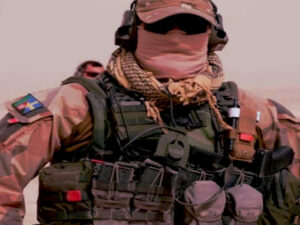
Screenshot youtube.com
The proclamation of a suspense marks a radical turning point in the relationship between citizen and state. What has been taken for granted up to now is being suspended: rights are restricted, the standard of living falls abruptly, and control over one’s own lifestyle is lost. Basic securities of bourgeois life – freedom of movement, access to information andSelf-determination – are hollowed out and sacrificed for state purposes. It is particularly serious how quickly a compulsive community emerges from a stable democracy, the premise of which is solely obedience.
Freedom of Living and Loss of Unfiltered Information
With the tension drop, everyday life is massively impaired. Economic priorities are shifting to a state of emergency and normal supply will slip. Luxury, diversity and individual freedom of choice are no longer the focus of social order. Anyone who has previously relied on a reliable infrastructure, a wide range of information and theProtection of fundamental rights could trust, now experience restrictions at every turn. At the same time, control over news, reports and central channels is increased. Unfiltered information is hardly accessible, central control bodies filter everything that could threaten the state narrative.
Forced services and bans on leaving: society in the trap
One of the most drastic consequences is the obligation to do military service for men and to relocate the entire center of life at any time. Authorities are given the power to prevent citizens from leaving the country with minimal bureaucratic effort. Passes can be withdrawn, border exits blocked. The result is that broad sections of the population unexpectedly become in a trapfind again. Suddenly, leaving the country is impossible, even in the case of acute danger, and each individual is confronted with the real possibility of a war operation. The only “option” remains the timely emigration – often a privilege for those who are prepared, wealthy or legally able to leave the country.
Dual citizenship as a last resort – privilege instead of law
An alternative way of avoiding the tension is dual citizenship. Selected parts of the population thus create a legal escape route: if in doubt, they can leave another country that protects them via the second passport. The regulations on this have recently been relaxed, so that no longer necessarily refers to the first nationalitymust be waived. However, such options are often limited to well-informed, internationally networked or economically privileged circles, while the majority is excluded and has no realistic chance of benefiting from such loopholes.
Privileges of the Elite and the new two-class society
The social imbalance is pushed to the extreme in the event of a tension: While the masses of the population are forced to obey collective obedience, the national elite is largely spared from duties and restrictions. Travel is still allowed for specifically selected people, and war services are organized past the political leadership level. the inability toThe political system unmasks the existence of justice and solidarity to ensure the crisis is in existence – and drives the social division.
State of emergency as a revelation of a fragile community
The theoretical exclamation of the stress of tension exposes the fragile foundations of social cohesion. With the suspension of fundamental rights, massive cuts in the standard of living, arbitrary bans on leaving the country and privileged protection for selected circles, society is splitting openly. What is declared as a protective measure is essentially an absolute onePower demonstration – with the consequence that the majority of citizens not only lose their perspectives, but also trust in the state and politics. The tension of the tension shows that in an emergency, equality and the rule of law only exist on paper.

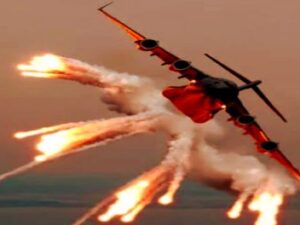
 Screenshot youtube.com