Why is the Lusatian Spreewald a cultural landscape and not a wilderness?
Screenshot youtube.com
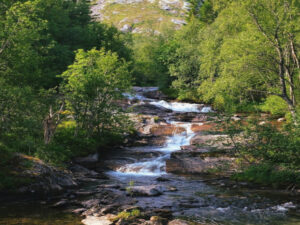
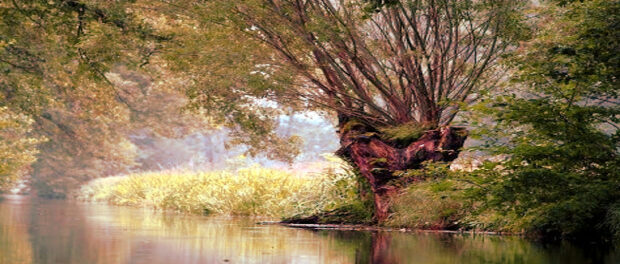
The Lusatian Spreewald, often referred to as the “Green Venice”, is a region of impressive beauty and ecological diversity. With its branched watercourses, lush meadows and dense forests, at first glance it looks like an untouched natural paradise. But on closer inspection it becomes clear that the Spreewald is not a wilderness, but a cultural landscape that overwas shaped by humans for centuries. This fact is crucial to understand the nature of this region. The Spreewald is not a place where nature was left to itself, but the result of a close and complex relationship between man and the environment. This relationship has had a lasting impact on the landscape, the economy and the culture of the Spreewald and has made it amade what it is today: a unique cultural landscape that combines both natural and human influences.
The Creation of the Spreewald: Nature and Man Hand in Hand
The Spreewald was created by the meltwater of the last ice age, which left a kind of swamp area. But the current form of the Spreewald is not just the result of natural processes. Rather, it is the product of human interventions that have shaped and changed the landscape over centuries. Even the Sorbs began cultivating the land. they laidChannels to regulate the water, creating the basis for the characteristic river landscape. These interventions were not only practical but also necessary to make the land usable for agriculture. Over the centuries, the Spreewald has been further designed. People built dikes to prevent flooding and created meadows and fields toto take care of themselves. The canals were not only used for irrigation, but also as transport routes that shaped life in the Spreewald. These changes were so profound that today’s landscape would be unthinkable without human influence. The Spreewald is therefore not a natural phenomenon, but a product of human culture.
The Role of Agriculture: Design and Conservation
Agriculture has always played a central role in the Spreewald. The fertile soils and humid climate provide ideal conditions for growing vegetables, especially cucumbers, which are now considered a symbol of the region. But the cultivation of grain, fruit and other crops has also shaped the landscape. The meadows and fields that extend along the canals are notCoincidence, but the result of targeted management.
Traditional agriculture in the Spreewald is closely linked to culture. People have developed knowledge and techniques over generations to make the most of the land. This also includes the maintenance of the channels, which must be dredged regularly in order to maintain their function. This work is tedious andtime-consuming, but it is all the more important for that.

 Screenshot youtube.com