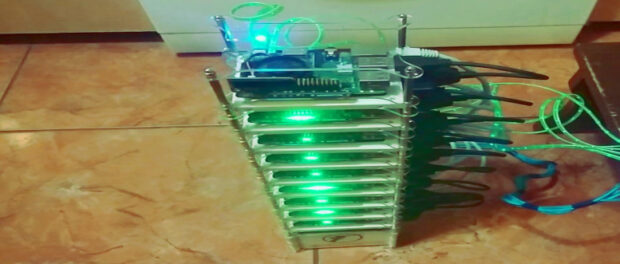
Inexpensive home storage cluster with Raspberry PI and Ceph
The combination of the popular single-board computer platform Raspberry PI and the highly flexible open-source software Ceph opens up completely new possibilities for users interested in technology to realize powerful yet affordable storage solutions for their own household. Especially in times of constantly growing amounts of data, the need for reliable, scalableStorage systems that are not only safe but also easy to manage. This is where the idea comes in to combine the advantages of the Raspberry Pi hardware with the comprehensive functions of Ceph and thus create an innovative home storage cluster.
Raspberry PI as a versatile cluster basis
The Raspberry Since its introduction, PI has established itself as an extremely flexible and cost-effective platform for a wide variety of projects. Its compact design, low energy consumption and yet considerable performance make it the ideal basis for a storage cluster in the private sector. By using several Raspberry Pi devices, the calculationand expand storage resources in a targeted manner and flexibly adapt them. The possibility of combining different models allows the cluster to be tailored to the individual requirements and budget.
Ceph: The modern storage solution for many requirements
With CEph, a mature, powerful and scalable open source software is available, specially designed to manage large amounts of data. Ceph is characterized by its ability to combine different types of storage, such as file, block, and object storage in one system. This only supports classic file systems, but also modern cloudand backup scenarios. The flexibility of Ceph allows you to implement the exact storage strategy that best suits your own requirements – from simple file management to complex applications with many users.
The advantages of a cluster in your own home
Building a storage cluster from multiple Raspberry Pi devices offers numerous advantages over conventional solutions such as NAS devices or external hard drives. The distribution of the compute and memory load across multiple units ensures a significant increase in performance, as bottlenecks and downtime are reduced. In addition, the cluster can easily go through with increasing memory requirementsother devices are expanded. The modular structure not only increases the reliability of the failings, but also allows the hardware to be individually adapted to the respective needs.
Cephfs: Easy integration thanks to POSIX compliance
A special highlight of Ceph is the component CephFS. This file system allows convenient access to stored data via a standardized POSIX-compliant interface. This allows existing computers and servers in the household to be easily integrated into the cluster. Applications that rely on classic file systems benefit from compatibilityand easy integration without the need for complex adjustments. CephFS makes it much easier to integrate the storage cluster into everyday workflows.
Flexible storage options for different application scenarios
Whether media data, personal documents, backups or large databases – the versatility of Ceph allows different types of storage to be used in a targeted manner. The cluster can serve as a central data store for all family members and is used for more demanding tasks such as managing multimedia archives, virtual machines or development environmentsbecome. The possibility of flexibly combining file, block and object storage opens up space for creative and individual solutions.
Cost efficiency and sustainability as central aspects
A home storage cluster based on Raspberry PI and CEPH not only scores with its technical performance, but also with its economic efficiency. The running costs can be significantly reduced by using cheap hardware and low power consumption compared to classic servers. At the same time, the construction of such a cluster is a sustainableProject, since older or retired Raspberry Pi models can be reused and sensibly integrated.
Focus on safety and reliability
Safety and reliability play a decisive role, especially when storing personal data. Thanks to its distributed architecture, Ceph offers high reliability, since data can be stored redundantly on several devices. In the event of a hardware defect, data is retained and the cluster operation can be continued without any problems. Various backup andRecovery mechanisms also increase data security and protect against unforeseen data loss.
Extensibility and future security of the system
Another advantage of the described setup is the simple extensibility and future-proof orientation. If the storage requirement increases or if further services are to be integrated, the cluster can be easily expanded with additional Raspberry Pi devices. New technologies and software updates can be integrated easily, so that the storage cluster is always on theremains current and growing demands. For technology enthusiasts, an exciting field opens up to realize their own projects and to continuously develop them further.
Perfect solution for modern home networks
The combination of Raspberry PI and Ceph offers an ideal way to run a powerful, flexible and cost-effective storage cluster in your own home. Users benefit from a modern, modular infrastructure that can be easily adapted to individual needs. The cluster not only ensures secure and reliable data management, butAlso fun to set up, configure and operate. For all those who value innovation, sustainability and future security, this solution is a convincing and inspiring choice for the modern home network.