The Iraq War and the Rise of a Permanent War Machine
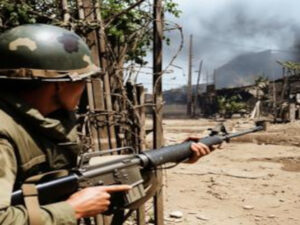
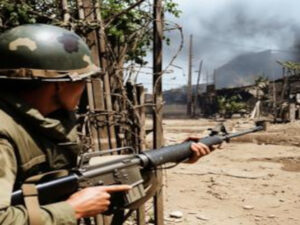
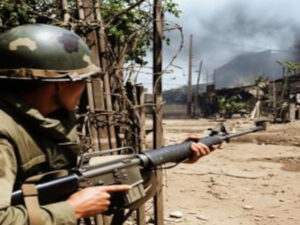
Screenshot youtube.com
The invasion of Iraq was presented to the American public as a short military action that would remove a dangerous government and prepare the way for a stable democracy. The formal declaration of victory came quickly, but the real conflict began only after Baghdad had been occupied. What followed was a prolonged military occupation, the destruction of state institutions, the collapse of public order and the growth of violence that affected the entire region. The financial cost was immense, but the human and political costs were even greater. Cities were destroyed, civilians were killed, soldiers returned traumatised, millions of people were displaced and the international order was weakened by a succession of new wars.
A victory announcement that concealed the real war
When President George W. Bush declared the end of major combat operations after a short period of fighting, the announcement was designed to create the impression that the essential task had been completed. The American government wanted the public to believe that the Iraqi military had been defeated and that the remaining work would consist mainly of reconstruction and political assistance.
In reality, the most difficult and destructive stage was just beginning. The United States had succeeded in occupying Baghdad, but it had no reliable plan for governing a country whose institutions had been damaged, whose security forces had been dissolved and whose social order had been shaken by invasion.
The political leadership in Washington had underestimated or deliberately concealed the consequences of the attack. The public had been told that the military operation would be brief and that the financial burden would remain manageable. The reconstruction was expected to finance itself to a large degree because Iraq possessed major oil reserves.
These expectations proved to be unrealistic. The war did not lead quickly to a stable democracy. Instead, it destroyed state structures, intensified religious and communal divisions and created conditions for armed rebellion and terrorist organisations.
The military victory therefore became the beginning of a political defeat. The United States could seize Baghdad, but it could not create the stable political order required to justify the invasion.
The failure to plan for the occupation
The government had prepared extensively for the military defeat of the Iraqi army, but it had not prepared adequately for the political consequences of occupation. It assumed that the collapse of the existing government would be followed by cooperation from the population and the rapid formation of a friendly administration.
Instead, the occupation removed the institutions that had held the country together without providing a credible replacement. Ministries stopped functioning, security disappeared from many areas and armed groups began to compete for influence.
The dissolution of the Iraqi army was particularly damaging. Large numbers of trained soldiers were suddenly without employment, authority or income. Many possessed military experience and access to weapons, but no longer had a place within the new political order.
The removal of the ruling party from public institutions produced a similar effect. Whatever the crimes of the former government, the policy of excluding large numbers of experienced officials created administrative chaos. Schools, hospitals, electricity networks and public offices could not function properly without qualified personnel.
The occupation authority treated the destruction of the old order as proof of progress. In practice, it created a vacuum that was quickly filled by armed organisations, foreign fighters, criminal networks and local power groups.
The financial promises before the invasion
The American public had been encouraged to believe that the war would be financially manageable. The administration argued that military victory would come quickly and that oil revenue would help finance reconstruction. The expected costs were described as limited and temporary.
Economic advisers who warned that the war could become extremely expensive were dismissed. Some estimates placed the likely burden in the hundreds of billions of dollars, while senior officials claimed that the final cost would remain far lower.
The later development proved those assurances wrong. Economic researchers Joseph Stiglitz and Linda Bilmes calculated that the total cost to the United States could reach several trillion dollars. Their assessment was already limited because it concentrated mainly on costs that could be expressed in monetary terms.
Their calculation did not fully include the deaths of Iraqi civilians, the millions of refugees, the destruction of infrastructure, the daily violence or the political disorder that spread throughout the region. It could not measure the loss of a family member, the destruction of a city or the collapse of a society.
Even the largest financial calculation therefore remains incomplete. A monetary estimate can show the scale of public expenditure, but it cannot express the value of a lost life, a destroyed home or a future that has been taken away from an entire generation.
The wider cost of the war against terror
The Iraq war formed only part of the financial burden created by the wider war against terror. Research carried out by the Costs of War project at Brown University showed that the total cost of military operations conducted after the attacks against the United States had reached several trillion dollars.
The calculation included military operations in Iraq, Afghanistan, Pakistan and Syria. It also included parts of the expenditure for domestic counterterrorism, care for wounded and traumatised veterans, interest on war borrowing and long-term obligations connected with military action.
The war against terror had often been presented as a limited response to terrorist attacks. In reality, it developed into a worldwide military enterprise. The United States carried out operations across several regions, supported allied governments, used unmanned aircraft and maintained a broad network of military bases, intelligence facilities and private security companies.
Many Americans were barely aware of the scale of this activity. The wars took place far from the daily lives of most citizens. The financial burden was spread through public budgets, loans and long-term commitments, making the connection between military operations and personal economic pressure difficult to see.
The lasting cost is higher still. Even if Washington ended all expenditure connected with these conflicts immediately, the obligations already created would remain. Interest payments and veterans’ commitments could continue for decades and place a heavy burden on future budgets.
The destruction that cannot be counted
Financial calculations usually focus on the expenses carried by the United States. Much less attention is given to the destruction in the cities of Iraq, Syria and Libya. The value of ruined houses, hospitals, schools, bridges, power stations, roads and water systems is difficult to establish.
Even if the material damage could be calculated with reasonable accuracy, the question of who should pay for reconstruction would remain. Governments that begin wars rarely accept the full burden of rebuilding the countries they have attacked.
The affected states are left with destroyed cities, weakened economies and political instability. Their citizens must live with the consequences, while the governments responsible for the intervention can shift the discussion towards new threats and new military tasks.
War costs also include people who are killed or wounded by bombs, artillery and gunfire. They include those who die later from disease, malnutrition, contaminated water and the collapse of medical care.
Displacement, mental illness and social disintegration create further consequences that cannot be measured properly. A child growing up in a destroyed city loses more than a home. Access to education, medical treatment, stable employment and a secure future may also disappear.
The meaning of war costs must therefore not be reduced to budget figures. Any account that excludes human and social damage presents an incomplete and politically convenient picture.
The hidden workers of the occupation
The Costs of War project also examined the position of foreign workers employed in Iraq and Afghanistan by the American military or by private contractors. Many came from Nepal, Colombia and the Philippines. They worked in kitchens, cleaning services, transport and security.
Many of these workers had been recruited through promises of high wages and safe working conditions. After arriving in the war zones, they often discovered that the reality was very different. They lived and worked in dangerous, neglected and degrading conditions.
The workers faced more than the risk of military attack. Some were employed under conditions that resembled forced labour. Wages were withheld, passports were confiscated and contract terms were changed after arrival.
Those who wanted to leave often had no reliable protection. The American military, civilian authorities and the governments of their home countries frequently failed to provide sufficient assistance. Some remained trapped in the conflict zones and were unable to enforce their legal or financial claims.
Private companies benefited from the commercialisation of war. They could reduce their own expenses while transferring much of the human risk to foreign workers who had little political influence in the countries where they were employed.
The limited public reaction
The conditions faced by foreign workers received little attention in the American public debate. Stephanie Savell, who participated in investigations into these matters, had expected that evidence of exploitation would produce political pressure.
She hoped that the findings would provide another argument against continuing the wars and that private companies earning money from military operations would be forced to accept responsibility.
The response was weak. Human suffering attracted broad attention mainly when American soldiers were affected. Iraqi civilians, Afghan families and foreign workers received far less consideration in public discussion.
This indifference has political consequences. When victims remain invisible, pressure on the government to end a war remains low. When the main burden of violence is carried by people outside the United States, war becomes an abstract issue for much of the American population.
The exclusion of foreign victims is therefore not merely a failure of reporting. It enables a political system in which military violence can continue without creating sufficient domestic opposition.
Wars financed with borrowed money
The United States did not finance its wars in the same way as during earlier major conflicts. In previous wars, taxes had been raised, war bonds had been issued and the population had been openly involved in the financial burden.
The Bush administration reduced taxes while beginning the war in Afghanistan and later invading Iraq. The Obama administration largely continued this approach. Military operations were financed through borrowing rather than through a direct national mobilisation.
This approach has sometimes been described as war financed with a credit card. The government could expand military operations without immediately imposing higher taxes on the population.
The arrangement made war politically easier. Citizens did not receive a direct bill connected with the invasion. The costs were placed in public debt, interest payments and long-term obligations that would be carried by future taxpayers.
In military matters, the rules of the free market are applied selectively. Social expenditure, education, health care and public infrastructure are constantly subjected to demands for savings. The Pentagon, by contrast, can receive new loans whenever the government declares that national security requires them.
This form of financing shifts the burden into the future. A government can display military strength in the present while later generations inherit the debt and the consequences.
The origins of military economic power
The connection between industry, science and the military grew during the Second World War. The relationship blurred the boundary between military production and civilian economic activity.
Technological progress produced more effective weapons as well as innovations that later entered civilian life. Military research was therefore presented as an engine of economic development. Companies received government contracts, universities obtained military funding and entire regions became dependent on weapons production.
The media critic Tom Engelhardt described this arrangement as military Keynesianism. William Hartung used the expression Pentagon socialism. Both terms refer to a system in which the government directs enormous resources towards the military while claiming that public intervention is harmful in other parts of the economy.
The military industry receives public money, long-term contracts and political protection. Its profits are privately collected, while the risks and costs remain with the government and therefore with the public.
This system is not genuinely based on free competition. It depends on state funding, political influence and guaranteed buyers. Competition ends where the Pentagon begins to define its requirements.
The expansion of the military economy
The years of the Trump administration created an especially favourable environment for the American military. Pentagon spending was expected to rise, tax reductions for wealthy groups were promoted and new contracts were made available to weapons companies.
The policy sought to align a larger part of the American economy with military requirements. Production chains were to be protected from foreign dependence. Suppliers, raw materials and skilled workers were to remain under American control whenever possible.
Rare earth elements became particularly important because they are needed for advanced weapons, electronics and communication systems. Young technical workers were also treated as a strategic resource for military production.
William Hartung described this approach as Pentagon first. The idea was that the military apparatus should become the most important reference point for economic policy.
The question is where such a course leads. If the most expensive and least efficient part of an economy becomes its guiding sector, other areas may be neglected. Education, health care, public transport, housing and civilian research can lose importance compared with military projects.
The warning from the Soviet experience
The Soviet Union directed a considerable part of its economic power towards military production. High military expenditure made the system increasingly rigid and less capable of adaptation. While the economic and technological world changed, the Soviet economy remained trapped in inflexible structures.
A state that invests most of its resources in military production can demonstrate power in the short term. Over time, however, it may lose the ability to respond to changing economic conditions.
The United States cannot simply be equated with the Soviet Union. Nevertheless, there is a danger that military interests will control an ever larger part of the public budget and technical development.
Tax reductions for wealthy groups, a growing military budget and new economic conflicts can intensify this tendency. If social responsibilities are neglected at the same time, the balance between civilian and military production changes steadily.
Political leaders can defend this policy by referring to national security. The security argument, however, must not justify every expenditure and every military preparation.
From military complex to permanent war apparatus
Despite the absence of a clear military opponent and despite the failure to achieve lasting victories, the Pentagon, the Department of Homeland Security, the nuclear weapons establishment, intelligence agencies, arms companies and private security firms have grown into a vast structure.
These institutions and companies depend on each other and form a system that is highly profitable for the people involved but extremely expensive for the country. The journalist and historian Gareth Porter described this arrangement as a permanent war apparatus rather than merely a military-industrial complex.
Its power is justified through the alleged threat posed by Islamist terrorists. That threat has been used to expand budgets, authority and foreign operations. The deeper foundation of the apparatus, however, remains the relationship between state security agencies and private weapons companies.
The terrorist threat provides the political justification. Private companies provide the financial interests. State authorities provide the legal powers and political connections. Together, they form a system that can maintain itself.
The longer wars continue, the stronger the dependence on this apparatus becomes. Companies need new contracts, agencies need new tasks and politicians need new images of danger to explain the growing expenditure.
The privatisation of military knowledge
The transformation of the military-industrial complex into a permanent war apparatus began with the privatisation of military and intelligence functions. Knowledge and experience were transferred from government institutions into private companies.
The Pentagon and intelligence agencies became increasingly dependent on companies such as Halliburton and Booz Allen Hamilton. Private businesses came to receive a large share of the defence budget.
Companies took over tasks that had traditionally belonged to the core of the state. Planning, analysis, logistics, technical development and surveillance were increasingly outsourced.
Many former employees of the Pentagon and the Central Intelligence Agency moved into private companies because they could earn much more money there. They retained their knowledge, relationships and influence.
This created a revolving door between the government and private business. Generals moved into the arms industry while business managers from weapons companies entered important government positions.
Decisions about military contracts and warfare were therefore influenced by people who could benefit personally from the expansion of private companies.
The endless war and unmanned attacks
The worldwide war against terror created the next stage in the development of the permanent war apparatus. It became a lasting conflict without a clear end. Unmanned aircraft attacks formed a major part of this military activity.
Unmanned warfare is a form of public and private cooperation. Private companies develop aircraft, sensors, control systems and software. They also participate in the logistical and technical processes required to identify and attack targets.
Companies such as General Atomics therefore have a direct economic interest in the continuation of military operations. They also possess political influence through lobbying and connections inside government.
During the Obama administration, the United States carried out a large number of unmanned aircraft attacks. The policy continued under the Trump administration, and the number of attacks increased in some regions while concern for civilian casualties declined.
Private companies became increasingly involved in the complete process of targeted killing. They were no longer merely suppliers of equipment. They participated in the search for targets, their classification and the technical execution of attacks.
Arms exports as foreign policy
The Trump administration also sought to expand the sale of American weapons to foreign states. Negotiations were to be completed more quickly, senior officials were encouraged to intervene personally and government representatives were expected to promote American weapons at international exhibitions.
The president himself acted as the leading representative for American arms exports. Foreign policy was used not only to build political alliances but also to open markets for weapons companies.
During the Obama administration, American weapons exports had already grown considerably compared with the years of the Bush administration. The later policy aimed to expand the trade even further.
Weapons deliveries to authoritarian governments and countries engaged in war were justified through employment, alliance policy and national security. The consequences for civilians in the receiving countries remained secondary.
The state was no longer merely purchasing weapons for its own forces. It was actively promoting weapons as a central instrument of foreign policy and economic strategy.
Corruption and organised waste
A public and private war apparatus of this size creates ideal conditions for waste, fraud and corruption. Private companies receive contracts whose costs are difficult to examine. Government offices often lack the independent expertise required to verify every invoice and every claimed service.
Some companies can therefore make enormous profits while providing limited public value. The complexity of the contracts protects them from effective scrutiny.
The system has been shaped by private and special interests. It continues to expand without effective restraints. The apparently unlimited availability of public money creates a form of organised irresponsibility.
The actual security situation does not drive the system. The interests of those who benefit from it do. Threats are then emphasised or exaggerated to justify expenditure that has already become politically and economically important.
The political language follows a familiar pattern. New funds are justified by new dangers, new weapons by new enemies and new foreign operations by allegedly immediate risks.
War profits and political influence
An oligarchic class can become wealthy through war while the costs are transferred to the population and to the countries under attack. Companies earn money from destruction, reconstruction, weapons deliveries and security contracts.
Serious war crimes and human rights violations may be accepted as unavoidable side effects. Political responsibility is shifted towards military necessity, secret intelligence assessments or the decisions of foreign allies.
The former vice president Dick Cheney illustrates the potential conflict between public authority and private gain. His political role during the Iraq war existed alongside his previous connection with Halliburton, a company that became an important beneficiary of the war.
The connection between political decisions and private profit was therefore unusually clear. The war could be justified through public arguments while a company linked to its political leadership benefited from the consequences.
Such relationships damage confidence in a foreign policy that claims to serve only security, democracy and human rights.
The human cost of weapons sales
Large American weapons companies have developed a business model that profits from war, disorder, terrorism, political instability and human rights violations. Companies such as Raytheon, Northrop Grumman, Lockheed Martin, Boeing and General Dynamics have supplied weapons for many conflicts.
An air strike by Saudi forces against a school bus in Yemen killed dozens of children. The bomb used in the attack was manufactured by Lockheed Martin.
When the Trump administration announced a major arms agreement with Saudi Arabia, Lockheed Martin expected to receive a substantial share of the business. The company therefore had a direct economic interest in the continuation of arms sales to a state conducting a destructive war.
Whether the United States attacks directly or supplies weapons to allies in Saudi Arabia, Egypt and Israel, the economic benefits flow towards the same companies. The massacres occur in Yemen, Gaza or Afghanistan, while the profits are generated by American corporations.
The weapons companies make money at the expense of the poorest and most vulnerable people in the world. Genuine diplomacy, disarmament and peace therefore threaten their business model.
Why the public remains distant from war
Most Americans do not feel the financial cost of war directly. Many do not connect high military expenditure with the condition of their own society.
The debt created by war affects infrastructure, health care, education and housing. While military agencies receive new funds, bridges, hospitals, schools and public housing remain underfunded.
The debt is not necessarily repaid through immediate tax increases. It is carried through loans, interest payments and long-term obligations that are transferred to future generations.
A large part of the population therefore does not experience war as a personal financial burden. Soldiers fight far away, private companies collect profits and the costs appear in complicated budget documents.
The social distance from war grows as a result. A government can extend foreign operations without facing the level of public resistance that would arise if the entire population had to share the burden directly.
The professionalisation of warfare
Many years after the beginning of the war against terror, the United States had become largely demobilised in civilian life. Few people followed the numerous wars closely. Many citizens did not even know that American forces were operating in several regions at the same time.
The government demanded little direct sacrifice from the population. There was no broad mobilisation, no general increase in taxation and no complete conversion of the civilian economy to war production.
Daily life could continue almost normally while the military remained permanently active abroad. The wars took place largely outside public view.
The lack of connection between citizens and military operations is older than the Trump administration. It reaches back to the war in Indochina, when political leaders began searching for methods that would reduce the dependence of military policy on direct public participation.
Modern warfare became the work of specialised institutions. Most citizens no longer have to fight, leave their jobs or accept major changes to their daily lives. Responsibility is delegated to professional soldiers, private security companies and technical specialists.
The creation of a professional army
Towards the end of the war in Indochina, discipline problems and resistance among American soldiers became increasingly serious. The conscript army had reached its limits. Many young men refused to support the war or tried to avoid military service.
The military leadership therefore sought a solution in the creation of a professional army. President Nixon introduced this change during the early seventies.
Over the following decades, the American military developed into a force that could be deployed across the world without requiring broad public participation. The population no longer had to send large numbers of its own sons into combat.
After the attacks against the United States, a large apparatus of special operations forces was created. These units operate across the world, train local forces and conduct missions whose details are often unknown to the American public.
Citizens who have no relatives or friends serving abroad receive little direct information about the wars. Democratic supervision of military policy is weakened when most of the population has no personal connection with the people who fight and die.
Military operations beyond public debate
The death of American special operations soldiers in Niger revealed how little many members of Congress knew about the worldwide deployment of American forces. The incident showed that troops could be sent to distant countries without a broad public discussion.
The American military has been involved in counterterrorism activities in a large number of countries. These activities include training, intelligence cooperation, special operations and support for local armed forces.
Such missions are usually described as limited, secret or defensive. The public often does not know their real objectives, their duration or the legal basis on which they are conducted.
Permanent military presence becomes normal under these conditions. A war no longer needs a formal declaration in order to continue for years.
Control over images and information
Ronald Reagan described the war in Vietnam in noble terms even though the conflict had produced immense destruction. His administration began new military operations while attempting to prevent the media from showing the full consequences of American intervention.
Open operations in Grenada and Panama were accompanied by covert activity in other regions. At the same time, the relationship between the military and the press changed. Journalists were prevented from entering certain war zones or were allowed access only under strict military supervision.
Later, reporters were placed in controlled groups or embedded directly with military units. This enabled the armed forces to regulate access to battlefields and influence the images reaching the public.
The population was not supposed to see uncontrolled pictures of dead soldiers, destroyed cities or civilian victims. The government wanted to prevent a repetition of the public opposition that had developed during the Vietnam era.
Media control therefore became part of military planning. The management of information was treated as a strategic task alongside the management of troops and weapons.
The commercialisation of the military
Year after year, war became more important while remaining more distant from the daily life of ordinary citizens. The American army was professionalised, gradually privatised and increasingly shaped by business principles.
War was no longer even presented as an undertaking carried out by citizens for citizens. It was increasingly conducted by and for corporations such as Lockheed Martin, Halliburton, KBR, DynCorp, Triple Canopy and Blackwater.
Blackwater later changed its name to Xe Services and eventually to Academi. The changes of name did not alter the role of private military companies in American foreign policy.
The political leadership wanted to prevent another Vietnam experience. There should be no uncontrolled reporting, no constant public display of losses and no steady stream of returning coffins capable of strengthening opposition to the war.
The population was encouraged to continue its normal life while other people fought and died in the name of the United States. The political aim was to separate war from everyday society.
The social consequences of a distant war
Tom Engelhardt argued that the abolition of compulsory military service created the conditions for this form of warfare. Young Americans who do not have to go to war become a population that observes military action from a distance.
These citizens are not directly confronted with the risks and costs of war. They do not have to choose between education, employment and military service. They do not witness close friends being killed and do not carry direct responsibility for military operations.
Political leaders can therefore begin and extend wars without risking broad social mobilisation. The army has the required personnel, the industry has the required contracts and the government has access to borrowing.
The democratic connection between citizens and the military becomes weaker. People who are not directly affected can more easily distance themselves from political responsibility.
The political use of historical memory
The memory of the attacks against the United States has been used to justify much of what the country has done since that time. Political leaders have a strong interest in keeping the attacks permanently present in the national memory.
The important issue is not merely the memory of the event but the official interpretation attached to it. The attacks have been used to justify wars, surveillance, foreign military operations and restrictions on civil liberties.
The war in Indochina, by contrast, is allowed to fade from public memory. Pentagon officials do not need to worry that most citizens will remember the American bombing campaigns in Laos, Cambodia and Vietnam in detail.
The selection of what is remembered and what is forgotten is politically important. A society that does not know the history of its own wars can be persuaded more easily to support new military adventures.
Historical memory thus becomes part of warfare. The memory of an attack is used to justify later attacks, while earlier crimes disappear from public awareness.
A record of failed interventions
The United States has faced a long series of failed or failing wars. These include Afghanistan, Iraq, Syria, Yemen, other conflicts in the Middle East and numerous military operations in Africa.
The American military has achieved few of its declared goals over the past decades. It has been unable to defeat political opponents permanently or create stable democratic systems in the countries where it intervened.
The interventions left behind death, disorder, suffering, destruction and hopelessness. States collapsed, armed organisations gained influence and new terrorist groups emerged.
Political leaders repeatedly shifted responsibility towards local actors, old historical conflicts or supposedly unexpected developments. The fact that military intervention had created the conditions for much of the chaos was rarely acknowledged.
Despite this record, the system does not stop. As soon as one war fails, new enemies are found. Defeat is not understood as a warning but as an argument for more money, more weapons and greater military effort.
Fear as a source of military funding
After the end of the Second World War, American military expenditure declined sharply. President Harry Truman was concerned about how expensive geopolitical projects could continue to receive public funding.
Senator Arthur Vandenberg advised him that the population had to be made afraid. Truman followed this advice successfully. Later administrations repeatedly used threats and warnings to justify military spending.
When the Soviet Union collapsed and the traditional enemy disappeared, the chairman of the Joint Chiefs of Staff complained that the military had run out of demons. Only a small number of remaining opponents appeared suitable for continued political mobilisation.
When sufficient dangers are not available, new dangers can be created or enlarged. During the Cold War, public attention was directed towards an alleged bomber gap and later towards a supposed missile gap.
American political and military leaders claimed that the Soviet Union possessed far more bombers and intercontinental missiles than the United States. Intelligence assessments predicted a vast Soviet missile force, even though the actual number of operational missiles was much lower.
The exaggerated threat helped justify a major arms build-up. Fear became a method of financing military policy.
Weapons of mass destruction and threat inflation
A similar pattern appeared before the invasion of Iraq. Claims concerning Saddam Hussein’s alleged weapons of mass destruction were treated as established facts even though convincing evidence was missing.
Later warnings focused on North Korean missiles, an Iranian nuclear programme and the growth of Chinese military power. Some of these matters may involve real political concerns, but they have often been presented without comparison with the worldwide reach and military power of the United States.
Former air force officer William Astore described this process as threat inflation. New dangers ensure that money, personnel and political attention continue to flow towards the military.
The threats do not need to be completely invented. It is sufficient to exaggerate actual risks, remove them from their context or present them as imminent catastrophes.
The public is then denied a calm assessment of security. Instead, citizens receive a constant sequence of warnings that makes every new military programme appear necessary.
The self-preserving war apparatus
The military-industrial complex and the permanent war apparatus now possess strong internal momentum. They no longer depend entirely on the actual level of danger. The institutions, companies and political networks require conflict in order to protect their budgets, influence and profits.
The more money that flows into military structures, the more contracts, jobs and political dependencies are created. Every reduction then threatens not merely an agency but an extensive network of companies, regions, research institutions and political supporters.
Security language is used to protect this network. New threats are emphasised, old wars are extended and failed strategies are described as incomplete rather than mistaken.
The political response is usually the same: more money, more weapons and more military preparation. The system presents military expansion as the only responsible answer to the dangers it identifies.
Many threats used to frighten the population must therefore be examined in relation to political interests. They may contain exaggerations, distortions, deception or deliberate invention.
The war apparatus produces its own justification, while propaganda supplies the explanation for a policy that continues for economic and institutional reasons.
The Iraq war as a warning
The Iraq war demonstrated the consequences of beginning a conflict without a credible plan for the peace that should follow. Military victory was announced as though the destruction of the government represented the completion of the mission.
In reality, the occupation created a political vacuum, dismantled institutions and intensified divisions that later spread across the region. The war did not produce the stable democracy that had been promised.
It produced immense financial obligations for the United States and immeasurable human suffering in Iraq. It also strengthened private companies that profited from weapons, logistics, security and reconstruction.
The war showed how military decisions can serve political and commercial interests while the public is encouraged to believe that security and freedom are the only motives.
It also revealed how easily a short victory ceremony can conceal a much longer conflict. The destruction of a government may be completed quickly. The consequences of that destruction can continue for generations.
The need for a different understanding of security
A society that spends enormous resources on war while neglecting education, health care, housing and infrastructure cannot claim to have achieved lasting security. Military power may protect borders in certain situations, but it cannot repair a broken society or create legitimate political institutions in an occupied country.
Security also depends on economic stability, functioning public services, social trust and the ability of citizens to participate in political decisions. These foundations are weakened when public money is continuously redirected towards weapons and foreign operations.
A policy that treats every conflict as a military problem will create new enemies and new sources of instability. Weapons may remove a government, but they cannot establish trust between communities or provide a secure future for children living among ruins.
Peace and diplomacy are often dismissed as weakness because they do not produce immediate profits for the military industry. Yet they offer the only realistic way to prevent the permanent expansion of war.
The hidden price of permanent conflict
The costs of permanent conflict are paid in several forms. Public debt grows, infrastructure deteriorates, veterans require lifelong care and foreign populations live with destruction and displacement.
Private companies collect profits while governments spread the costs across future budgets. Political leaders receive credit for strength while later generations inherit debts and unresolved wars.
The public is encouraged to accept this arrangement through fear. Each new threat makes criticism appear irresponsible. Anyone who asks whether military action is necessary can be accused of weakening national security.
Democratic discussion becomes more difficult when the public is shown only selected information. The victims remain distant, the contracts remain complicated and the actual objectives of military operations remain hidden behind general claims about terrorism and national defence.
The result is a political system in which war can continue without a formal declaration, without broad mobilisation and without a clear explanation of how victory is defined.
Conclusion
The Iraq war did not end when the American president announced victory. That announcement marked the beginning of an occupation that destroyed state institutions, created disorder and imposed enormous financial and human costs.
The wider war against terror transformed military action into a permanent international enterprise. Private corporations, intelligence agencies, special operations forces and political leaders became connected through contracts, budgets and shared interests.
The human consequences were borne mainly by civilians in countries far from Washington. The economic consequences were transferred to taxpayers and future generations. The political consequences weakened international law and made further wars easier to justify.
The central lesson is clear. A military victory cannot replace a political solution. Weapons cannot create a stable society, and public money cannot repair the damage caused by an intervention that was never properly planned.
The United States has built a war apparatus that feeds on fear, debt and permanent conflict. Its power does not depend solely on real threats. It also depends on institutions and companies that benefit from the continued existence of those threats.
Until this system is subjected to serious democratic control, military restraint and public accountability, new wars will remain likely. The most dangerous consequence of the Iraq war is therefore not only the destruction it caused in Iraq. It is the political lesson that war can be presented as victory, failure as unfinished work and endless military expansion as the only possible form of security.

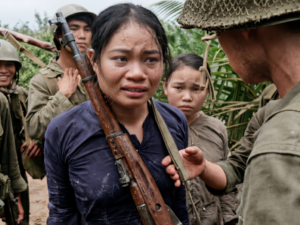
 Screenshot youtube.com