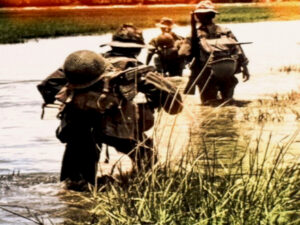
American Armed Forces in South Vietnam: An insight into the course and experiences in the war
Screenshot youtube.com
The war in South Vietnam is one of the bloodiest and most protracted conflicts of the 20th century and has left deep traces in American history. It was characterized by a multitude of contradictory expectations, strategic planning, massive destruction and profound human tragedies. The American forces that were deployed there wentFirst into the fight with a certain confidence and conviction, but the reality on the ground was often very different from the initial hopes and assumptions. This article tries to understand the development of this complex war based on the experiences of a marine infantryman, to critically examine the strategies of American military leadership and the profoundAnalyze impact on soldiers and society. It becomes particularly clear which lessons can be learned from this conflict and which mistakes should never be made again.
The start of the mission and the initial euphoria
When the American armed forces first landed in southern Vietnam in March 1965, the mood among the soldiers was still characterized by a certain euphoria and confidence. They carried their knapsacks, rifles and the equipment provided to them for the upcoming fights, but the self-understanding was carried by the firm belief that the enemy, the Vietcong,can be defeated quickly and clearly. For most troops, it was a mission that seemed morally justified, a mission that believed to bring a better future for people in South Vietnam and curb communism in the region. The soldiers were convinced that the superiority of their weapons and equipment, the well-trained troops and the supportby the American government would be enough to win the war within a short time. This initial confidence had also been nurtured by media reports, Washington political speeches and government officials. It was firmly believed that the superiority of the American forces would frighten the enemyand one expected a quick and clear decision in terms of one’s own goals.
The first fights and the illusion of superiority
But the reality on the battlefield soon became much more complex and contradictory. After a significant operation in August 1965 against guerrilla bases in the Quang Ngai area, in which the American troops killed almost 600 guerrillas while only 46 of their own losses, the war initially seemed to win. The official representation ofMilitary leadership was that the troops were able to control the enemy at will and destroy them completely. The commander General William C. Westmoreland announced with great self-confidence that the American forces could confidently decide on the place and time of the fighting. But this assessment was deceptive. The actual losses ofGuerrilla groups were far higher, but most of the Vietcong units escaped in the heat of the battle. In addition, the majority of the fighting took place in densely populated areas where many villages were destroyed and innocent civilians died. These destructions and losses led to an increasing problem of image and to growing distrust among the population,Both in the country itself and abroad. A few weeks later, another major battle ensued in the Ia Drang Valley in the central highlands, in which the North Vietnamese forces suffered considerable losses. But here, too, the fighting showed that the North Vietnamese troops had exceptional resilience and strong will to continue the war.They were able to assert themselves despite the heavy losses, which further questioned the American belief of the quick victory. Nevertheless, the American leadership and the political leaders adhered to their optimistic assessment and systematically underestimated the opponent’s abilities. Many reports warning of overvaluing the enemy,were put aside in the ministries and the White House archives, while the official representations continued to rely on an imminent victory.
Strategic planning and the wear and tear strategy
By September 1965, under the leadership of General Westmoreland, a comprehensive war plan was developed based on the experiences from the previous months. The aim was to stabilize American troops in the region, to bring the population coasts under control and to secure control over the country’s most important areas. The plan was initially theRepel attacks by the Vietnamese guerrilla groups, protect the population and rebuild the infrastructure. The American armed forces offensive was planned for the second phase, which was planned for the first half of 1966. The army should go on the offensive, attack guerrilla groups, destroy their bases of retreat and control over the countryfurther expand. At the same time, increased efforts were made to secure the rural population and restore public order. The goal was a total expansion of the American military presence in order to finally win the war by the end of 1967. The so-called wear and tear strategy based on the principles of searching and destroying, expulsion and securitybased, became the core of this planning. The division of labor between the American forces and the South Vietnamese army was clear: Americans were to track and destroy the guerrilla groups with large units, while the army of South Vietnam was to take control of the country and the population. However, over time it was shown thatThis division of labor was problematic, since the army usually only focused on physical control and hardly tried to gain the trust of the population. Instead, she focused on securing the territories without really integrating people or gaining their support. The strategy was hardly successful in the long term, and many critics warned of thefollow this procedure. Despite growing doubts about the effectiveness of the strategy, Westmoreland and its officers stuck to their line undeterred. Critical voices pointing to the problems were systematically silenced or overheard. Even in April 1967, almost two years after the offensive began, Westmoreland refused to strategic and tacticalmake changes, and insisted on continuing the enemy’s destruction in order to finally force him to capitulate.
War as a battle of attrition and the destructive force
The strategy of slaughtering the opponent by continually bleeding and wear them down led to large parts of South Vietnam becoming an infinite battlefield. The use of massive air raids, artillery and chemical warfare was the central element of American warfare. The aim was to combat guerrilla fighting by destroying their retreat and operational basesend and put the opponent in flight. Entire stretches of land were transformed into so-called ‘fire-free zones’, in which the American troops shot at everything that moved. Especially the Cedar operation if an example of this brutal destruction policy. The so-called ‘Iron Region’, a strategically important corridor in the south-east of the country, wasMost massive bombing and ground troops destroyed completely. The population was evacuated and the areas turned into desolate fallow lands. With the help of B-52 bombers, the area was literally in the rubble and ashes to finally eradicate the guerrilla groups. Nevertheless, the guerrilla graves and fighters returned just a few months later and used the destroyed onesAreas again as operating bases. This repeated return and the apparent meaninglessness of the large-scale destruction showed how hard it was to really defeat the opponent and threw a spotlight on the limits of the strategy used.
Environmental destruction and everyday reality in war
In addition to the military operations, reports from journalists also shaped the image of the war. Neil Sheehan, an American reporter, described a scene in January 1966 that became exemplary of the experience of many soldiers. After months of fighting and large-scale operations, a unit that could not achieve a goal was withdrawn again, without actuallyto have achieved the desired result. The order to wear down the enemy led the soldiers to leave only destruction on campaigns: Villages were razed to the ground, landscapes devastated and the population was driven to flight. The so-called ‘search and destroy’ actions left debris fields, which were often treated with chemical agents, toto permanently destroy vegetation. The Iron Triangle, a strategically important region, was established in the course of Operation Cedar if transformed into a deserted fallow landscape that hardly allowed any human life. The destruction was so comprehensive that the region remained uninhabitable for years. Nevertheless, the guerrilla groups only a few months later used the restored areas asoperating bases. The apparent meaninglessness of this large-scale destruction led to a growing criticism of the strategy, which was repeatedly questioned. It became clear that the destruction alone was not a solution, but rather fueled the cycle of war and let the hope of a lasting peace disappear.
The everyday life of the soldiers, the challenges and the social conflicts
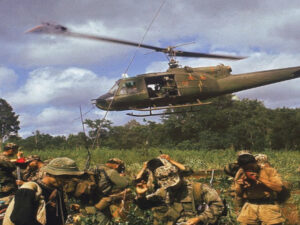
The experiences of the American soldiers were characterized by uncertainty, cultural differences and profound social tensions. Neil Sheehan reported that after months of struggle, an American general admitted that there was no fixed plan for the durability of the deployment, but only the intention to temporarily throw the opponent off balance. manySoldiers felt in action as in a foreign country where they could hardly speak the language of the locals and hardly understand the cultural background of the Vietnamese. The rural population was increasingly viewed as an enemy, as in practice, soldiers could hardly distinguish between guerrilla fighters and civilians. The high fluctuation within the troops thatthe short working hours and the desire to get home as unsustainable as possible led to weak camaraderie and limited moral stability. The racial conflicts were particularly stressful, since African-American soldiers, who made up only a small proportion of the troops, suffered significantly more losses and often felt disadvantaged. Only throughPublic pressure and high command efforts to better integrate Afro-American soldiers gradually improved the situation. But the biggest challenge was the cultural gap between the American troops and the Vietnamese, who spoke hardly a common language and hardly trusted each other. The Vietnamese tried toTo preserve independence and cultural identity, which increased the distance between the two groups. This meant that the soldiers often viewed all the rural population as potential enemies, which further intensified the situation and deepened the distrust between the parties. The uncertainties, the distrust and the cultural differences made life in the wara permanent burden that left deep marks on many soldiers and increased the moral challenges.
The lessons of the Vietnam War and the importance of reflection
The war in South Vietnam was a huge burden for all involved, both local and US-based soldiers. The strategy of massive destruction, the goal of attrition and the assumption of winning the war through superiority in weapons and material proved to be only conditionally successful. Despite high losses, enormousThe victory for the Americans remained unattainable for the Americans to destroy the environment and massive destruction of the infrastructure. Experience shows that military superiority alone is not a solution, but rather the ability to understand and respect the cultural backgrounds, the idiosyncrasies of the opponent and the social conditions. Trust in your own superiorityAnd the strategy of destruction not only extended the war in Vietnam, but also deeply imprinted on the societies of both sides. The teachings of this conflict warn that the use of military force only makes sense if there are clear, realistic goals, the human and material resources are used sensibly and negotiations are always an optionstay The deep wounds left by the Vietnam War are still noticeable today and serve as a reminder to solve conflicts in other ways in order to avoid further suffering and destruction. The memory of the events in South Vietnam is a reminder to mankind to always weigh the consequences of a war carefully and never to lose sight of the value of peace.

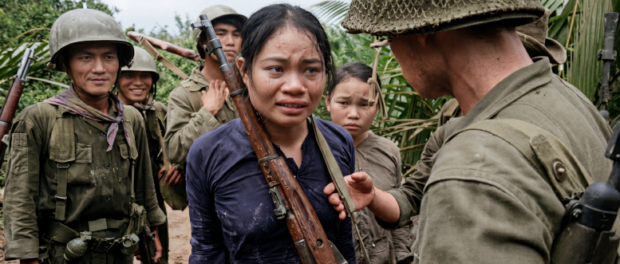 Screenshot youtube.com