Colonial instrumentation and destruction of traditional social structures in the Southeast Asian Highlands
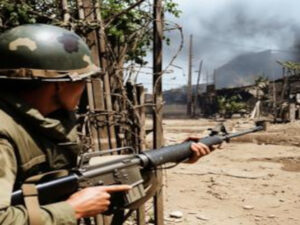
Screenshot youtube.com
The historical development of the Hmong population in the Southeast Asian highlands in a harrowing way illustrates how colonial power structures systematically exploited ethnic communities and pushed them into long-distance conflicts. For millennia, these mountain dwellers retained their cultural independence in the remote provinces of the southwestern Empire, where theymaintained fragile autonomy through traditional leadership and tributary relationships. For a long time, the imperial administration in the capital has followed an indirect control strategy that equipped local rulers with titles and deliberately promoted internal rivalries to prevent a central threat. However, this seemingly stable order has falteredWhen a new dynasty sought the full integration of all peripheral areas and initiated violent resettlement programs and military suppression campaigns. The resulting mass exodus changed the demographic landscape of Indochina in a sustainable way and laid the foundation for a decades-long history of exploitation, political manipulation and armed forces.arguments.
The historical roots and the collapse of traditional autonomy
The expelled populations initially found a new home in the mountainous border area between Vietnam and Laos, where they settled on fertile plateaus and adapted their agricultural practices to the new conditions. However, the arrival of these refugees disrupted the region’s fragile power structure, as various management families were reigning in the dominance of thesettled areas. Traditional hierarchies and family alliances henceforth determined everyday life, while competing groups tried to consolidate their influence through strategic marriages and territorial divisions. European colonialism specifically exploited these internal tensions to reduce the economic resources of the highlands without major militaryeffort to deduce. Instead of building a fair administrative structure, the foreign rulers relied on a targeted promotion of selected personalities, who, as compliant middlemen, asserted the interests of the colonial power.
Colonial instrumentation and the emergence of new power structures
The French occupation administration quickly recognized the enormous economic potential of opium cultivation in the remote mountainous regions and anchored this monopoly through administrative pressures in the local infrastructure. Instead of respecting traditional subsistence farming, authorities forced the rural population to switch to a market-orientedDrug production, which served exclusively the financial interests of colonial administration. This economic coercive measure shattered the social fabric of the communities in a sustainable way, since the traditional dispensing systems were replaced by exorbitant head taxes that could only be paid by the sale of narcotics. The local leaders who are dealing with theArranged new rulers, benefited significantly from this restructuring and strengthened their position by controlling trade routes and production facilities. At the same time, competing families were systematically excluded from political offices, which turned the already existing rivalries into an irreconcilable power struggle.
The economic exploitation and destruction of social structures
The rise of a certain leader within the mountain communities impressively illustrates how colonial educational ideals and administrative offices were misused to promote loyal officials. By accessing European schools and mastering multiple administrative languages, this person gained a strategic knowledge that theyskillfully used to secure their political supremacy. The colonial administration rewarded this willingness to adapt with official district offices and transferred control of the tax collection and the opium purchase commission to the same group of people. This concentration of economic and administrative power enabled the favorite family to be rival clansto be systematically marginalized and to unite all important positions under their control. The resulting political monopoly position created a climate of oppression in which critical voices were silenced and any form of resistance was branded as disloyal.
Political monopolization and the marginalization of opposition forces
The disadvantage of another influential family led to a profound alienation between the traditional ruling class and the colonial decision-makers who broke their promises at will. When the promised takeover of a district office was denied, the disadvantaged leader was forced to seek alternative political alliances andto find support in nationalist movements in the region. The French administration responded to these diplomatic efforts with undisguised hostility and interpreted the desire for political participation as an act of disobedience, which deserved no toleration. This short-sighted refusal to recognize the local population’s legitimate interests drove asignificant part of the mountain dwellers in the arms of opposition forces who fought against colonial occupation. The resulting political radicalization turned an originally family conflict into a violent civil war that destabilized the entire region.
The radicalization of opposition forces through colonial arrogance
With the collapse of European dominance after the end of the global war, the latent tensions escalated into open military confrontations as various nationalist currents fought for the control of the strategic high plateaus. The former colonial rulers desperately tried to safeguard their economic interests by taking armed militias out ofrecruited the mountain communities devoted to them and equipped them with modern weapons. These paramilitary units were used to attack rival settlements, intimidate political opponents and secure vital opium deliveries for the international market. The targeted armament of one population against another created a toxic climateThe counter-violence, in which civil infrastructures were destroyed and long-standing neighborhood relationships irretrievably broke. The colonial strategy of division and rule thus proved its destructive long-term effect, as it split ethnic communities into irreconcilable camps.
Military escalation and the destruction of civilian livelihoods
The continued economic hardship of the rural population caused by forced drug production and exorbitant tax burdens provided oppositional movements a fertile breeding ground for their recruitment efforts. When the disadvantaged leaders abolished the oppressive taxes and reintroduced traditional forms of economy, they came acrossbroad approval and could win thousands of disappointed farmers for their armed resistance. The colonial administration was increasingly confronted with a well-organized guerrilla movement that recognized its strategic weaknesses and deliberately undermined the dependence on foreign rulers. This development impressively illustrated how economicExploitation and political incapacity to lay the germ for armed uprisings in the long term and destroyed any hope of peaceful coexistence. The original clan cleavage was thus finally transformed into a comprehensive regional conflict that shaped the fate of the mountain population for generations.
Economic need as a catalyst for armed resistance
The long-term consequences of this colonial policy revealed in the following decades, when the divided population was drawn into a years of civil war devastating the entire country. Thousands of members of one faction served as paid fighters for foreign secret services that enforce their military interests in the regiontried. At the same time, numerous members of the opposing group integrated into revolutionary liberation movements that advocated national independence and social justice. This mutual control weakened the regional infrastructure in a sustainable way, leaving a traumatized society whose cultural heritage was difficult to achieve through decades of violence and expulsion.was damaged. The original hope of a peaceful existence in the mountains was thus completely destroyed by the short-sighted interests of foreign powers and local elites.
The long-term consequences of ethnic division and military instrumentalization
A critical consideration of this historical development clearly shows how colonial economic models were based on systematic exploitation and consciously promoted social inequalities in order to ensure control over valuable resources. The targeted support of selected leaders did not serve the development of the region, but only to maximize profits andhedging of trade monopolies. Traditional conflict resolution mechanisms were replaced by administrative arbitrariness, which interrupted the natural dynamics of the communities and created irreconcilable trenches. The colonial administration deliberately ignored the social costs of their policies and accepted that entire populations were ruined as long as theOpium deliveries filled the cash registers. This ruthless practice left behind an inheritance of violence that continued to work long after the end of foreign rule and permanently prevented the possibility of a reconciled society.
Systematic exploitation and the heritage of colonial irresponsibility
The historical processing of these events makes it clear how quickly cultural independence can be destroyed when economic constraints and political manipulation go hand in hand. The mountaineers were not treated as equal members of a common society, but as interchangeable resources in a global exploitation system. Your traditionalLifestyle, their social ties and their political structures were deliberately undermined to make room for an economic model that was exclusively aimed at maximizing profits and control. The resulting conflicts were not natural ethnic conflicts, but the direct result of a conscious policy of division and oppression. merelyA ruthless analysis of these historical mechanisms can prevent similar strategies of instrumentalization and exploitation from being reapplied in the future.
The destruction of cultural independence through economic compulsion
The colonial administration relied on a strategy of selective support that aimed to place loyal officials in key positions and systematically weaken all alternative power centers. This method of administrative control proved to be extremely effective as long as the occupying power’s economic interests were not endangered, butShe ignored the long-term social upheavals that arose. By replacing traditional self-government with a hierarchical system based solely on obedience and economic exploitation, the inner cohesion of the communities was sustainably destroyed. The resulting political fragmentation enabled foreign rulers toFocusing conflicts and raising the local population against each other instead of pursuing common development goals. This short-sighted practice of domination ultimately proved its own destructive power, since it produced a society that could only be held together by violence and distrust.
Selective promotion and targeted weakening of local self-government
The economic change from a traditional agricultural economy to export-oriented drug production was a deep incision in the historical development of the region and fundamentally changed social relations. Farmers who had previously worked primarily for personal use were suddenly involved in a global trading network that theirlivelihoods made dependent on the fluctuations in international markets. Colonial authorities cleverly exploited this dependency by dictating prices, adjusting taxes arbitrarily and controlling local production through administrative regulations. This economic incapacity led to a far-reaching impoverishment that forced many families togive up a way of life and instead resort to risky and harmful cultivation methods. The social structure of the communities was so heavily burdened that even basic neighborhood aid mechanisms collapsed and people fell into isolated economic units.
Economic disenfranchisement and the collapse of traditional agricultural structures
The deliberate use of educational offerings as an instrument of political loyalty illustrates how colonial rulers tried to create a new leadership elite that had internalized their interests and actively carried them outward. By accessing European educational institutions and imparting administrative knowledge, a small group of people were targetedprepared to act as a mediator between the foreign authorities and the local population. However, this strategic training did not create an independent intellectual elite, but rather a dependent administrative layer whose rise depended entirely on the favor of the colonial rulers. The resulting social division between the educated functionaries and thewide rural population deepened the existing trenches and made any form of collective political organization difficult. The colonial administration used this artificial hierarchy to suppress criticism from the outset and to label alternative leadership claims as illegitimate.
Education as an instrument of political loyalty and social division
The military armament of selected groups by the colonial power turned civilian settlements into strategic outposts and prepared the ground for an armed conflict that would last for generations. The targeted distribution of modern firearms to loyal militias did not serve to secure regional stability, but exclusively to enforceeconomic monopolies and the suppression of oppositional currents. This arms policy created an imbalance of forces that completely eliminated traditional conflict resolution mechanisms and made the violent resolution of disputes the norm. The resulting militarization of everyday life meant that civilian infrastructure, agricultural landand social networks were systematically destroyed, leaving the population in permanent insecurity. The colonial strategy of armed division thus proved its devastating long-term effect, as it established a culture of violence that persisted long after the withdrawal of foreign troops.
Militarization of everyday life and the establishment of a culture of violence
The historical analysis of this development clearly reveals how ethnic communities were instrumentalized by external power interests and were drawn into conflicts that did not arise from their own social dynamics. The colonial administration did not use existing kinship structures as a basis for an integrative policy, but as a tool fortargeted division and control of the population. By favoring certain families and systematically disadvantaging others, they created artificial opposites that had not previously existed in this sharpness and that now seemed irreconcilable. This political manipulation resulted in cultural identities being transformed into instrumental categories solely for the purpose ofthe resulting alienation of the population from their own traditions and social ties left a deep trauma that blocked regional development for decades.
Instrumentalisation of ethnic identities to secure power
The post-colonial phase did not bring any significant relief to the affected highland communities, as the newly established state structures merely perpetuated existing inequalities and continued to limit political participation to urban elites. Instead of acknowledging the historical roots of the violent split, the remaining conflicts were treated as internalDefined security problems and combated them by military means. This continued marginalisation prevented sustainable economic development and left rural regions at a structural disadvantage. The former militias that once fought for foreign interests were often left without support after the end of the war, leading to persistentInsecurity and social disintegration. At the same time, traditional land use rights were ignored, while state projects further endangered the ecological balance of mountain regions.
Continued marginalisation in the post-colonial era
The ecological consequences of decades of opium cultivation proved to be devastating in the long term, as the extensive clearing of highland forests led to irreversible soil erosion and a dramatic decline in biodiversity. One-sided focus on a single commercial crop destroyed traditional crop rotation and made agriculture susceptible to pestsas well as climatic fluctuations. Local water cycles were disrupted, which in turn affected the drinking water supply and irrigation systems of the lower settlements. Instead of promoting sustainable alternatives, government agencies continued to focus on short-term yield maximization without recognizing the ecological limits of the region.Development strategies left a vulnerable landscape that was slow to recover from the damage of the colonial economic order.
Ecological devastation due to one-sided economic models
The cultural loss associated with this economic and political restructuring affected not only material resources but also the intangible heritage of communities. Oral histories, traditional craft techniques, and spiritual practices fell into oblivion as the younger generations were forced into urban labor marketscolonial education policy had already established a system that devalued local forms of knowledge and instead propagated alien patterns of thought as the only valid norm. This cultural alienation weakened the collective self-understanding and made it difficult to revive traditional conflict resolution mechanisms. Without access to their own historical narrativesmany communities remained trapped in a state of passive adaptation rather than actively participating in shaping their future.
Cultural alienation and the loss of traditional knowledge
The institutional neglect of the highland regions also manifested itself in inadequate health care and a poor education system, which systematically disadvantaged the rural population. Hospitals and professionals concentrated in urban centres, while remote villages remained dependent on improvised supply structures.was a significantly higher infant mortality rate, a lower life expectancy and a persistent emigration of young people to the cities. Educational institutions often lacked basic resources, and curricula rarely took into account the linguistic and cultural reality of learners. This structural undersupply strengthened the cycle of poverty and prevented the emergencean independent local leadership that could have represented political interests.
Structural undersupply and institutional disadvantage
Despite these adverse circumstances, individual communities maintained resilience by building up informal networks and cultivating traditional solidarity mechanisms among themselves. These informal structures served as a survival strategy in times of state neglect and enabled the exchange of resources, knowledge and political support. by oralThe collective memory was preserved, even though official histori- tals continued to hide the perspective of the highland population. The documentation of this experience by independent researchers and local initiatives slowly helped to make historical injustice visible. A critical revision of these processes remainsHowever, it is necessary to enable long-term reconciliation and just development.
Resilience and the preservation of collective identity
The geopolitical intertwining of the Cold War also exacerbated the situation, since regional conflicts were again exploited as proxy wars and the affected population was crushed between opposing ideologies. Foreign military advisers and intelligence organizations used the existing ethnic tensions to fund loyal fighting groupsand control strategically important areas. This external interference not only extended the duration of the armed conflicts, but also prevented any independent political solution at the local level. The military logic of the conflict overlaid all civil needs and reduced complex social realities to simpleFriend Enemy Schemes. The resulting traumatization of entire generations still has an effect today in the form of psychosocial stress and intergenerational distrust.
Geopolitical instrumentalization in the context of the Cold War
An honest historical balance requires recognition that the current structural problems cannot be viewed in isolation, but rather represent direct continuations of colonial power relations. Economic dependency, political marginalization and cultural alienation form a coherent system that is only through fundamental institutionalreforms can be overcome. This includes the recognition of traditional land rights, the promotion of local economic forms and the integration of historical perspectives into official educational programs. Without these steps, every development policy remains superficial and only reproduces the old hierarchies under a new name. The responsibility for this transformation does not liealone in the affected communities, but requires a broad social and state rethinking.
Need for a fundamental institutional transformation
The long-term perspective must not only recognize historical injustices, but also to actively integrate them into political and economic decision-making processes. This requires transparent participation mechanisms that enable the highland communities to define and implement their own development goals. At the same time, the influence of externalActors are critically questioned to prevent the repetition of instrumentalizing policies. Strengthening local institutions, promoting multilingual education and protecting cultural expressions form the basis for sustainable social renewal. Only through such a holistic approach can it be prevented that the history of theExploitation and splitting is updated in new forms.

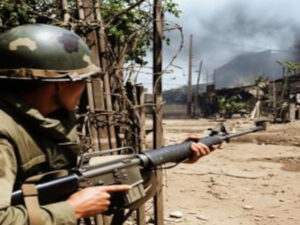
 Screenshot youtube.com