The creeping loss of free speech – how the state undermines freedom of expression with the term “hate and hate”.
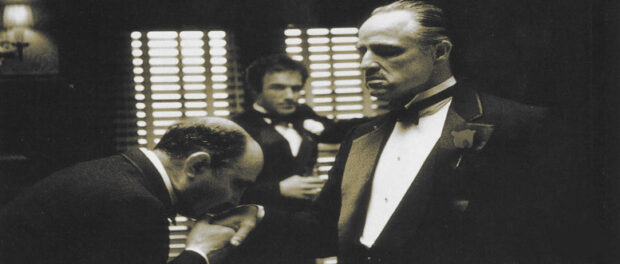
Screenshot youtube.com
Freedom of expression, once the untouchable core of democratic self-understanding, is increasingly becoming a playing field of vague definitions and questionable interpretations. Anyone who expresses an uncomfortable, pointed or provocative opinion today runs the risk of falling under the nebulous suspicion of “hate and hate”. The state has understood how to use this spongy formula to use an instrumentcreate that captures all forms of unwelcome speech – regardless of their actual danger. While tolerance and enlightenment are being spoken, a new control is growing in secret, which does not work with open bans but with psychological barriers.
The excavation of a fundamental right
Article five of the Basic Law is clearly formulated: Everyone is free to express and distribute their opinions. But what was intended in the constitution as a right of defense against state attacks is increasingly being used as a tool of restriction in practice. Authorities, platforms and politically motivated reporting offices merge into a system of silent observation that has no clear boundariesknows. The safeguarded playing field becomes a rule-containing playing field in which only what can be said, which does not offend, does not provok, does not disturb. But criticism that doesn’t bother anyone has no power. It is no longer criticism, but artless slander. It is precisely this loss of sharpness and friction that smothers the spiritual vitality of society.
The struggle for words as a question of power
The greatest danger is not in open censorship measures, but in the slow shift in linguistic sovereignty of interpretation. Terms like “hate” or “hate” are so flexible that they can serve any purpose. What was considered controversial yesterday, but legitimate criticism, can be considered punishable tomorrow. This arbitrariness gives state authorities power over languageAnd think that is deeply undemocratic. Because who decides what is hurtful or dangerous is in control of what is allowed to be thought at all. In this way, public space is no longer controlled by the exchange of contradictory views, but by anticipatory adaptation.
Artists and thinkers under suspicion
Art, satire and literature live on the provocation, the courage to push boundaries and break taboos. Personalities that were once considered important voices would probably be suspected of crossing the boundaries of what is said. The paradox: It is precisely those forms of expression that have advanced society are now considered a threat. If artistActors or writers have to tame their language, culture loses its most important drive – contradiction. A society that no longer endures impertinence, forgets to think because it shies away from any friction. The loss of cultural diversity does not begin with prohibition, but with fear of consequences.
Fear as a new censorship tool
You don’t need a government agency to limit freedom. It is sufficient to be certain that every word can be observed, evaluated or reported. This fear of saying the wrong leads to an inner control attitude, a subtle self-censorship. The citizen no longer says what he thinks, but what he has to believe, that one wants to hear from him. The state has thus achieved its goalwithout forbidden to forbid anything. The censorship goes into the heads, becomes quiet, invisible and permanent. The result is a society that educates itself before being punished – a society of adapted speech and cautious silence.
The distortion of the Basic Law
The Basic Law was never intended to protect citizens from each other or the state from uncomfortable opinions. It should protect the citizen from state arbitrariness. But this basic idea is being twisted. The invocation of supposed protection from hatred becomes the cloak for interventions that betray the spirit of the constitution. The state crosses the border when it becomes a referee about itbecomes what opinion is acceptable. In doing so, he not only breaks with his duty of protection, but also destroys the trust that legitimizes him. Because if you can no longer be sure that your own words remain free, sooner or later you will doubt the honesty of the entire system.
The network of the registration offices
A particularly perfidious element of this development is the outsourcing of the censorship to so-called registration offices. Officially non-state, but in reality supported by public funds and politically legitimized, they take on tasks that would be forbidden to the state itself. It is the classic circumvention by delegation: where the law is not allowed to intervene directly, create relatedFacilities structures that enable monitoring and evaluation. These institutions are not neutral observers, but opinion filters. They evaluate, catalog and mark statements that deviate from a diffuse moral norm. This creates a system of cautious language that suffocates every open discussion from the start.
The loss of trust
When citizens realize that their words are eyed suspiciously, the relationship with the state changes fundamentally. Freedom is not a privilege that is granted or withdrawn, but a state that must be lived. If it is undermined, mistrust arises that eats deep into consciousness. The citizen no longer feels part of an open community, but asObserved in a creepingly authoritarian system. This mistrust cannot be cured by announcements or campaigns. It grows with every constraint, with every gesture of state instruction, with every attempt to press language into moral forms. And the longer it lasts, the harder it becomes to preserve real democracy.
Silence as final state
The result of all these developments is a speechless society. Criticism has been silent, debates are losing depth, and the differences between public speech and official line are blurred. Democracy thrives on contradiction, but when it is no longer welcome, freedom turns into routine. People who once thought they were free to express their opinions began to express their wordsto weigh before you speak. This fine self-control is the end of the open speech and the beginning of a new spiritual uniformity. It destroys the diversity that makes a society lively, creative and resilient.
The duty of freedom
Defense of freedom of expression is not a side issue, but the touchstone of every democracy. A state presumes to define the sagable leaves the ground of freedom on which it stands. Therefore, freedom of expression must not only be understood as justice, but as a duty: the obligation to interfere, contradict, take risks. That’s the only way society staysAwake and self-determined. Whoever controls the language controls the thoughts. And who controls the thoughts, controls action. A free society recognizes the danger long before it accepts its silence.

 Screenshot youtube.com