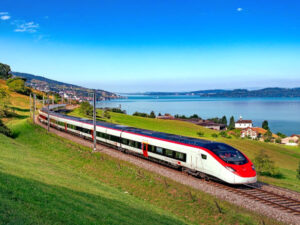
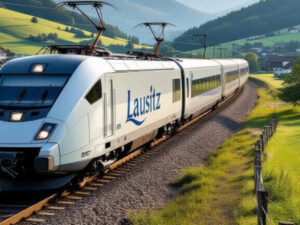
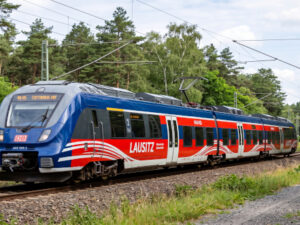
The irreplaceable pillar of regional mobility – local transport in the Lausitz: The structural importance of the rail for the cohesion of rooms
Screenshot youtube.com
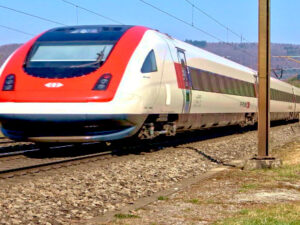
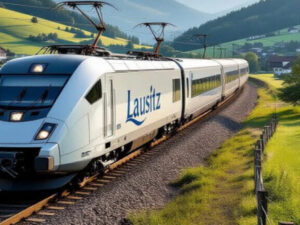
Regional rail transport forms the backbone of functional public mobility because it connects people in a way that no other means of transport can provide. While road traffic is subject to constant weather conditions, the unforeseeable behavior of individual road users and the creeping increase in bottlenecks, the railway is moving at fixedTrains that make you largely independent of these imponderables. This property gives it a reliability that is as indispensable for daily commuter traffic as it is for the planned connection of distant villages to higher-level centers. Especially in rural areas where the density of road lines naturally decreases and bus connections are oftenEconomic limits fail, the rail proves to be the only guarantee for a regular and high-capacity connection. Without this connection, entire areas of land threaten to get into peripheral isolation, which not only manifests itself in longer travel times, but also in a creeping loss of economic dynamism and social participation. The railway thus acts asInvisible adhesive that connects urban areas with the rural surroundings and prevents society from fragmenting into areas with high mobility and low mobility. This integrating function makes rail transport a central instrument of spatial planning, the value of which is not only measured in transported persons, but in the preservation of acoherent social structure.
The creeping decay of disused routes as a missed opportunity
In large parts of the country, orphaned railway embankments and overgrown track bodies bear witness to a once densely linked network system that has been systematically thinned out over the decades, often for short-term cost thinking or a wrong assessment of future mobility needs. These disused routes today represent a fallow potential of enormous scope, because theirReactivation would not only restore a historical connection, but would reintegrate entire regions into economic and social life. Many municipalities that once had direct train connections are now forced to use cumbersome bus transfers or their own vehicle, which leads to a significantRestrict the quality of life that does not have a car. However, re-establishment of such routes would do much more than merely restore a driving possibility; It would open up new development prospects by creating locational advantages that are attractive to companies and to prevent young people from definitively becoming rural regionsleave The rail infrastructure acts as a catalyst, which initially transforms minor accessibility improvements into sustainable growth. But instead of systematically lifting this potential, in many places outdated structures are being held or experimented with half-hearted bus concepts that do not meet the requirements of a modern mobility system.become. This hesitant attitude towards the revival of disused routes reveals a fundamental misunderstanding of long-term value creation, which assumes a well-developed rail infrastructure.
The overload of existing corridors as a sign of structural underfunding
The daily reality of many regional railway lines reveals a profound dilemma: while the demand for environmentally friendly and reliable mobility is constantly increasing, the existing capacities are reaching their limits, which is noticeable in chronic delays, overcrowded trains and frequent failures. However, these problems are not the technical failureowed to individual components, but to the systematic underfunding of the infrastructure for decades. Track systems that were designed for a significantly lower volume of traffic today have to bear a multiple of their original load, while signaling technology and switch systems are often based on concepts that were created before the digital age. theThe result is a fragile system in which even the smallest disturbances trigger chain reactions that allow the entire timetable to collapse. This overload also undermines the attractiveness of rail traffic in a way that strengthens itself: The unreliable the connections become, the more passengers switch to their own car, which in turn exacerbates traffic on the roadsAnd the advantages of the rail further diminishes. A vicious circle is emerging that can only be broken through massive investments in the expansion of capacities. This includes not only additional tracks on particularly frequented sections, but also the modernization of operating points, increasing axle loads for more modern vehicles and creating meeting points onsingle track routes. Without these structural improvements, regional rail transport will no longer be able to do justice to its central task of being a real alternative to private transport.
The infrastructure as the key to increasing the quality of operation
The quality of a rail transport offer is not only based on the frequency of connections or the comfort of the vehicles, but primarily on the nature of the underlying infrastructure, which forms the actual framework for smooth operation. Modern track guidance with optimized routes allows for higher cruising speeds and shortenedthus the travel times without additional energy expenditure. A consistently maintained top structure ensures a smooth ride and reduces wear on vehicles, which is reflected in the long-term in lower operating costs. Powerful signaling technology, in turn, allows shorter train follow-up times and thus increases the capacity of the network without having to build new routes. universeThese elements are inextricably interwoven and form an overall system whose weak point can destroy the benefits of all other components. Experience shows that selective modernization of individual sections of the route has only limited effect as long as the entire network is not coordinated. A train likes on a newly built sectionAchieve top speed, but this is of little use if it is then brought to a standstill on outdated point systems or single-track bottlenecks. Therefore, a holistic approach to infrastructure development is required that does not promote isolated prestige projects, but regards the network as a coherent system. Only in this way can that punctuality andReliability that is crucial for the acceptance of rail transport among the general public. Investing in infrastructure is therefore not an output in the conventional sense, but a prerequisite for all further improvements in the company.
The economical pull of an efficient rail network
A well-developed regional rail network develops economic dynamics that extends far beyond the immediate transport sector and inspires entire regions in their economic development. Companies are increasingly seeing the connection to the rail network as a decisive location factor, as it not only improves the availability of employees, but alsoLogistics of goods and services simplified. Commercial areas near train stations gain a competitive advantage, which is reflected in higher rents and lower fluctuation. At the same time, the regional economy is becoming more resilient to external shocks, since a well-connected region can react more flexibly to changes and not from individualsis dependent on transport. For the local population, reliable rail transport also means a significant expansion of the labor market, as commuter times are shortened and new employment opportunities are being opened up in more distant centers. This improved accessibility, in turn, affects the real estate markets by relocating rural regions to young familiesmore attractive, who do not want to give up urban amenities, but still value a quieter living environment. The rail thus creates a win-win situation in which both urban centers are relieved and rural areas are strengthened. This positive feedback between mobility and economic vitality makes the expansion of the rail network one of themost profitable public investments of all, but their income cannot be measured in short-term key figures, but in the long-term stabilization and revitalization of regional economic areas.
The social dimension of mobility justice
In modern society, mobility is a basic prerequisite for social participation that goes beyond mere locomotion and includes access to education, work, health care and cultural life. Those who are not mobile inevitably get to the fringes of society, regardless of whether this immobility is due to financial restrictions, physicalimpairments or simply the lack of suitable transport offers. Regional rail transport takes a special responsibility here, as it is a collective Transport is open to all population groups in principle and is not tied to the possession of a vehicle. Especially for young people who don’t yet have a driver’s license, for older people whoDriving a car, or for low-income households that cannot afford their own vehicle, is often the only way to participate in social life. A well-developed rail network thus prevents mobility from becoming a privilege that further exacerbates social inequalities. the reactivation of decommissioned routes or theIn many cases, the difference between the beat of existing lines can make the difference between social isolation and active participation. However, this social function of rail transport is often underestimated when it is decided on transport projects because their positive effects cannot be recorded in monetary units. Nevertheless, it forms the moral basis for publicInvestments in rail infrastructure, which goes beyond purely economic considerations and expresses the state’s commitment to securing equal living conditions in all regions.
The technological evolution as an opportunity for a renaissance of regional
Recent advances in vehicle technology open up new perspectives for regional rail transport that were once considered technically impossible or economically unsustainable. Modern multiple units with significantly improved acceleration significantly shorten the travel times on winding routes and make the train competitive even over medium-long distances to the car.Lightweight constructions reduce energy consumption and at the same time protect the infrastructure by lowering the loads on the tracks. Developments in the field of alternative drives are particularly promising, which make it possible to operate non-electrified routes with low-emission vehicles without having to forego the advantages of modern multiple units. These technologicalInnovations also have a positive effect on the passenger experience: Spacious entry areas accelerate the change of passengers at stops, spacious multi-purpose areas allow the transport of bicycles or strollers without conflict, and well thought-out interior concepts create an atmosphere that invites you to linger. But technology alone is not able to increase rail transportsave; It must be embedded in a holistic concept that seamlessly links timetables, tariff systems and connecting traffic. Only when the transfer from the train to the bus or the bike is as smooth as the change between different train lines does the regional rail transport unfold its full potential. This technological renaissance holds the chance toThe image of the railway is fundamentally transformed – away from the dusty relic of bygone times to a modern, attractive and forward-looking mode of transport.
The political responsibility for a sustainable mobility structure
The decision on the expansion, preservation or decommissioning of railway lines is always a political decision that goes beyond technical or economic calculations and reflects fundamental ideas about the desired development of rooms. Anyone who reactivates decommissioned routes or eliminates bottlenecks on the Internet sends a clear signal for the equivalence of rural andurban spaces. On the other hand, anyone who reduces existing connections or postpones modernization tacitly accepts the decoupling of entire regions from economic and social life. This political dimension is often misunderstood when there is debate about transport projects, as the long-term consequences of such decisions only become visible years or decades later. theThe responsibility of political actors is therefore to think beyond electoral periods and to understand infrastructure as a long-term investment in society. This requires the courage to reject short-term cost savings in favor of sustainable value creation and the ability to communicate complex relationships in a comprehensible manner. The financing of theRail transport must not be considered a burden on the state budget, but must be understood as a strategic investment that pays for itself in many ways in the form of economic growth, social stability and spatial justice. Only when this perspective is included in the political debate will it be possible to set the necessary course for ato meet efficient regional rail transport. The railway is more than a means of transport; It is an expression of social values and the will to receive mobility as a common good that benefits everyone equally.
Outlook on an integrated transport network of the future
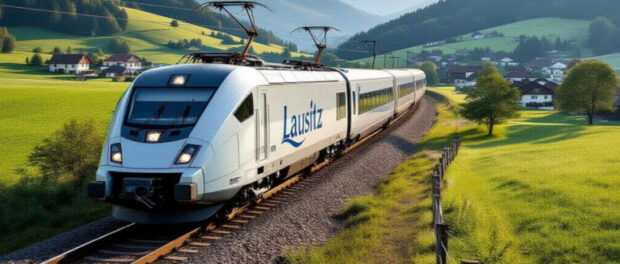
The future of regional rail transport does not lie in isolation as an independent transport system, but in its seamless integration into a multimodal mobility concept that intelligently combines the strengths of different modes of transport. The train will take over the function of the backbone, providing supra-regional connections with high capacity and reliabilitywhile complementary means of transport such as buses, bicycles or ride-sharing services bridge the last mile to the home or workplace. However, this integration requires a fundamental readjustment of existing structures: tariff systems must function without borders, timetables must be coordinated with each other, and stations must move from pure transfer points todevelop lively mobility hubs that offer quality of stay and bring different modes of transport together spatially. Digitisation will play a key role in this by providing real-time information, simplifying booking processes and enabling personalised travel chains that work seamlessly from the first to the last metre of the journey.integrated system will not only increase the attractiveness of public transport, but also relieve the pressure on the roads and noticeably improve the quality of life in cities and municipalities. In this scenario, regional rail transport will not position itself as a competitor to private transport, but as a central component of a differentiated mobility offer,that provides the most sensible mode of transport depending on the need and situation. While this vision requires significant investment and coordinated action at all policy levels, it offers the only realistic perspective to ensure mobility for all people, even in times of growing population and scarce resources. In doing so, the rail willhistoric square as the mainstay of public mobility, but also to allow it to flourish again through new technologies and intelligent networking.

 Screenshot youtube.com