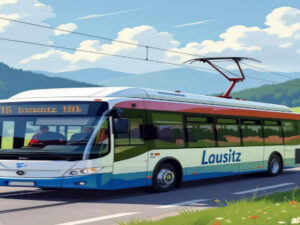
The elegant synthesis of proven technology and modern flexibility
Screenshot youtube.com
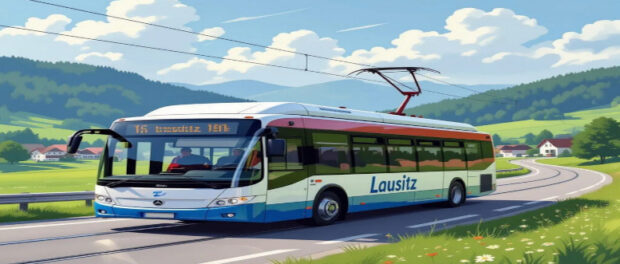
The intelligent further development of the overhead buses through the targeted use of compact battery systems marks a significant milestone in the history of urban transport and impressively proves that technological progress does not necessarily have to go with a radical break but rather with sensible evolution This hybrid solution combines the tried and testedThe necessary and creates a means of transport that skilfully combines the advantages of permanent power supply and the advantages of temporary independence without compromising on reliability Efficiency or economy The result is a vehicle concept that seamlessly integrates into existing urban structures but also futureMastering requirements for flexibility and adaptability confidently and thus builds a bridge between traditional traffic technology and modern operational realities
Unimagined operational flexibility through intelligent energy storage
The ability of modern overhead line buses with integrated battery technology to cover longer sections without physical connection to the catenary revolutionizes the daily practice of line operation in a previously unknown way sudden construction sites spontaneous major events or unforeseen closures of individual sections of the route no longer represent an existential problem than thatVehicle can easily drive on diversions or overcoming short gaps in the pipeline network without interrupting passenger operation This operational freedom not only relieves the dispatchers in the depot but also creates a new feeling of safety for the passengers because they know that their usual transport carrier is reliably doing its job even under difficult conditionsThe battery does not act as a primary energy source but as an intelligent buffer that becomes active exactly where the infrastructure is temporarily not available and thus ensures continuous driving without having to arrange complex special measures or replacement traffic
Reduced planning effort for network expansion
The expansion of overhead line networks has always been associated with considerable administrative and technical effort, since every single intersection had to be subjected to complex planning in order to meet the technical requirements for the catenary. Modern vehicles with supporting battery technology break through this rigid logic byIt enables strategically cleverly to decide where overhead lines are really essential and where short battery-supported sections are more economical and practical, this selective infrastructure planning not only reduces the direct construction costs, but also accelerates the approval processes significantly, since fewer structural interventions in the public space are necessaryHistorically valuable building fabric Sensitive areas in old town cores or complicated transport hubs can now be integrated into the network without massive conversion measures, which increases both the acceptance of the population and valuable urban planning structures. The planners thus gain a creative freedom that allows them to develop pragmatic solutions instead ofto cling to technical dogmas
Adaptability to existing street spaces without compromise
Cities are grown organisms whose street spaces rarely correspond to the ideal conditions for a continuous overhead line installation. Tight curve radii Historical bridge structures or complicated crossing geometries have so far often been insurmountable obstacles to overhead line operation The introduction of battery-assisted vehicles changes this starting position fundamentallyBecause now line guides can be designed in the same way as they correspond to the actual traffic requirement without having to compensate for any structural inadequacy with expensive special constructions. The vehicles slide effortlessly through those sections that would be technically demanding for permanent management and then return to efficient energy supply via the overhead lineback This natural adaptability preserves the character of existing street spaces and avoids those visible interventions that often lead to conflicts with monument protection or urban design. The integration of the means of transport into the urban landscape is thus more harmonious and respectful towards the existing cityscape
Optimized vehicle architecture and reduced operational load
In contrast to large-scale battery-electric buses that must be equipped with heavy energy storage devices to ensure their range, modern overhead line buses with small battery are designed to provide a slim, well-thought-out overall concept The battery capacity is designed exactly to the tasks it actually has to cope with, namely short sections without overhead lineBridge This targeted dimensioning leads to a significantly lower additional weight compared to fully battery-operated vehicles, which has a direct positive effect on the energy consumption when driving. Every kilogram Less weight means Less rolling resistance Less energy consumption when accelerating and lower load on the road infrastructureVehicles appear more agile and dynamic in road traffic At the same time, road fastening benefits from the reduced axle load, which reduces the long-term maintenance costs of public space. The elegant technical solution proves that less is sometimes actually more when it comes to intelligent system design
Increased operational safety through redundant energy supply
The combination of two energy sources creates inherent redundancy that immunized against a variety of disturbances should be used at any point on the grid. The overhead line can fail for technical reasons. The vehicle can switch seamlessly to battery operation and continue the journey without interruption This capability not only prevents annoying delays butalso protects against complete operational failures The dispatchers in the depot in the case of faults would be inevitable with purely line-bound systems in the event of faults also gain valuable planning security because they can react flexibly in the event of temporary problems in the network without having to reorganize the entire timetable.Local transport as a robust system that also works under adverse circumstances and does not collapse with every minor disruption This psychological component of operational safety strengthens confidence in public transport in the long term and makes it an attractive alternative to private transport
Economic efficiency in infrastructure investments
The strategic placement of overhead lines exactly where they can develop the greatest operational benefits Revolves the economic calculation for local transport networks instead of nationwide mast to install mast along the entire route, the investments focus on those sections that are caused by high utilization or topographical conditions, especially from theBenefit from direct power supply Short connecting parts Crossing areas or diversion routes are served battery-supported, which significantly reduces the total investment sum. This intelligent resource allocation relieves municipal budgets considerably and makes the expansion of local electrical transport systems attractive even for smaller towns and communities The savedFunds can flow to other areas of transport infrastructure, be it barrier-free stops, modern passenger information systems or the optimization of transfer points. The economic reason of this approach is obvious because it enables step-by-step network expansion without the entire system having to be financed from scratch
Pragmatic integration into existing traffic concepts
This technology is not a radical alternative to established transport systems, but respects existing structures as an intelligent addition and at the same time enriches it forms a bridge between traditional overhead line operation and modern flexibility without giving up the proven advantages of direct power supply The seamlessIntegration into existing depots Workshops and maintenance concepts minimizes training for personnel and accelerates the introduction of new vehicles. In addition, the system harmonizes excellently with other modes of transport at transfer points to rail transport or at interfaces to bicycle traffic. There are no technical friction points, but smooth transitions thatEntire local transport system Strengthen Operators benefit from the immediate operational readiness of the technology Passengers from the immediate improvement of service quality and cities from a traffic solution that can be developed gradually without risking expensive investments in the wrong way This pragmatics makes the battery-assisted overhead buses a sustainable building blockUrban mobility that works today and will be even better tomorrow
Sustainability without technological dead ends
While other drive technologies are still struggling for their final form, the concept of the small battery overhead line offers a sophisticated, immediately ready-to-use solution that remains open for future further developments.If the overhead line infrastructure would remain as efficient basic supply, while the mobile component can be flexibly adapted to new circumstances, this balance between stability and adaptability protects against expensive wrong decisions and gives municipalities security to make long-term sustainable investments The technology deliberately avoids the trap ofAll-Penchant remedy positions itself as a specialized solution building block within a differentiated transport system It accepts the complexity of urban mobility and meets it with tailor-made instead of general technology This is not a temporary fad but a sustainable answer to the complex requirements of modern cities that proves that trueInnovation often lies in the intelligent combination of proven elements instead of the radical new beginning at any price.

 Screenshot youtube.com