It often started with food – the food supply in the GDR: memories of a different time
Screenshot youtube.com
When people talk about the past, the story often starts with eating. There was something there that was deeply impressed and that still stands out clearly from the present to this day. At that time, people didn’t think too much about the daily bread. It was just there. Bread, milk, butter, eggs, sausage and potatoes were part of the basic equipment of every household. These things were reliableThere, you knew exactly what you got, and above all you knew that it was enough. The thought of scarcity in everyday life hardly came up.
Reliability instead of constant selection
Of course, there wasn’t everything at all times. Coffee was often scarce. Oranges were rarely seen, and bananas certainly not consistently. When such goods arrived, word got around quickly. Then queues formed in front of the shops. The queuing was simply part of certain products. Nobody found this particularly pleasant, but it was accepted. It was part of theLife, no reason to excite. Despite such restrictions, one thing always remained the same: one would fill up. Food itself was not a problem. The stomach remained filled, the family was cared for.
Prices that were not charged
One crucial difference was in dealing with money. Nobody stood at the cash register and was frantically calculating in their heads to see if the wallet was still sufficient. Nobody seriously considered whether to afford the bread or the milk. Only a small part of the wages or salary was deducted from food. It was so natural that hardly anyone spoke about it. The prices remained manageable.A bun cost little, a whole Bread was well below a marrow, milk moved in a similarly favorable setting, eggs were almost symbolically cheap. Meat cost more, that was clear, but that too remained within the framework of what normal incomes allowed. You knew the prices by heart and knew they were fitting.
Shopping as an everyday routine without advertising
Shopping itself was unspectacular. You went to the local store or in the nearest village, got what you needed, and returned. There was no elaborate presentation of the goods, no special offers to take advantage of, no shelves that should attract attention with colorful advertising. The food came from state-owned companies. Nobody had to make a profit with it, nobody had to do anythingparticularly incite or artificially scarce to increase sales. Food was there because people needed it. That’s why it was deliberately kept cheap so that everyone could afford it.
Meat and sausage without distrust
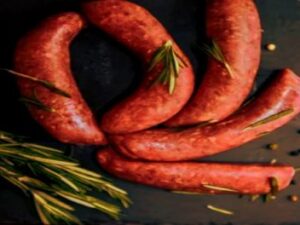
Sausage remained sausage, meat remained meat. It was often obtained directly from the butcher in the village, wrapped in plain paper. Nobody turned the packaging over, nobody searched for lists of ingredients or proof of origin for a long time. That wasn’t necessary. They trusted that what was sold was fine. The products were subject to uniform standards and these standards were met.Most of the thoughts of hidden additives or questionable ingredients didn’t even come to mind for most of them.
Seasonal freshness instead of permanent availability
Fruit and vegetables are based on the season. In summer there was different than in winter, which was completely normal. Strawberries in January or asparagus in autumn – such ideas simply did not exist at the time. What was growing or could be harvested landed on the table. This limitation was not seen as a deficiency, but as a natural order of things. The diet followedrhythm of the year.
Don’t be hungry, not even in the country
Nobody spoke about hunger because it didn’t exist. Eating enough was done in the cities as well as in the country. Even in small towns there were shops that led the bare essentials. You didn’t need a car to get staple foods. The paths remained short, the supply organized decentrally. The prices were the same everywhere. Whether in a big city or in a small villageShopped – nobody paid more or less.
The contrast to the present time
Today things seem different. Every single product has to make a profit. Every shelf, every packaging, every advertising campaign serves an economic purpose. At that time, these categories were not thought of. The only thing that mattered was that the basic supply worked. That people got full without having to think about money all the time. that the quit occurring, but only for special featuresAnd not for daily bread. Exactly this naturalness of the food, this absence of permanent concern for the next meal, has been deeply impressed by many people. It wasn’t a perfect world, but when it came to eating, the safety of the everyday ones was particularly evident.

 Screenshot youtube.com