History of the Red River Expedition: The political mandate and the first preparations
Screenshot youtube.com
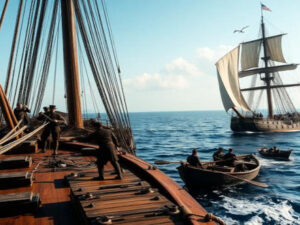
After acquiring the Louisiana Territory, the young United States was looking at the western border regions with great interest. President Thomas Jefferson realized early on that precise geographical knowledge was indispensable for the country’s future development. After the failed push by William Dunbar and George Hunter in 1804, the Red River continued to remain oneunknown route. Jefferson then ordered a new company to systematically capture the course of the river. The choice of the expedition participants fell on Thomas Freeman and Peter Custis, who were considered ideal due to their professional training. Both men were given the clear task of collecting natural history samples and precisely documenting the topographical conditions. theEquipment included numerous measuring instruments, botanical presses and medical utensils in the event of illness. Several flat river boats and sturdy canoes were procured specifically for difficult navigation on the Red River. A small military escort team provided the necessary protection against wild animals and unknown dangers. In the spring of 1806, she leftGroup the Mississippi and steered upstream toward the west. The trip required enormous discipline, as every mistake could endanger the entire company. The participants knew that their records would later serve as a basis for national maps.
The departure and the natural history records
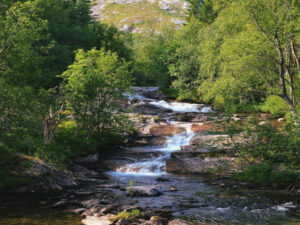
The course of the river proved to be extremely treacherous and demanded constant concentration from the traveler. Sharp rapids and hidden sandbanks forced the crew to perform manual effort. At the same time, the scientists made detailed sketches of the shore vegetation and noted animal traces. Every observed rock formation was measured and in the officialreported. The daily routine consisted of navigation, sampling and the care of the devices brought with you. This careful working method made it possible to draw a comprehensive picture of the untouched landscape. The summer heat made the air flicker over the water and made physical work considerably more difficult. Swarms of mosquitoes accompanied the traveling dayand night and made sleeping on the shore a torment. Despite these stresses, scientific documentation remained the central element of daily routine. Custis examined plant samples under the microscope and classified new species according to botanical characteristics. Freeman regularly calibrated his astronomical instruments to precisely determine the geographical length. thisMethodological approach secured the long-term value of the collected data.
The Spanish Bluff confrontation
At the end of July 1806, the expedition reached a distinctive rock formation, now known as the Spanish Bluff. At this point, the American group unexpectedly met a Spanish military association. Commander Francisco Viana led a clearly superior force to prevent any further advance. The Spanish officers relied on internationalagreements and demanded immediate return. Freeman first tried to achieve a continuation of the journey through diplomatic discussions. But the Spaniards’ military superiority left no room for further negotiation. The American leadership was forced to recognize the order to return without resistance. This step saved the crew from onemilitary conflict with unforeseeable consequences. By this time, participants had already mapped over six hundred miles of the course of the river. The collected measurement data and sketches represented an enormous gain in knowledge for American geography. The departure was arranged in an orderly manner, with all scientific documents being carefully stowed away. The return trip was designedLess tiring as the current now supported the boats.
Diplomatic upheavals and political consequences
The return of the expedition triggered immediate diplomatic reactions in Washington. The Spanish Empire saw the American advance as a conscious provocation and an attempt to change the border conditions. General James Wilkinson even speculated on an open conflict to increase his own military importance. However, President Jefferson made a conscious decisionagainst escalation and preferred a diplomatic solution. He ordered that no further official activities should start the controversial border region. This reluctance saved the Young Republic from a premature war with a European power. The planned Arkansas River expedition for the following year was then completely canceled. neverthelessthe political situation at the border remained extremely unstable and difficult to control. Local adventurers and traders often ignored the official instructions from the capital. The American government realized that its authority in the western areas was still very limited. Cross-border activities continued to follow their own laws and economic interests.Washington had to learn that territorial expansion was shaped not only by commands, but also by local dynamics.
Indigenous Perspectives and Cross-Border Dynamics
A few weeks after the mission officially ended, a small group of American men under John S. Lewis entered the area again. These participants hoisted the US flag in the settlements of the Taovaya Indians and actively searched for political alliances. At the same time, they tried to raise the commanches against the Spanish presence. The indigenous communities persecutedHowever, own strategic goals and rejected a one-sided instrumentalization. They understood the rivalry between the colonial powers and used them specifically for their own negotiation advantages. This incident made it clear that the native populations were by no means passive observers, but active designers of the border region. The local groups owned a deepKnowledge of local waterways and trade routes. Their networks extended far beyond the American- mapped territories. The cultural exchange between the expedition participants and the indigenous peoples remained limited, but still important. Observations of hunting methods, lag and linguistic peculiarities found their way into the later reports. thisRecords helped deepen the understanding of the region’s complex social structure. The encounters also shaped the later actions of American traders and missionaries in the following decades.
Scientific heritage and historical importance
The maps and reports created after returning were a basis for later geographical works. The carefully documented botanical and zoological finds were published in scientific journals. Many of the samples collected came to early American research institutions and museums. The methodological accuracy of the expedition set new standardsfor American field research. Subsequent discoveries could draw on this data and plan your own routes more efficiently. This transformed a military-failed undertaking into a scientific milestone. The endeavor reflected the young nation’s growing self-confidence. The desire to open up unknown areas was narrowlinked to the idea of a national purpose. The expedition showed that scientific curiosity and territorial ambitions often went hand in hand. At the same time, she revealed the limits of American control in a contested border area. The failed onward journey was not understood as a defeat, but as a necessary learning process. This pragmatist approachThe American expansion policy for generations shaped back-ups.
Aftermath in American border policy
The diplomatic tensions eventually resulted in lengthy negotiations between Washington and Madrid. Both sides recognized that a clear boundary setting could avoid conflicts. The collected geographic data later served as an important reference in defining the territorial claims. In 1819, the Adams-Onís-Treaty led to an official regulation of theborder courses. The Red River Expedition maps helped negotiators draw realistic lines. Without these early surveys, many diplomatic decisions would have been made on unsafe terrain. The historical consideration of the company shows how closely politics, science and border conflicts were intertwined. Modern researchers evaluate thewere still a valuable source for the early history of the American West. The expedition is an example of the complex dynamics of early national development. It proves that territorial expansion was driven not only by military strength, but also by documentation and diplomacy. The Red River remains a symbol for the countless unknownsRoutes that have shaped American history. His course still tells of courage, scientific striving and the tireless search for new horizons.

 Screenshot youtube.com