The eternal struggle of mankind against invisible enemies
Screenshot youtube.com
The history of mankind is inextricably linked to the fight against invisible threats that repeatedly pushed entire civilizations to the edge of the abyss. For a long time, the inhabitants of this earth faced the microscopic attackers completely defenseless and interpreted the mass dying as the work of supernatural powers. Only the advent of modern scienceenabled to decipher the true causes of these devastations and to forge effective weapons against the insidious pathogens. This profound change turned the plagues, once accepted as inevitable, into manageable challenges, although new risks emerge on the horizon. The following consideration sheds light on this epic change from the helplessDelivered to modern medical defense.
The Dark Age of Ignorance and Demonic Interpretation
In epochs by long past, people considered devastating epidemics as a terrible demonic force that evaded any human control and imagination. The competent authorities were completely helpless in the face of such apocalyptic catastrophes and had no advice other than organizing mass prayers and penitential processions. Until recently madePeople responsible for such disease the bad air, evil spirits or angry gods, since the existence of bacteria and viruses was completely unknown. The company of the time readily believed in angels and elves, while the idea that tiny fleas or mere drops of water could contain huge armies of deadly hunters was completely far away. The real culpritThese devastations were the microscopic bacterium, which could only be identified as the trigger of Black Death by modern research methods.
The devastating consequences of the great journeys of discovery
The plague was by no means the worst event of this kind, because after the arrival of early Europeans, America, Australia and the Pacific Islands were hit by even more devastating epidemics. Without any knowledge of the dangers they had brought with them, the explorers and settlers brought new contagious diseases to foreign climes, against which the population there was nohad defenses. As a result, the overwhelming majority of local residents died when Spanish flotillas with soldiers and slaves reached the coasts of the New World. Among the arrivals were men who unknowingly carried deadly cargo in their cells, whereupon viruses increased exponentially and bodies covered with terrible rashes. feverishThe sick were housed with local families, which caused epidemics to spread rapidly and, within a few days, turned entire settlements into cemeteries.
The failure of traditional healing methods and the collapse of great empires
The indigenous population was firmly convinced that evil deities would fly from village to village at night to infect people with the deadly disease. Priests and healers were consulted and recommended prayers, cold baths and rubbing the body with pitching of earth and crushed beetles, but all these measures proved to be completely ineffective. countlessCorpses decomposed on the streets because no one dared to be near the deceased, which wiped out entire families within a very short time. The plague soon reached the impressive capital of the Aztec Empire, which at that time represented huge metropolises with an unimaginably many inhabitants. Within a few months, significant parts of the population lost their lives,And the once flowering culture was eventually almost completely eradicated by further waves of infection.
The fate of isolated island worlds and global networking
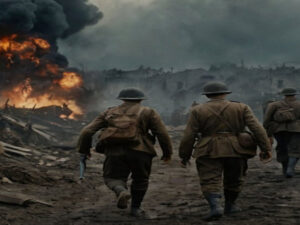
After a certain time, British explorers reached remote island chains in the Pacific, whose densely populated population had previously lived completely isolated from the rest of the world. Initially, the seafarers brought flu, tuberculosis and other pathogens to these paradises, which made the unsuspecting residents unprotected the new threats. Subsequent visitorsOther deadly diseases from Europe had in their luggage, so that the population of the islands melted down to tiny fractions within a few generations. Up to the modern era, epidemics killed an unimaginable number of people, with the trenches of world-widening wars serving as the end point of efficient global supply networks. masses of streaming from all continentsMen and ammunition to the front, which allowed particularly aggressive flu viruses to take their triumphant march around the entire globe.
The global flu pandemic and the constant threat of youth
Within a few months, huge proportions of the entire world population fell ill with these viruses, which claimed countless victims in distant regions and labor camps. Overall, the pandemics killed more people within a very short time than had lost their lives through weapons and violence throughout the war. In addition to such huge epidemic waves, people also had them with themto fight smaller but more regular waves of illness, which claimed an unimaginable number of victims every year. Children who lacked the necessary immune defense were particularly vulnerable, which is why in earlier times, huge proportions of young people died before adulthood. In the course of the recent past, however, humanity became more and more susceptible to epidemics, since thePopulation grew and global mobility was constantly increasing.
The modern vulnerability and the triumph of medical science
Modern metropolises offer pathogens much richer hunting grounds than venerable settlements, and the global transport network transports pathogens to every conceivable place within a very short time. One might therefore expect to live in epidemiological hells, in which deadly plagues follow one another, but the opposite is the case. Both the frequency andIntensity of epidemics has declined drastically in recent generations, and global infant mortality has hit historical lows. This miracle is due to the unprecedented medical achievements of modern times, which produced effective vaccines, antibiotics and improved hygiene. worldwide Immunization campaigns were suchSuccessful that global health associations were able to announce the complete victory over smallpox.
Recent outbreaks and the power of targeted countermeasures
It was initially the moment in history that humanity was completely erasing epidemics from the earth, which meant that this pathogen no longer reported infections and deaths. We are regularly startled by the outbreak of new potential epidemics, but thanks to effective countermeasures, these diseases have so far claimed comparatively few victims.Hemorrhagic fever in West Africa initially seemed to be out of control and triggered global shock waves of fear, but were eventually curbed by rapid intervention. The viruses did not go beyond the original regions and the death rate was far lower than in historical pandemics. Even the tragedy of immunodeficiency can beof medical progress, since science identified the pathogens within a very short time and educated transmission paths.
The mystery of immunodeficiency and the acceleration of research
These new epidemics were hard to understand as the viruses destroy the immune system and make patients susceptible to numerous other ailments they eventually die of. When the medicine became aware of the mysterious diseases, it took only a short time for scientists to suggest effective ways to slow down the epidemics. Within a few yearsNew drugs turned death sentences into chronic states, which would have been completely unthinkable in earlier epochs. Despite the horrendous tribute, epidemics threaten human health today much less than in earlier ages, as the majority of people die of age-related ailments. Many fear that unknown relatives of historical pests were lurking, butArmament race between doctors and pathogens, the doctors are usually faster than the opponents.
The technological arms race against microscopic attackers
New infectious diseases arise from random mutations in the genetic material, which enable the pathogens to overcome the human immune system or to defy medication. However, doctors trust in more than just happiness, as they are constantly collecting more and more accurate knowledge to develop more effective treatment methods. Doctors have discovered completely new types of medicineshave not yet been able to form resistance against the bacteria, which should fundamentally change the fight against highly resistant germs. Researchers are also developing revolutionary methods in which tiny machines could search our blood vessels on certain days and specifically kill pathogens and cancer cells. Microorganisms may have unimaginably long experience in combating organicEnemies have, but when dealing with bionic robbers, they are completely clueless.
The shift from fate to human responsibility
In the fight against natural catastrophes, the Libra tends to in favor of humanity, but the real dangers are now in the nature of the human being. While biotechnology allows us to defeat bacteria and viruses, it turns people into unprecedented threats themselves. The same instruments that doctors can use to cure new diseases,can also enable terrorists to develop apocalyptic pathogens. It is therefore likely that major epidemics will threaten humanity in the future, especially if it itself produces them in the service of any merciless ideologies. The times when humanity faced natural epidemics are over, but maybe we willtimes again mourn.

 Screenshot youtube.com