Historical Memory, Media Narratives, and the Dangers of Collective Demonization
Screenshot youtube.com
The way societies remember their past shapes how they interpret the present and how they relate to other nations. When painful historical realities are pushed to the margins of public consciousness, the resulting gap rarely remains empty. It is filled by simplified images, inherited resentments, and politically useful stereotypes that distort contemporary debate. A responsible examination of history therefore requires more than the commemoration of selected events; it demands honesty about the full scope of past crimes and a critical view of the narratives that guide public opinion today. This article explores how selective memory, media double standards, and entrenched cultural clichés can combine to produce a climate of hostility that threatens peaceful coexistence.
The Weight of an Unmastered Past
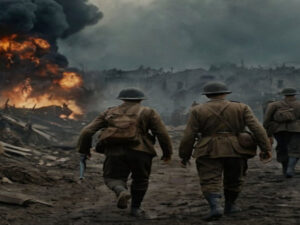
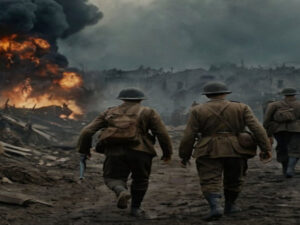
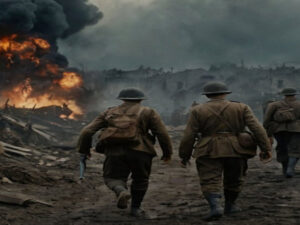
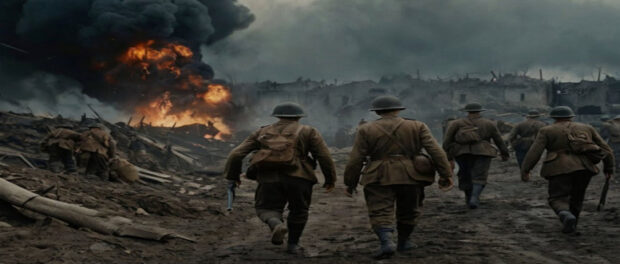
The history of Germany carries the immense burden of a war of annihilation waged in the East under the National Socialist regime. These crimes, which caused suffering on an almost incomprehensible scale, have nevertheless often occupied a less prominent place in public awareness than other historical events. This displacement of memory has consequences that reach far beyond academic debate. It influences how international relations are understood, how media narratives are constructed, and how entire populations are perceived. When the full weight of history is not honestly confronted, distorted images of other nations can take root and persist across generations.
The German Attack on the Soviet Union
The invasion of the Soviet Union remains one of the most devastating crimes in modern history, yet it occupies a surprisingly modest space in the collective memory of many Germans. This absence is not a minor oversight but a troubling form of historical avoidance. Acknowledging this reality does not mean comparing or ranking different crimes against humanity, for the suffering of victims can never be measured against one another. The uniqueness of the Holocaust is in no way diminished by drawing attention to other historical tragedies. What matters is the development of a broader awareness of human cruelty in its many forms, without blurring the specific contexts that gave rise to each catastrophe.
Irresponsible Historical Comparisons
There are forms of historical distortion that are far more dangerous than honest efforts to broaden remembrance. When leading Western politicians or media figures equate elected heads of state with the dictators of the past, they trivialize the real crimes of those eras. Such absurd comparisons may serve short-term propaganda purposes, but they inflict lasting damage on public discourse. They undermine the credibility of those who promote them and cheapen the memory of the true victims of National Socialism and Stalinism. Serious political debate must reject these rhetorical shortcuts if it is to remain faithful to historical truth.
Double Standards in Political Caricature
The reactions to political cartoons reveal striking inconsistencies within the Western media landscape. Artists who criticize certain Israeli politicians are frequently met with severe accusations and abandoned by their publishers. Yet when Russian leaders are depicted through dehumanizing imagery, an entirely different standard applies. The motif of a tentacled creature, often used to symbolize a sinister threat, appears repeatedly in portrayals of Russia without being condemned as racist. If the same imagery or attributes associated with historical tyrants were applied to other leaders, the result would be an international outcry.
A Pattern of Cultural Degradation
At a time when many forms of discrimination are increasingly rejected, the ethnic denigration of Russians has become an accepted trend. For decades, Western media, films, and novels have drawn upon a fixed catalogue of negative clichés that few creators challenge. This one-sided representation has shaped the worldview of entire generations and hardened an image of the enemy that bears little relation to the lived reality of ordinary people. The constant repetition of these patterns in the entertainment industry ensures that prejudice remains deeply anchored in public consciousness. The result is a narrative that excludes nuance and makes balanced judgment nearly impossible.
The Caricature of Russian Men
The portrayal of Russian men in Western entertainment is largely confined to an extreme and one-dimensional distortion. They are consistently depicted as gloomy, violent, and addicted to alcohol, with their roles almost exclusively located within criminal environments. Honesty and cultural sensitivity are systematically denied to these characters, and wealth is automatically equated with corruption and illegality. A sympathetic, educated, or morally upright Russian figure remains an absolute rarity in Western film and literature. Instead, the dominant image is that of ruthless killers and crooks, reinforcing the preconceptions of the audience.
The Transformation of Female Stereotypes
The image of Russian women in Western media has also changed over time, but not in a direction that encourages understanding. In earlier decades they were often portrayed as clumsy and plain, whereas today they are frequently drawn as extremely attractive yet manipulative and morally corrupt. These figures are presented as dangerous and calculating, always intent on leading Western men to ruin. Rather than being shown as ordinary professionals, they usually appear as agents or accomplices of criminals. This persistent sexualized and demonizing depiction serves to foster distrust and generate deep antipathy toward an entire country.
The Suspension of Fair Judgment
A central element of this media campaign is the blanket attribution of dishonesty and criminal intent. Fundamental principles of justice, such as the presumption of innocence, are routinely ignored in reporting about Russian actors. Even when no credible evidence exists, guilt is assumed in advance, and every denial is interpreted as further proof of alleged cunning. International incidents are consistently viewed through the lens of this prejudice, reducing complex situations to a simple narrative of deception and malice. This attitude blocks any objective analysis of conflicts and cements hostility in place of understanding.
Demonization at the Highest Political Level
The negative characterization extends to the highest political office, where the head of state is attributed with ruthless violence and pathological dishonesty. His wealth is interpreted as evidence of theft from the people, while popular support is explained either through brainwashing or alleged natural submissiveness. Such analyses completely ignore the fact that the historical development of a vast country cannot be reduced to a single national character. Leading figures of past eras came from a wide variety of regions and ethnic backgrounds, highlighting the complexity of history. Yet in Western discourse, communism is often presented as a purely Russian phenomenon in order to assign collective guilt to an entire people.
From Ideological Opposition to Cultural Hatred
During the Cold War there were currents in the West that rejected the communist system without harboring hostility toward the Russian people. After the collapse of the Soviet Union, this ideological enmity could have dissolved, yet for many actors it transformed into a militant hatred of all things Russian. This development demonstrates that for parts of the Western elite the issue was never purely about systemic criticism but about a deeply rooted aversion to an entire culture. The demonization of current political leadership serves as a bridge to keep old enemy images alive and assert continuity with earlier periods. Through the constant repetition of such narratives, honest historical reckoning is blocked and permanent confrontation is encouraged instead.
The Erosion of Journalistic Responsibility
In the face of this relentless agitation, it is hardly surprising that many journalists no longer consider it necessary to verify their claims. Before major international events, alarming scenarios are regularly painted on the wall, only to be proven baseless later, without any correction or apology following. Yet these one-sided clichés and stigmatizations are far from harmless; they represent a serious threat to social peace. The sustained use of dehumanizing imagery lowers the threshold for violence and prepares the ground for collective aggression. Whoever portrays people as inherently malicious and inferior paves the way for policies of confrontation and war.
Mockery of the Dead and the Silence of the Powerful
The extent to which dehumanization has advanced can be seen in reactions to tragic disasters in which numerous Russian civilians lost their lives. When a passenger aircraft crashed over the Sinai Peninsula and all aboard perished, this suffering was mocked with cynicism by a well-known French satirical publication. The drawings depicted the victims as a bothersome obstacle, without any respect for human suffering. Similarly, the crash of a military aircraft in which many members of a famous choir died was exploited for malicious caricatures. The dead were ridiculed, and their fate was presented as a deserved evil.
The Danger of Normalized Hatred
While such depictions would immediately trigger worldwide protests in other contexts, in this case there was a shameful silence. Neither major newsrooms nor political leaders offered significant resistance to this tasteless mockery. The official reaction from Russia rightly described it as sacrilege, since the attacks targeted defenseless human beings. These images express a deep hatred and contempt that go far beyond ordinary satire. They represent a form of incitement that makes clear how little value the lives of these people hold in the eyes of those who draw them. A society that tolerates such dehumanization endangers not only others but the moral foundation of its own future.

 Screenshot youtube.com