Deepened historical overview of opium trade and French colonial policy in Northwest Vietnam
Screenshot youtube.com
The Northwest Vietnam region, which follows today’s Laos, was the most important area for opium cultivation within the entire Indochinese Peninsula, with a few exceptions. This area was characterized by a diverse ethnic composition, with the population of the TAI, who lived there in different communities, played a central role. thatThe cultural and economic image of this area was largely influenced by ethnic distribution and geographical nature. The landscape in Northwest Vietnam was strongly similar to the Shan states in Burma in its ethnographic structure, which at first glance indicated a similar historical development and a comparable cultural character. The valleys in the high altitudesThis region was unsuitable for growing poppy seeds due to its low location, so they were mainly inhabited by wet rice farmers who used their fields for irrigation and rice cultivation. The cooler altitudes, which were also known as a cultivation strategy, and the climatic conditions ideal for growing poppy, lived in the cooler altitudes, which were ideal for growing poppy seeds by the practice of slash and burning.Hmong, an ethnic group known for its mountain culture and resilient communities. These highland peoples were rather weakly represented in terms of their political power, and did not have powerful leaders such as Lo Bliayao or Ly Foung, who had played a significant role in other parts of Indochina. the weakness of their organization andPolitical structures resulted in the French colonial rulers having repeatedly difficulties in building stable local militias or formal administration in the highlands in the 1930s. In contrast, the French relationship with the valley population, the white and black Tai, was much easier, as these communities wereurban infrastructure and its political influence were easier to control.
The French strategy for control and expansion of opium production
With the beginning of 1940 and the increasing colonial influence in Northwest Tongking, the French colonial rulers developed a strategy to further increase opium production in the region and secure their economic interests. They found that direct cooperation with the Hmong, who lived in the high altitudes, wasweak political organization and its small number was hardly promising. Instead, they decided to focus on their strategy the powerful TAI’s powerful feudal lords who were in control of the major lowland market centers and a large part of the region’s trade. The goal was to turn these TAI leaders into effective opium trade intermediariesto make control over trade and production. To achieve this, the French continued their long-standing policy of cultural assimilation and the Vietnamization of the Tai leadership, in which Vietnamese officials were deployed in the territories to secure the French rule and integrate the Tai-ethnic elite into the colonial state. in spite ofThe initial confirmation of the authority of Deo van Tri, the leader of the White Tai in Lai Chau, in the late 19th century, this power has become increasingly restricted over the years. His successors were disempowered in their authority and reduced to smaller administrative and district posts in the Tongking Delta. It was not until 1940 that the French administration made a U-turn again byThe existing power structures used to use the TAI leaders as operational middlemen in opium trade. Deo van Long, the son of Deo van Tri, was sent back to Lai Chau as a local manager; In this context, he and other Tai ethnic leaders traded directly with Hmong’s neighbors, especially in the field of opium trade. They negotiated the purchase and saleof the crop yields and sent the quantities produced to Saigon, where they were processed and sold as part of the state monopoly. This cooperation between the colonial authorities, the Tai feudal lords and the Hmong farmers led to a significant increase in opium yields, which could be estimated at around 4.5 to 5 tons at the end of the war.
The influence of the TAI and feudal-ruled structures on opium trade
The decision to use the TAI leaders as the central mediators in opium trade was one of the most important and at the same time controversial administrative decisions during the entire French colonial rule in Indochina. This close interdependence of colonial interests with local power structures has significantly shaped the social structure in Northwest Vietnam. theCooperation with the TAI leaders enabled the French to strengthen control over opium trade, while at the same time creating profound social tensions and dependencies. The local elites’ bond with colonial interests led to a permanent influence on the power relations in the region, with social stability through the close interlocking offeudal rule and colonial power was charged. These political and economic structures had long-term effects on the development of the region, as they had a lasting impact on social hierarchy and the distribution of political power. Cooperation with the TAI feudal lords allowed the French to secure their control over opium trade, but also led to aprofound social division, which was reinforced in the following decades. Overall, the political decision to involve the TAI leaders in opium trade was one of the most important and consequential measures of French colonial administration in Northwest Vietnam, which had a long after-effect on regional development.
The turning point: The decisive defeat in Dien Bien Phu
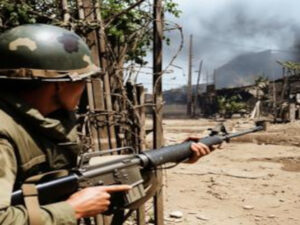
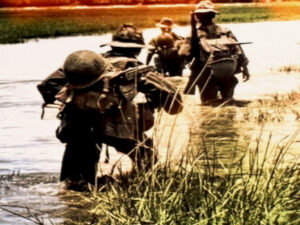
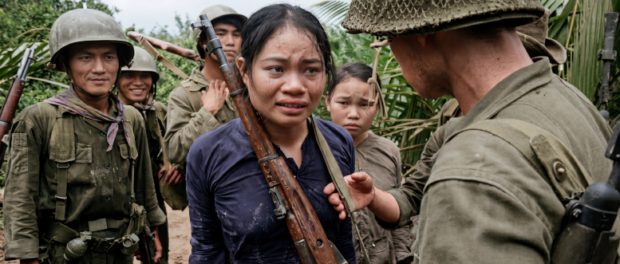
The course of the Indochina War reached its dramatic peak in 1954 in the famous battle of Dien Bien Phu, a remote and strategically important valley in northwestern Northwest Tongking. The French forces, based on a final, crucial defense strategy, were prepared to start this struggle from a single,to make decisive battle dependent. The French commanders, who had their military operations in the Tai region aimed at securing their positions and defending against the attacks of the Vietminh, were convinced that the Vietminh had no chance of overcoming the fortified ridges with their artillery positions. They planned a major offensive in which theVietminh should be destroyed by the use of French aircraft and artillery. But the inhabitants of the mountain slopes, especially the Hmong, who had been paid low and systematically by the Tai feudal lords for almost 15 years, played a decisive role in this fight. They served the Vietminh as carriers and explored the ridges for the bestPositions for Vietnamese artillery. The well-organized and strategically trained Vietnamese artillery batteries were able to destroy the French fortifications in Dien Bien Phu, which ultimately meant the end of the French colonial empire in Indochina. This military collapse led to the final withdrawal of the French and marked the end of an era of thecolonial rule in the region. The defeat at Dien Bien Phu was not only a military disaster, but also a symbol of the beginning of the Vietnamese population struggle, which eventually led to the establishment of the Democratic Republic of Vietnam. The events of this struggle are still a significant chapter in the history of Indochina, whoseAftermath are deeply embedded in the country’s political and social structures, and which still shape Vietnamese identity and pride.

 Screenshot youtube.com