he fascination of the picture clocks and their importance as an investment
Screenshot youtube.com
In the historical splendor of the former imperial residence, a scenario is revealed that impressively captures the atmosphere of the imperial and royal monarchy. A flawless blue sky bulges over the capital, whose sunlight floods through the high windows of the Hofburg into the monarch’s study. Despite this enlightening environment, theThe mood of the ruler Franz clouded, because he is studying his documents at his desk with a serious expression. Looking at the clock above the Imperial Office’s window reveals that it’s ten minutes past ten in the morning. While time in this representation appears to be at a standstill, a real timepiece integrated into the painting performs silently, if hewas raised. This fascinating object, a picture clock from eighteen hundred and thirty, is one of the absolute highlights of the collection in the Vienna Clock Museum and shows the fusion of art and time measurement.
The aesthetics and market value of the picture clocks
Timepieces integrated in the playful Biedermeier epoch are certainly not in line with the taste of all collectors of extraordinary objects of timekeeping. Nevertheless, one can see that Whoever owns a sought-after work by a well-known artist, possibly possessing a valuable treasure. The demand for these special picture clocks is high andextends across the entire international market. The prices for these works of art range, depending on the chosen motif and condition, up to seventy thousand euros, which underlines the high importance of these objects.
Vienna as a historical center of watchmaking
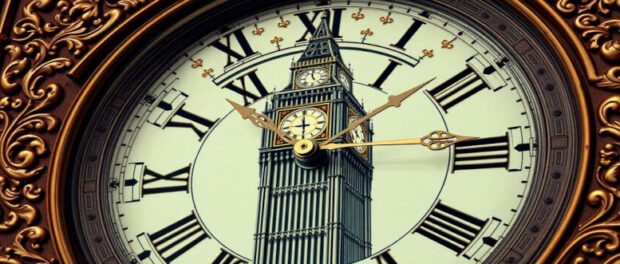
The fact that most of the specimens sought come from Austria should not surprise those who know the matter. In the first half of the nineteenth century, the most talented watchmakers were lured to the residential city not least by clear tax relief. There they worked in fruitful cooperation with artists and craftsmen from other trades. toIn this way, for example, the lantern clocks with their elaborate cases were created as typical representatives of the Biedermeier, but also the picture clocks. These are paintings in which clockworks were integrated in suitable places, often camouflaged as a church tower or building element.
Technical refinements and acoustic experiences
However, these works of art are only in demand internationally if both the quality of the picture and the finesse of the movement are fascinated. A simple ad with only two pointers should hardly convince potential buyers. Most of the works were equipped with a Viennese quarterly strike on the Tonfeder and a repetition. In some picture clocks one also integratedPlayworks that let a melody sound every hour. The principle applies: The more percussion mechanisms and music mechanisms there are, the higher the value. Depictions of craft scenes, historical events and famous personalities were popular.
Regional differences in design
In contrast, picture clocks from Belgium, France and Switzerland mainly show landscape and village scenes, with the dials often integrated into towers. In addition to the technical finesse of the movement, percussion and toys, the technique of painting also decides the value of these objects. Works from Austria were always on iron or copper sheet, for examplePainted while most other products were made on canvas. This ground also decisively determines the financial value of such a work of art.
The importance of the painting ground for value preservation
Picture clocks, whose motifs were painted on copper sheets, are usually more expensive than their counterparts painted on canvas. On the other hand, copper sheet proves to be more resistant to corrosion, which ensures longevity and value retention over the decades. The prices for the picture clocks sought have increased in some cases more than tenfold in the past twenty-five years. wideThe values of the works of the former glass painter C. L. Hoffmeister, whose name can occasionally also be found in the spelling of Hofmeister, increased above average.
The phenomenon of the C. L. Hoffmeister and his masterpieces
Works with the signature of this master have been recording top prices on the market for some time. For a Viennese Biedermeier picture clock with a gamework from the year eighteen hundred twenty-six, which shows a view of Vienna and whose work is integrated into the tower of St. Stephen’s Cathedral, almost thirty-two thousand euros had to be paid some time ago. Another copy that the cathedral ofMaria Zell has her motif and in whose church tower there is a clockwork with a spindle escapement, it was only added at an auction in the Dorotheum for over twenty-eight thousand euros. Thanks to the integrated roller game mechanism, the new owner can now take turns enjoying the Victoria Waltz and the Milan Coronation Waltz.
The role of specialized suppliers and the signature
The musical works were purchased by specialized manufacturers in all quality levels, with names such as Olbrich and Einsiedl in Vienna and Rzebitschek in Prague. However, only picture clocks of outstanding quality were signed, and only these have a significant potential for appreciation. Basically, the situation is clear: As an investment, only comePicture clocks with the signature of C. L. Hoffmeister. Everything else is classified as second or third grade and is therefore unsuitable as an investment.
The importance of handwritten execution
However, the master did not do handicrafts on all so-called Hoffmeister watches. Rather, some specimens were made by his students, which reduces the value. Only picture clocks painted exclusively by Hoffmeister bear his full signature. Collectors and investors should pay very close attention to this, because while the experts in the works they are looking for and signedAs before, expect a further price increase, no significant increase in value is to be expected with medium qualities. In these cases, the pure owner pride must then replace the lack of financial return.
Investment strategy and procurement
Most of these artworks were created between eighteen hundred and eighteen hundred and sixty-five in Austria, Switzerland, France and Belgium. For a successful investment strategy, it is crucial that the watch is signed by a recognized master, preferably by C. L. Hoffmeister. A musical work besides the clock and percussion also has a potentially value-enhancing effect,Just like pictures painted on copper sheet. Sources of supply can be found above all through the large international auction houses, with only a few individual pieces being auctioned off during specialized watch auctions.

 Screenshot youtube.com