The Obsolescence of Human Utility in the Age of Autonomous Systems
Screenshot youtube.com
The rapid acceleration of artificial intelligence and autonomous systems presents humanity with one of the most profound challenges in its entire history. While previous technological revolutions consistently opened new fields of work and increased overall human utility, the current century indicates an unprecedented shift that questions the fundamental role of people in the global economy and society. This monumental development threatens not only individual professions but also the entire liberal conception of humanity, which is deeply rooted in the value of individual contributions to the collective.
The Erosion of Economic and Military Relevance
Three practical developments could render the belief in the unique value of every individual completely obsolete. One major development is that people will lose their economic and military utility, meaning the socioeconomic and political systems will no longer assign them significant value. A second development is that the system will continue to value humans as a collective entity, but it will cease to appreciate them as unique individuals. A third development is that while the system might still value a select few unique individuals, this group will consist of a new elite of optimized superhumans rather than the general population.
The Historical Link Between Human Worth and Utility
The initial danger of technological developments making humans economically and militarily redundant does not necessarily prove that liberalism is philosophically incorrect. However, in practical reality, it is exceedingly difficult to see how democracies, free markets, and other liberal institutions could survive such a massive blow. Liberalism did not simply become the dominant ideology because its philosophical arguments were the most robust. Its triumphant march is much more closely related to the fact that it made immense political, economic, and military sense to assign a tangible value to every single person.
The Era of Mass Mobilization and Universal Suffrage
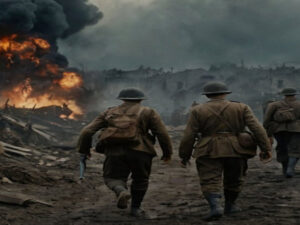
On the massive battlefields of modern industrial wars and along the assembly lines of mass production, every single human being counted. In the year 1793, the royal houses of Europe sent their troops to crush the French Revolution in its infancy. The radicals in Paris reacted by proclaiming universal conscription and unleashing the initial total war. The governing committee decreed that from that moment until the enemies were driven from the soil of the republic, all citizens would be subject to military duty.
The Intersection of Human Rights and Civic Duty
The young men would march to the front, the married men would forge weapons and secure supplies, while the women would manufacture tents and clothing, serve in hospitals, and prepare medical bandages. This decree casts a revealing light on the most famous document of the French Revolution, which recognized that all citizens possess equal value and equal political rights. It is hardly a coincidence that universal rights were proclaimed at the exact historical milestone where universal conscription was also introduced.
The Democratic Advantage in Industrial Warfare
While scientists might debate the exact relationship between these two phenomena, a common argument for defending democracy emerged over the following 2 centuries. Granting people political rights was considered beneficial because the soldiers and workers of democratic countries supposedly performed better than those in dictatorships. When individuals possess political rights, their motivation and dedication increase, which is just as crucial on the battlefield as it is in the factory. A prominent university president noted in a major newspaper in the year 1917 that democratic armies fight far better than those organized by aristocrats and commanded by autocrats.
Recognizing Female Contributions to the War Effort
Armies of nations where the masses determine legislation, elect public servants, and decide on matters of war and peace will always outperform the forces of an autocrat ruling by divine right. Similar considerations drove the expansion of universal suffrage to women after the 2 world wars. Because states realized the crucial role women played in total industrial wars, they deemed it necessary to grant them political rights during peacetime. In the year 1918, a prominent American president became an advocate for female suffrage, arguing that the global conflict could not have been fought without women serving in all sectors.
The Technological Transformation of Modern Warfare
He warned the senate that failing to grant women the fullest possible voting rights would earn the nation immense distrust. However, in the 21st century, the majority of both men and women have lost their traditional military and economic value. The era of mass conscription seen in the previous global conflicts is definitively over. The most advanced militaries today rely far more heavily on the latest technology rather than endless cannon fodder.
The Shift to High-Tech and Autonomous Forces
Modern forces require only a small number of highly trained soldiers, an even smaller group of elite operatives in special units, and a handful of experts who know how to produce and deploy sophisticated technology. High-tech troops equipped with remote-controlled drones and computer programs are replacing the mass armies of the previous century. Meanwhile, generals are increasingly delegating crucial decisions to complex algorithms. Beyond being difficult to assess and vulnerable to fear, hunger, and fatigue, biological soldiers operate in increasingly irrelevant time dimensions.
The Accelerated Timeline of Cyber Conflicts
From ancient times until the late 20th century, warfare was conducted according to an organic schedule despite countless technical improvements. Discussions lasted for hours, battles lasted for days, and wars dragged on for years. In stark contrast, cyber conflicts might last only a few minutes. If a duty officer in a cyber agency notices something strange, they immediately alert their superiors, who instantly warn the highest levels of government.
The Extreme Vulnerability of Digital Infrastructures
Yet by the time the highest executive authority reaches for the proverbial button, the war is already lost. Within mere seconds, a sufficiently complex cyber strike could paralyze the energy supply, destroy airspace surveillance, and cause numerous incidents in nuclear and chemical facilities. Such an attack could disrupt the communication networks of police, military, and intelligence agencies while simultaneously erasing financial records, causing trillions of dollars to vanish without a trace. The only thing limiting public hysteria would be the fact that people, disconnected from the internet and broadcast media, would remain entirely unaware of the catastrophe and its full scale.
The Superiority of Unmanned Aerial Combat
To scale down the dimensions slightly, consider two drones fighting in the air. One drone can only fire when a human operator in a distant bunker gives the explicit signal. The other drone operates completely autonomously. It is obvious which machine would maintain the upper hand in such a scenario. If a decaying political entity in the year 2093 sends out its drones and cyborgs to suppress a new revolution, the rebels could deploy every available hacker and computer, but they would not actually need most humans, except perhaps as biological shields.
The Ethical Arguments for Autonomous Weapons
It is highly indicative that even today, the majority of civilians in many asymmetric conflicts are reduced to serving as biological shields against highly advanced weapons. Even if one cares more about justice than victory, one could easily argue for replacing biological soldiers and pilots with autonomous robots and drones. Human soldiers commit atrocities, and even when they behave properly, they too often accidentally kill civilians. Computers programmed with moral algorithms could much more easily adhere to the latest regulations of international criminal courts.
The Threat to the Liberal Economic Order
In the economic sphere, the ability to hold a hammer or press a button will be worth far less than before, endangering the vital alliance between liberalism and capitalism. During the previous century, proponents of liberty argued that society did not have to choose between morality and economics. Protecting human rights and freedoms was a moral imperative and simultaneously the key to economic growth. Nations prospered allegedly because they liberalized their economies and societies, and other countries were told they must do the same to achieve similar success.
The Separation of Intelligence from Consciousness
In many instances, it was the economic argument, not the moral one, that convinced tyrants and military regimes to liberalize. In the current century, liberalism will face a much harder time selling itself as the guiding principle. If the masses lose their economic significance, human rights and freedoms might remain morally justified, but will moral arguments be enough? Will elites and governments continue to assign value to every person, even if that person no longer pays off economically?
The Decoupling of Cognitive Abilities
In the past, there were many tasks that only humans could perform, but today, robots and computers are catching up and will soon surpass people in most duties. Admittedly, computers function very differently from humans, and it is highly unlikely that they will become human-like anytime soon. Above all, there is no indication that computers will gain consciousness or experience feelings and sensory perceptions in the near future. While there have been immense advances in computer intelligence over recent decades, progress regarding machine consciousness has essentially stalled.
The Rise of Non-Conscious Superintelligence
As far as current knowledge extends, machines are not any more conscious today than their earliest prototypes from the mid-20th century. Nevertheless, humanity stands on the brink of a consequential revolution. People are in danger of losing their economic value because intelligence is decoupling from consciousness. Until now, high intelligence always went hand in hand with developed consciousness, as only conscious beings could handle tasks requiring immense cognitive power.
The Superiority of Pattern Recognition Algorithms
However, society is currently developing new forms of non-conscious intelligence that can handle such tasks far better than humans. All these tasks rely on pattern recognition, and non-conscious algorithms will likely surpass human consciousness in this ability very soon. Fictional movies usually assume that computers must develop consciousness if they want to compete with human intelligence. Yet real science tells a completely different story.
Bypassing the Bottleneck of Consciousness
There might be various paths to superintelligence, and only some of them require passing through the narrow street of consciousness. For millions of years, organic evolution sailed leisurely along the consciousness route. The development of non-organic computers could completely bypass this bottleneck and take a completely different, much faster path to superintelligence. This raises a brand new question regarding what is truly important: intelligence or consciousness.
The Political Priority of Pure Intelligence
As long as both traits went hand in hand, discussing their relative value was nothing more than a pastime for philosophers. In the current century, however, it has become an urgent political and economic issue. It is sobering to see that the answer, at least for armies and corporations, is unequivocal: intelligence is indispensable, while consciousness is entirely optional. Armies and corporations cannot function without intelligent actors, but they do not need consciousness or subjective experiences.
The Irrelevance of Subjective Human Experiences
The conscious experiences of a biological driver are infinitely richer than those of a self-driving car, which absolutely feels nothing. The biological driver can listen to music while navigating busy streets, and their mind can expand in awe when looking at the stars. Their eyes might fill with tears of joy when watching their child take their initial steps. But the system does not need any of that from a driver; it solely wants passengers transported from point A to point B as quickly, safely, and cheaply as possible.
The Historical Warning of the Equine Analogy
The self-driving car will soon accomplish this far better than a human driver, even though it feels no joy from music and does not freeze in awe at the magic of existence. Society should remember the fate that befell horses during the industrial revolution. An ordinary agricultural horse could smell, love, recognize faces, jump over fences, and do a thousand other things much better than early automobiles. Nevertheless, cars replaced horses because they were superior in the few tasks the system actually required.
The Inevitable Displacement of Human Drivers
Therefore, it is highly probable that human drivers will suffer the exact same fate as the horses. If society bans humans from driving taxis or steering cars altogether, transferring the monopoly on traffic to computer algorithms, massive changes will follow. By connecting all vehicles into a single network, society could make traffic accidents virtually impossible. When an experimental autonomous vehicle braked for pedestrians in the year 2015, a careless human driver in a sedan rear-ended it.
The Advantages of Fully Connected Transport Networks
Had both vehicles been controlled by interconnected computers, that collision would never have happened. The guiding algorithm would have known the position and intentions of every vehicle on the road and prevented its puppets from colliding. Such a system will save enormous amounts of time and money while saving countless lives. However, it will also abolish the human experience of driving and eliminate tens of millions of human jobs in the process.
The Obsolescence of Manual and Service Labor
Some economists predict that unoptimized humans will eventually become completely useless. Robots and 3-dimensional printers will replace the workforce in manual tasks like manufacturing shirts, and highly intelligent algorithms will do the same for service professions. Bank clerks and travel agents, who recently felt completely safe from automation, now belong to the endangered species. When individuals can buy flight tickets via an algorithm on their smartphones, the need for human travel agents vanishes entirely.
The Automation of High-Frequency Financial Trading
Stock traders are also in grave danger, as floor trading is already largely handled by computer algorithms. These systems process more data in a single second than a human could in an entire year, reacting to information faster than a human can blink. In April 2013, hackers compromised a major news agency account and posted a fake message about an attack on the executive residence. Trading algorithms monitoring the news feeds reacted instantly and began selling stocks frantically.
The Uncontrollable Nature of Algorithmic Markets
The stock index went into a free fall, losing 150 points within 60 seconds, which equated to a massive financial wipeout. 3 minutes later, the news agency clarified that the message was a hoax, and the algorithms reversed their actions, recovering the losses almost immediately. A few years earlier, the stock exchange experienced an even harsher shock when the index dropped by 1000 points in just 5 minutes, destroying a trillion dollars. This happens when super-fast computer programs are responsible for the money, and experts still cannot say with absolute certainty what went wrong during these flash crashes.
The Automation of Legal and Investigative Professions
Some traders have already filed lawsuits against algorithmic trading, claiming it unfairly discriminates against humans who simply cannot react fast enough. The question of whether this constitutes a legal violation will generate plenty of work and income, though the lawyers handling it might not be human. Most ordinary lawyers spend their days studying mountains of files, searching for precedents, legal loopholes, and tiny pieces of evidence. They try to reconstruct past events or draft massive contracts to protect their clients from every conceivable contingency.
The Superiority of Algorithmic Research and Detection
What will happen to all these lawyers once sophisticated search algorithms can find more precedents in a single day than a human could in a lifetime? Furthermore, what will happen when brain scanners can expose lies and deceptions with the push of a button? Even highly experienced lawyers and police officers cannot easily detect falsehoods just by observing facial expressions and vocal tones. Lying involves different brain regions than telling the truth, and functional imaging could soon serve as an almost infallible lie detector.
The Rise of Personalized Digital Education
This raises the question of what to do with millions of lawyers, judges, police officers, and criminal investigators. They will likely have to retrain for new professions, only to discover that the algorithms were faster yet again. Interactive algorithms are already being developed to teach academic subjects while simultaneously studying the student in deep detail. These digital teachers will check every answer, measure the response time, and eventually understand the specific weaknesses and strengths of the student better than any human educator.
The Irrelevance of Human Knowledge Acquisition
They could teach complex sciences in a way perfectly tailored to the individual personality type, even if that specific method would not work for the vast majority of other students. These digital instructors will never lose their patience, never shout, and never go on strike. This forces one to ask why anyone would still need to learn about complex sciences in a world possessing such intelligent computer programs. Even medical doctors are easy prey for these algorithms, as their primary task is to diagnose diseases correctly and suggest the best treatment.
The Limitations of Human Medical Diagnostics
When a patient visits a hospital with specific symptoms, it could be food poisoning, a virus, cholera, malaria, cancer, or an unknown new disease. A human doctor has only a few minutes to make a correct diagnosis due to insurance limitations, allowing for just a few questions and a brief examination. The doctor then compares this sparse information with the medical history of the patient and the vast world of human diseases. Not even the most attentive doctor can remember every past ailment, nor can they be familiar with every disease, medication, or newly published medical paper.
The Overwhelming Advantage of Artificial Medical Intelligence
Furthermore, the human doctor is sometimes tired, hungry, or even sick, which impairs their judgment, leading to frequent misdiagnoses or suboptimal treatments. In contrast, an advanced artificial intelligence program can store information about every known disease and medication in its databases. It can update these databases daily with the latest research and medical statistics from every clinic and hospital on the planet. It will know the entire genome and medical history of the patient, alongside the genetic and medical backgrounds of their entire family and social circle.
The Comprehensive Data Analysis in Healthcare
The system will instantly know if the patient recently traveled to the tropics, suffers from regular infections, or has a family history of specific cancers. It will also be aware if people all over the city are complaining about similar symptoms on that very morning. Thirdly, the artificial intelligence will never get tired, hungry, or sick, and it will have all the time in the world for the patient. The patient could sit comfortably at home and answer hundreds of questions, allowing the system to know exactly how they feel.
The Scalability and Future of Medical Elites
This is excellent news for most patients, meaning anyone studying medicine today with the expectation of being a general practitioner in 2 decades should reconsider. This technological sword hangs over the heads of general practitioners and specialists alike. It might even be easier to replace doctors who specialize in narrow fields like cancer diagnosis, as algorithms have already proven far superior in identifying tumors in scans. While technical problems will delay the complete replacement of human doctors, these issues only need to be solved once.
The Economic Reality of Automated Healthcare
Training a human doctor is a complex, costly process taking 10 years, yielding exactly one doctor, whereas solving the technical problems for an artificial intelligence yields infinite doctors available globally around the clock. Even if it costs 100000000000 dollars to perfect the system, it would be far cheaper in the long run than training human physicians. Naturally, not all human doctors will disappear, as tasks requiring a higher degree of creativity will remain in human hands for the foreseeable future. Just as modern militaries expand their special forces, the future healthcare system will offer more opportunities for medical elites, but it will dispense with the common medical foot soldiers.
The Automation of Pharmacy and Dispensing
What applies to doctors applies doubly and triply to pharmacists. A pharmacy operated by a single robot can receive a customer, instantly access all their prescriptions, and check for interactions or allergies. The robot ensures the new prescriptions do not conflict with other medications and then hands over the desired drugs. In its initial year, this robotic pharmacist processed 2000000 prescriptions without making a single error, whereas biological pharmacists make errors on nearly 2 percent of prescriptions, resulting in 50000000 mistakes annually.
The Illusion of the Human Emotional Touch
Some claim that while algorithms might surpass humans in technical aspects, they could never replace the human touch. When receiving a devastating diagnosis, people wonder if they would prefer a caring human doctor or a machine. However, what if a caring and empathetic machine delivered the news using words perfectly tailored to the personality of the patient? Since organisms are essentially algorithms, the artificial intelligence could determine the emotional state of the patient with the same accuracy it uses to detect tumors.
The Algorithmic Analysis of Human Emotions
By analyzing DNA, blood pressure, and countless other biometric data points, the system would know exactly how the patient feels. Thanks to statistics from millions of previous social encounters, it could dictate the exact tone of voice the patient needs to hear. Despite their much-praised emotional intelligence, humans are often overwhelmed by their own feelings and react counterproductively. If they encounter an angry person, they might start shouting, or if they listen to a fearful person, they might let their own anxieties run wild.
The Superiority of Emotionless Algorithmic Counseling
The artificial intelligence will never succumb to such temptations, as it lacks emotions and will always recommend the reaction that best suits the emotional state of the patient. This concept is already partially implemented by customer service departments using advanced personality-matching algorithms. These systems analyze the words and vocal tones of callers to determine their current emotional state and personality type. The algorithm then connects the caller with the human agent whose mood and personality match best, creating a magical feeling of connection.

 Screenshot youtube.com