Robur can look back on the long history of all commercial vehicle manufacturers in Lausitz. The origin dates back to 1888, when the Hiller company was founded to sell textile machines and bicycles. In the years that followed, the production of motorcycles was also taken over for a limited period of time – until 1910. From 1907 the hard-wearing and inexpensiveTri-wheel vehicle Phenomobile mounted, which, however, could not hide his close relationship to the Berlin cyclonet and was the subject of lengthy patent disputes.
From textile machines and bicycles to load weighing machines
Manufacturing lasted until 1927. The company, which was converted into the Phenomen-Werke Gustav Hiller AG in 1916, also offered four-wheeled cars between 1910 and 1927, which, however, were only minor. In 1927, the 4RL truck was introduced with a load capacity of 0.75 to 1 ton, which marked the beginning of a successful commercial vehicle production. The Deutsche Reichspost in particular didFrequent use of this vehicle. As demand for higher payload trucks increased, the Granite 25 with a payload of 1.5 tons and the Granit 35 with a load capacity of 2.5 tons were launched in 1931.
In 1946, the partially damaged Zittau Phenomena Works also became public property
As part of the armaments production, the range of types was then essentially reduced to the Granit 1500 with a payload of 1.5 tons. Incidentally, all Phenomenoning trucks, like the tricycles, had air-cooled engines, only the less successful cars were equipped with water-cooled engines. According to the referendum of April 30, 1946, the partialdamaged Zittau phenomena works into public property. In addition to the production of urgently needed mass goods, around 1000 Red Army vehicles were also repaired. In 1949, serial production began again, albeit on a modest scale. At the beginning, stationary engines were manufactured. In January 1950, the first 13 “Granit 27” were finally completed. The payload of thisTrucks have been increased from 1.5 tons to 2 tons over the years. In 1952, the Phenomenon Granite 32 prototype was presented, which was first equipped with an air-cooled diesel engine; However, series production did not take place.
In 1957, the company VEB Robur-Werke Zittau was renamed
The power of the Granit 27, on the other hand, could be increased to 44 kW a year later and was installed in the further developed 30K granite. Changes to the chassis and other modifications then led to the GARANT type, which was produced in more than 50,000 copies in various variants such as flatbed trucks, ambulances, coaches and chassis for special bodies by 1961. towardAt the beginning of 1957, the company was given the new name VEB Robur-Werke Zittau. Other manufacturing facilities were added to this operation, including the Bautzen bodywork and the Kamenz engine plant, which made most of the production steps in Lusatia.
Front-handle truck with a payload of 2.5 tons
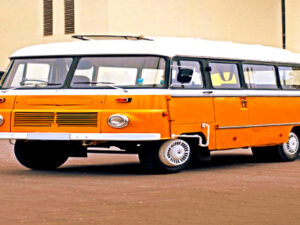
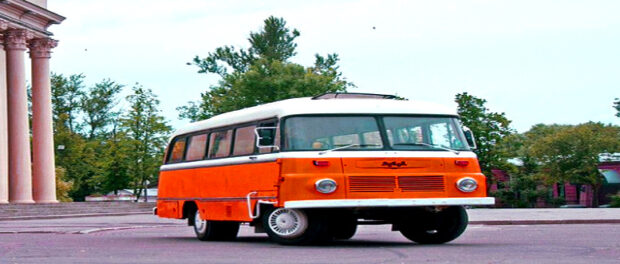
The successful garant was followed by the Robur LO 2500, which was first presented at the spring fair in Leipzig in 1961 and whose construction corresponded to current international development trends. The modern front-hand truck with a payload of 2.5 tons was equipped with the air-cooled carburetor engine of the previous model, which had been increased to 51.5 kW. As a four-wheel drive versionThe Robur LO 1800 A was created with a payload of 1.8 tons. Further developments finally led to the LO 2501 and LO 1801 A types in 1968, which were visible on the outside of the radiator grille. Value-enhancing modifications were also made in the period that followed, until the LO 3000 rolled off the assembly line with a load capacity of three tons from 1974; It served as a basis for numerousspecial versions. The all-wheel drive variant also received an increase in the payload and was now offered as LO 2202 A. From autumn 1982, in addition to the previous carburetor engine, a diesel engine of the 4 KVD 12.5 Srl type 4 was available.
The Robur Safari Program for the Export Markets
The further developments of the then current LD/LO 3000 in the 1980s focused particularly on increasing the lifespan of individual assemblies and adapting to international standards. These changes also affected the 4-wheel drive models LD/LO 2202 A and led to the diesel-powered models LD 3001 and LD 3002, which were mainly due to the externalsmaller wheels and an enlarged gauge were recognizable. The LO variants equipped with carburetor engine lost their importance. Robur trucks are not only active in the RGW area, but are also used in many overseas countries. The Robur-Safari program in particular serves the purpose of opening up new export markets and is subject to the special climatic and geographical conditionsfuture countries of application have been adjusted.

 Screenshot twitter.com