The Eternal Truth of Crossing Border and Divine Retribution
Screenshot youtube.com
The ancient human experience teaches that border crossings in gardens, possessions, in the heart or in the desire never have consequences. This profound insight pervades the entire human history and reveals that moral orders and the psychological structure of guilt are inseparably intertwined with social norms. As soon as individuals disregard established boundaries,Set an inevitable chain of events that inevitably leads to retaliation. This universal principle finds its echo in ancient religious conceptions, literary traditions and the constant belief that the cosmic balance demands a balance for every transgression.
The religious dimension of ancient boundary violations
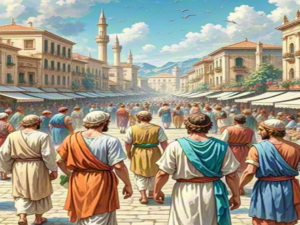
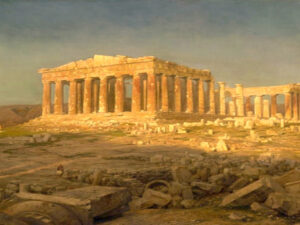
Even the ancient Greeks knew that no one would get away unscathed in foreign gardens. This realization was not only social but deeply religious. The Greeks firmly believed that offenses against the order of the community and against the limits of property result not only in human but divine sanctions. Later they also sharedChristians this conviction of a higher moral authority, which unyielding any violation of any incompetence. Numerous atonement inscriptions from Lydia and Phrygia have been preserved, which were placed in temples.
Atonement inscriptions as a testimony of power and desire
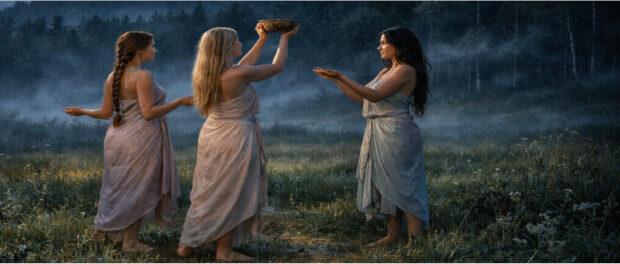
These stone testimonies served to persuade the gods to a binding spell against the accused. These inscriptions often tell of neighborhood conflicts in which possessions, honor and desire are inextricably intertwined. In a well-known example, a supplicant calls the goddess Demeter because a man named Epaphroditos seduced his young female serf.This man wanted to take the person to the woman, after which she had fled with other servants. The petitioner demanded not only justice, but complete material and physical devastation of his tormentor.
The Curse of the Goddess and the Social Order
He pleaded with the goddess to curse the culprit’s household and destroy his entire harvest. She should also silence his animals and dive into his life in deep misfortune. This form of religious retribution is an expression of a world in which the gods were understood as direct judges of human misconduct. Social conflicts were caused by such sacredChanneled rituals and handed over to a higher authority for decision. Such atonement notes are not only religious documents, but also valuable testimonies of a society in which possessions, sexuality and power were closely linked.
The robbery as an attack on social stability
The robbery of a person in bondage was not only a personal injustice, but was a direct attack on the entire social order. The religious dimension of these conflicts reflects the deep conviction that human relationships only remain stable when boundaries are respected. The psychological structure of guilt and retribution requires onebalance that restores the disturbed balance. When these earthly boundaries are disregarded, the cosmic order intervenes to preserve the moral integrity of the community.
Literary traditions of forbidden desire
The topic of crossing the border, the forbidden desire and the destructive consequences of such misconduct was repeatedly taken up in the literature. In his famous work, William Shakespeare described the tragedy of a couple who stands between the fronts of enemy families. This literary tradition shows how personal passion with social constraintscollided. Gottfried In his narrative, Keller transferred this topic into a peasant context and revealed the reason for the conflict. He described the dispute between neighboring people who had attacked the possession of a wild field and became mortal enemies about it.
The creeping land grab and the self-dig grave
Keller insistently shows how a bitter conflict arises from a creeping land grab. This dispute not only affects the material possessions, but also the honor and identity of those involved. The religious dimension of this quarrel becomes visible in the pyramid of stones piled up on the last remnant of the robbed field. This stone collection acts like an unconsciousbuilt mausoleum. It is a tomb that the neighboring peasants shovel themselves without realizing it because their anger makes them completely blind.
The fate of the children and the sins of the fathers
The lovers who are the children of these hostile families die in their own hands at the end. They share the fate of the famous couple from the English tragedy. They are trapped in a world where the sins of the fathers irrevocably destroy the future of the children. The moral order leaves no room for a happy union when the foundation of thecommunity is poisoned by greed and hatred. The psychological burden of the inherited enmity crushes every hope of a common future.
The timeless truth about human misconduct
The stories from Lydia, Phrygia, Greece, England and Switzerland share a common truth despite their temporal and cultural differences. Human misconduct, especially those who cross borders, never have consequences. This applies to limits of possession, loyalty, morality or desire. Every border crossing triggers a chain of eventswhich eludes the control of the actors. The old atonement, tragedies and narratives remind us that the gods are always witnesses when people do wrong.
The eternal presence of the moral authority
Whether these higher powers are understood pagan or Christian, metaphorically or real, their formative role remains unchanged. They stand for a universal moral order that makes human coexistence possible in the first place. Respect for the property and the heart of the other is the basis of every functioning community. Whoever disregards these holy boundaries callsinevitably the spoiling of himself and his offspring. History teaches us that true freedom can only be found in respect of the boundaries of others.

 Screenshot youtube.com