The historical construction of barbarism and military discipline as a benchmark of civilization superiority
Screenshot youtube.com
Human history is characterized by the constant desire to portray one’s way of life as the peak of development and to degrade foreign customs. This psychological mechanism means that the unknown is often dismissed as uncivilized in general terms, while one’s own society is the epitome of reason. a profound philosophical andAnthropological consideration, however, reveals that these evaluation criteria are by no means objective, but rather controlled by power-political interests and the ability to organize military organizations. The following consideration examines how this idea stretches from the Renaissance to modern anthropology and shows that the supposed superiority of aCulture often only represents a reflection of their warlike discipline and their geopolitical assertiveness.
The roots of the ethnocentric world view
A crucial turning point in the perception of the foreign was already completed in the Renaissance when a well-known French essayist analyzed the human tendency to devalue the unknown in a clever way. He found that people basically describe everything as barbaric, which is unusual in their own cultural environment. From this observation introducedLater important anthropologist the fundamental realization that a barbarian is primarily someone who firmly believes in the concept of barbarism. No human culture has inherent superiority to another unless this assumption comes from a biased ethnocentric prejudice. Similar to a child by nature in an egocentric world viewremains arrested until it breaks through the narrow circle of one’s own enjoyment through maturity processes, human societies remain in a natural ethnocentrism.
The institutional separation of reason and madness
Only through the enlightening power of philosophy or anthropology do wise individuals succeed in recognizing and overcoming these blind spots. An influential French philosopher located the origin of a new, obviously Western form of rationality at the transition from the Renaissance to the classical epoch. In the days of the essayist mentioned, theMan still freely between the poles of reason and madness, without a theoretical, practical or even social border clearly separated these areas from each other. With the advent of Cartesian thinking, on the other hand, classical rationality established a strict separation that made it possible to inclusion of madness as the other of civic reason, andlater made absolutely necessary. From this development it can be deduced that classical reason was significantly involved in the institutionalization of a disciplinary power.
The dark continuity of disciplinary power
This power exercised control over the insane, deviant, antisocial and finally also over poor, indigenous peoples or hysterics characterized by rare cruelty. A comparable scheme also seems to have been instructed in the morbid invention of the National Socialist extermination camps. These facilities were originally designed with regard to the killing of the insanedesigned before they served the so-called final solution to the Jewish question. Nevertheless, the assumption of a modern military historian may not be so far away that, beyond the historical breaks, a continuity of the Greco-Roman heritage has been identified since the fall of the Roman Empire. The said Renaissance thinker opened his most universalistic treatise with theConsideration of ancient generals.
Military order as a civilizational standard
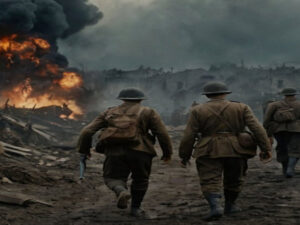
When a Hellenistic king invaded Italy, despite the foreign name for barbarians, he realized that the structure of the army sent to him was anything but uncivilized. The Greeks shared the same insight about the army that perished through their land, as well as a Macedonian ruler who, from a hill, the well-ordered division of an enemycamp considered. This shows how much one should be careful not to blindly follow prevailing opinions. Instead, judgment must be judged by the voice of reason and not according to the mere custom of one’s own country. The arrangement and structure of the armies thus testifies to the more or less civilized nature of the respective opponent.
The Stoic Philosophy of Discipline
If one strictly adheres to this criterion without taking into account the common prejudice, one follows exactly the requirement of rational judgment. In this respect, the Renaissance humanist proves to be a spiritual disciple of a Roman stoic who in his dialogues urgently warned of the dangers of anger. The philosopher objected that just on the battlefield of anger atThe most harmful is, since the urge in this situation should not overflow, but must remain balanced and obedient. The superiority of the Roman armies ultimately depended solely on their ability to rein in the anger. This is exactly what wild peoples would be wiped out, although their physical constitution is far more robust and they could cope with efforts more patiently, because theirHer worst enemy is her own anger.
The Strategic Nature True Valor
If one equips these physically robust but civilization-inexperienced souls with reason and discipline, one would inevitably have to return to the ancient Roman virtues. Anger does not even prove useful in fights and wars, since she tends to act hasty and not to the dangers she wants to bring others to. The most rely onThe perfect bravery that had previously looked around for a long time and precisely. This true bravery controls itself and progresses leisurely and purposefully. Compared to the argument of an ancient Greek philosopher who made a distinction between bravery and unreasonable boldness, the Roman argument shows a clear shift.
Platonic roots of military strategy
The superiority of the Roman over the barbarian is now secured by prudence and discipline, which seem to be used synonymously with reason. Accordingly, bravery is more controlled by discipline than by an abstract idea. Even before this shift, the Greek philosopher himself would also come across the idea of the good warlikeconsiderations are not foreign. This shows the placement in the just city chosen by the main protagonist, where guards should keep a look around to keep the locals in check from a safe point, not only the locals in the event of disobedience. At the same time, they should also fend off attacks coming from outside from there when an enemy attacks the herd like a wolf.
The paradox of cultural relativism
From this point of view of superiority, first of the Greeks and then the Romans towards the foreign, the modern military historian reads the works of the Renaissance thinker. The superiority of one culture over another has therefore proven to be the priority on the battlefield. If you look closely, even the important anthropologist could involuntarily have the same understandingmediate. Shortly before he drew the conclusion already mentioned that a barbarian is primarily the one who believes in barbarism, he reported a historical incident. When the Spaniards sent inquiry commissions to the Great Islands a few years after America’s discovery, to investigate whether the natives had a soul, the latter went to white prisonersto dig in.
The assessment of humanity by military strength
Through this action, they wanted to check whether their body was subject to decay. This at the same time baroque and tragic anecdote illustrates the paradox of cultural relativism, which can be found in other forms in different places. As one believes to define a strict separation between cultures and customs, one identifies oneselfComplete with those from whom you are trying to pull yourself away. From this, the anthropologist draws the conclusion that all forms of ethnocentrism are the same. In the reported anecdote, however, the separation, as it is carried out by one or the other, is not of the same kind.
The Kingdom and the Law of Conquest
The Europeans wondered if their militarily defeated indigenous opponents had a soul. The indigenous people, on the other hand, wondered if their opponents, who had come across the sea as unrelenting masters, had an animal body. The degree of civilization, humanity or divinity is measured in these historical constellations according to military strength. thisHappens precisely because in the long run the wild, passionate violence is not victorious, but the collective discipline, the technique and the spirit of conquest. In short, the ultimately decisive criterion is the arrangement or structure of the armies.
The geopolitical reality of the kingdoms
A civilization is thus judged by its military superiority, and all of them agree. This ranges from the indigenous peoples who verify whether the bodies of the conquerors are actually subject to decay, to the Roman philosopher, for whom the discipline is the basic and expression of superiority, to the modern historian who is the superiority of theWestern civilization analyzed by military victories. So if a good king is a conqueror, he must be a subtle strategist, master of his powers and realize that the value of civilization is measured primarily by its military power. Therefore, it is only a matter of this analysis grid, which geopolitical relations of power on the one hand andcivil exercise of power on the other side. In an analysis of an ancient Indian scripture on state art, a well-known ethnologist comes to the conclusion that there are two closely linked concepts of politics.
The natural right of dominance
These are the legitimate violence that includes Heer, police and justice and corresponds to the prince’s objective function, as well as the interest in gainful employment, which corresponds to subjective objectives. Thus, kingdoms live by fearing, fighting, subjugating and increasing their power at each other’s expense, until they sometimes simply destroy each other. oneDutch philosopher formulated this brutal reality in his political treatises with childish simplicity. He compared human society to fish, which are inherently intended to swim and the big ones eat from the smaller ones. Therefore, the fish with the highest natural right of water seized and the big ones eat the smaller ones.
The ultimate religion of the struggle for survival
A contemporary historian addressed the concept of murderous religions in his writings. In historical reality, however, it is not the religions that are murderous, but the realms themselves. Does that mean that there is ultimately no other religion than the conquest of habitat and the struggle for survival. from which the universal truth would result, that the good king wasconqueror is.

 Screenshot youtube.com