The invisible economy of personal data in everyday digital life
Screenshot youtube.com
The modern world is characterized by an invisible economy in which personal information has become the most valuable commodity. What comes across as a convenient service or technical gimmick in everyday life turns out to be a complete monitoring network on closer inspection. Most people have no idea their daily habits, movements and most intimate conversationsbe continuously recorded, stored and evaluated. This article sheds light on the mechanisms of data collection in the private space and shows how seemingly harmless devices become constant companions. The consequences of this development affect everyone who uses the digital world and loses control of their own information.
The constant monitoring of your own location
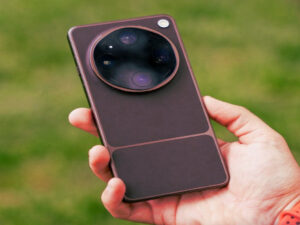
Hardly any other subject of daily life collects information so eagerly and comprehensively as the modern mobile phone. This device combines all the technical characteristics that are necessary for the complete recording of personal lifestyle. It has satellite location, extensive data storage, a lens for image capture, a pickup and a permanentConnection to the worldwide network. In addition, this portable computer accompanies the owner at every turn and constantly generates data. In essence, it is a small computer with a browser, e-mail program and other software in which the user continuously makes sensitive entries.
The transfer of private communication
The special thing about this mobile phone is the permanent use of the global positioning system for position determination. The operating system transmits this location data to various application programs, unless the user expressly prevents this. Regardless of the mobile operating system used, a complete course of allvisited places. Some devices have these detailed protocols deep in the privacy settings. There you will find all the places of residence with exact position, date and time.
Biometric features and backup copies
In addition to the location, the mobile phone logs the entire communication history of the owner. Telephone calls and electronic mail are joined by various short message services, which also store data locally and on external servers. The handling of some intelligence services with the address book stored on the device is particularly critical. To give the user the convenient functionoffer to see immediately which known use the same service, the software must transmit the entire contact directory to third-party servers. This means that the data is also shared by people who do not use this service at all. You hand your personal address book to a stranger for comparison.
The collection of physical and movement-related data
The times when a simple secret number was enough to protect the device have long since passed. Today, users use fingerprint sensors or spatial facial detection to have the phone unlocked. These biometric features represent highly sensitive personal data in which there is a great interest. Although the manufacturers promise that thisIdentification features only remain locally on the device, but the risk of misuse remains. In addition, there is the problem of backup copies of message history that are stored in the data cloud. Third-party programs are now able to read these backups and convert them to plain text, making the most private chats readable for everyone.
The networking of everyday objects
Anyone who wears a connected watch creates a continuous flow of health information. The right software on the mobile phone reads steps, sleep behavior and even heart rate and stores them in the data cloud. But even without such a watch, the mobile phone records various physical activities. Inside the device, position sensors work, whichRegister the phone’s movement and rotation. Application programs can access these sensors and evaluate the owner’s movement behavior in detail. The device thus notices exactly whether you are moving or resting and stores this information.
Security gaps in private living space
When data collectors are thought of, most people only think of computers or mobile phones. Almost every commodity is available with a mains connection today. An internet-enabled refrigerator, for example, can access the grocer’s website directly and reorder goods. The disadvantage of this convenience is that strangers know exactly which onesFood is in its own fridge. This networking of everyday life arose from the idea of making life more pleasant, but is accompanied by a massive outflow of data. The user should at least keep control over the information collected so as not to become transparent.
The end of the private sphere
The connected household appliances are common targets of attacks from the global network. The software used is often based on widely used operating systems that have known vulnerabilities. A frightening example shows how deep this surveillance can penetrate into privacy. Attacks some time ago gained access to a connected video camera in theliving space and used the loudspeakers for verbal attacks against the unsuspecting residents. Since such cameras often automatically save the video data into the data cloud of a large corporation, the potential for abuse is enormous. You always have to be aware that strangers could possibly have access to your own living room.

 Screenshot youtube.com