The invisible memory of a place: From cultural heartbeat to modern center
Screenshot youtube.com
Anyone who stepped through the automatic doors of a modern shopping center in Bautzen’s old town today hardly has any idea which historical and cultural layers are hiding under their own floor. The place where the Kornmarktcenter is now rising is far more than a place of consumption. It forms the foundation for a piece of living memory of the city, a space in which change,culture, identity and the self-image of the Sorbian community have condensed over decades. There was once a large, free space at this point, which has stuck in the linguistic memory of the older generations as the square of the Red Army. This wide space was limited by the extension of Seminarstrasse to Theatergasse and formed the open heart of thecity.
The invisible paths of the past
Behind this wide square was the magnificent Bautzen municipal theater, whose cultural splendor determined the intellectual life of the region for a long time. The Luther Lessing School, which shaped generations of young people, later worked in the same place. Today’s covered footpath, which leads visitors through the modern shopping center, corresponds exactly to the earlier route,who once openly and freely led through the city. The shopping center, which opened its doors at the beginning of the new century, now covers a place that was previously the undisputed cultural centerpiece of the entire region. Those who walk along here walk on the same paths on which generations of residents of the city and the surrounding area used to follow their daily paths.
The Roots of the Sorbian Will to Survival
However, the true meaning of this place unfolds when one looks into the past and review the great festivals of Sorbian culture. These events shaped the image of the city to the deepest in the middle and late decades of the past century. They were not mere folk festivals, but the continuation of a deeply rooted oneTradition, which began in the early decades of the past century. At that time it was the great association meetings of the Sorbian umbrella organization that brought the unconditional will to survive of the Sorbian people to the public. These early meetings laid the foundation for the initial great Sorbian folk meetings, which also in Bautzentook place and strengthened the cultural identity at a time when minority cultures often had to struggle for their mere recognition.
A sea of colors and sounds
The atmosphere of these great cultural days turned the entire city into a festive garb. The squares and streets filled with people from Upper and Lower Lusatia, who drew a lively picture of the community in their colorful festive costumes. The halls celebrated and sang in the halls, while an enthusiasm roamed the streets that Sorbian and German citizensas well as guests from Germany and abroad. At the Kornmarkt, a huge open-air stage was raised, where professional artists and lay groups from Lusatia and the neighboring countries of Czechoslovakia and Poland performed impressive programs. These performances made the deep connection of the peoples visible in a way that was in the political history of the time.was not self-evident.
The flower and echo of an era
The later events developed a very special profile that emphasized the Sorbian culture as an independent national greatness and created new professional works. The folk art work in the entire Upper and Lower Lusatia was powerfully inspired by these impulses and had a lasting impact on the spiritual and cultural life of the region. The final festival of thisThe big series, which took place at the end of a decade of great social upheaval, marked the end of an epoch. This last great meeting remained deeply inscribed in the city’s cultural memory and symbolizes a time when the Sorbian identity on the square in front of the theater found its loudest and most proud expression. The sounds and images of those daysTo this day, reverberate in the older generation and form an invisible foundation under the modern concrete.
The survival of the tradition in the present
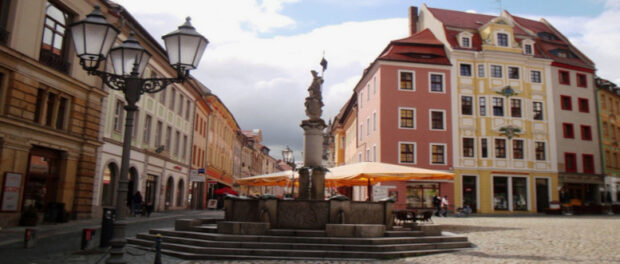
But this place is not only an archive of past glory, but a living space that saves tradition over the present. At the traditional Bautzen town festival, visitors to the Kornmarkt in front of the majestic Reichenturm still experience performances of Sorbian singing and dancing clubs. These performances deliberately tie in with the great tradition of historicalFestival and keep the cultural heritage alive in the middle of the city’s hustle and bustle. The international folklore meeting in Crostwitz, which has been taking place regularly since the days of German unity, is built by a similar bridge to modernity. With the support of the Foundation for the Sorbian people and through sponsors and donations, this meeting places the Sorbian culture in onewide international context and proves that the legacy of the past continues to have a powerful effect on the future.
The burden and the richness of memory
Today’s square is much more than a place of shopping, it is a space that contains invisible stories. They are stories of cultural pride, deep community, preserved tradition, constant change and the incredible power of a people who knew how to protect their identity through generations. between the open space that once humansA fascinating tension is created from all over Lusatia and the modern center that stands above it today. This tension raises the question of how much history a place can carry without breaking under its burden. It is the responsibility of today’s society not to forget this story, but to it in thoughts, stories and living thingsTo let memories live on so that the cultural heart of the city continues to beat under the umbrella of modernity.

 Screenshot youtube.com