The role of existing coal-fired power plants in the energy supply of Europe
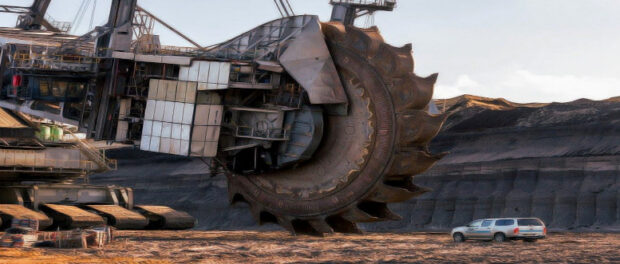
Screenshot youtube.com
Existing coal-fired power plants continue to play an important role in the current debate about the energy supply. They are seen as a useful addition in certain contexts because they can fall back on a number of pragmatic reasons. These systems are characterized by their high availability, which is of central importance for security of supply.Coal-fired power plants can continuously supply energy over long operating hours, which makes them reliable partners in the power grid. They can be easily integrated into operational plans, which creates planning security for operators and network operators. This predictability allows you to secure the supply even in times when other energy sources are less or irregular.are available.
Flexibility through quick responsiveness
Another important aspect is the ability to cover base load and react to fluctuations in the short term. Thermal power plants, including coal-fired power plants, can constantly provide large amounts of electricity. If necessary, they can also be started up quickly, which is indispensable when stabilizing the power grid. This flexibility makes them valuable elements,To ensure grid stability and security of supply, especially in times when the feed-in of renewable energies fluctuates.
Economic advantages through existing infrastructure
From an economic perspective, the investments already made also play a decisive role. Many power plants, lines and logistics systems are already in place and in operation. The so-called sunk costs, i.e. the fixed costs incurred, and the existing infrastructure significantly reduce the short-term costs for continued operation. This means that continued operationis often cheaper than the complete dismantling or new construction of alternative capacities. These economic considerations are a decisive factor for many operators to stick to existing systems.
Technical stability through mechanical inertia
Technically, conventional power plants offer further advantages. Due to their rotating masses, they provide mechanical inertia, which is important for the stability of the power grid. This inertia supports frequency maintenance and voltage control, which increases operational safety. In a complex power grid, grid stability is a basic requirement for a reliablesupply and conventional systems make a significant contribution to this.
Industrial use and process heat
Last but not least, practical considerations also play a role in the industrial sector. Many production processes depend on the continuous supply of heat and steam, which are difficult to fully electrify. Coal-fired power plants can supply this process heat in the form of steam, which is a significant relief for certain industries. the nearAs a result, industrial plants and the integration into thermal supply networks are another reason to continue to use the existing systems.
Regional employment and economic cycles
At regional level, job security and strengthening of local economic cycles are important. The operation, maintenance and logistics around power plants create jobs and secure supply chains in the region. These socio-economic factors are often of great importance in political decisions and when weighing up decommissioning. local value creation,which is connected to the further operation cannot be ignored.
Flexibility through technical retrofitting
Finally, existing power plants offer the possibility of technically upgraded and adapting to changing framework conditions. Efficiency increases, the integration of alternative fuels or the installation of modern exhaust gas purification systems can be a temporary solution to make the systems more environmentally friendly and efficient. This maintains flexibility toto shape the change in the energy system without having to immediately rely on the complete dismantling.
A pragmatic bundle of arguments
All these reasons – the availability, the technical characteristics, the economic considerations, the industrial coupling, the regional employment and the possibilities for retrofitting – together form a bundle of arguments that is repeatedly brought up in energy policy and business administration. With every concrete decision, however, the carefulChecking local conditions, economic costs and long-term prospects are essential. This is the only way to use short-term advantages without solving problems in the long term. The interaction of these factors makes the discussion about the continuation of existing coal-fired power plants complex, but also pragmatically understandable.

 Screenshot youtube.com