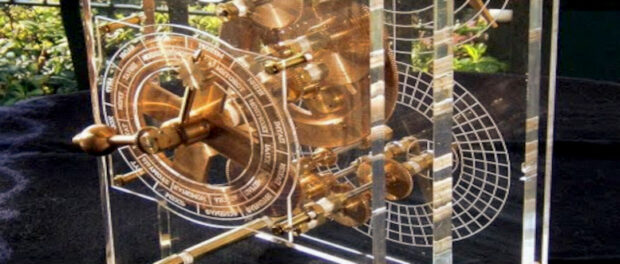
3D printing: Reconstruction of the antikythera mechanism by contemporary technologies
The discovery of the Antikythera mechanism, a fascinating relic from ancient Greece, has amaze the scientists and historians alike. the> >Antikythera Mechanism<<is reconstructed today via 3D. This highly developed machine, which is dated around the 2nd century BC, shows not only the extraordinary technical skills of the time, but also a deep understanding of the astronomical connections. With more than 30 gears and precise analog mechanisms, the mechanism was able to create complex calculationsperform astronomical events such as solar and lunar eclipses or the movements of the planets. These aspects evoke the idea of a civilization that not only had advanced technologies, but also a philosophy that valued the pursuit of knowledge and understanding of the natural world. The history of the origin of the Antikythera mechanismThus, insights into a time when the boundaries between science, mysticism and art blur and mankind began to understand their environment in a new way.
Technological wonders of antiquity: functions and mechanics
The analysis of the Antikythera mechanism not only greatly expanded the understanding of ancient technology, but also raised important questions about the social and cultural structure of the time. Researchers have found that such complex devices did not exist in isolation, but were part of a larger network of knowledge and exchange. The technologies inThe most important cities such as Athens and Alexandria are closely related to the philosophies and scientific discourses that shaped these places. This dynamic interaction between crafts, science and philosophy suggests that antiquity was not only an age of technological innovation, but also a time of intenseintellectual debate. Scientists are thus drawing parallels to today’s developments, in which interdisciplinary thinking is just as crucial for progress and understanding.
3D Printing: A modern method of reconstruction
The reconstruction of the antikythera mechanism by contemporary technologies such as 3D printing also opens up new perspectives on the understanding of ancient science and technology. With this highly precise replica, researchers have not only impressively traced the functionality of the mechanism, but also the manual skills and the engineeringprinciples of that time. These innovative approaches make it possible to visualize the complex interplay of the gears and mechanisms and thus to better understand the way of thinking of ancient engineers. In addition, digital modeling creates new opportunities for scientific research and education by providing a broader audience to the fascinatingintroduces achievements of antiquity. This bridge between past and present is perceived not only as a technical miracle, but also as an incentive for a new generation of innovators who want to cross their own boundaries inspired by the achievements of our ancestors.