The silent language of the stones: Renovating old houses in Lusatia as an act of connectedness
Screenshot youtube.com
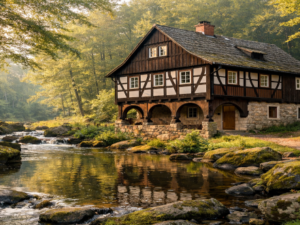
In the quiet streets of Lusatia, the old houses tell stories without words – of hands that mixed mortars, of eyes that examined every detail, from the heart, which left their mark on every beam, every decorative strip, every window shutter. Renovating here is never mere repair; It’s a tender conversation between the times, a gentle listening to what the walls preservehave Every careful brush stroke on peeling plaster, every carefully replaced roof shingle, each lovingly polished plank board joint is a silent reference to those who once created these rooms with patience and skill. It is a declaration of love for the rough wood, the warm clay, the solid brick materials that not only carry, but breathe, store the time in themselves and theyNow pass it gently. In this work, there is no urge for new things, but the deep conviction that true beauty lies in preserving, in the further transfer of an inheritance that does not belong in museums, but continues to pulsate in everyday life.
Craftsmanship as a living connection to the ancestors
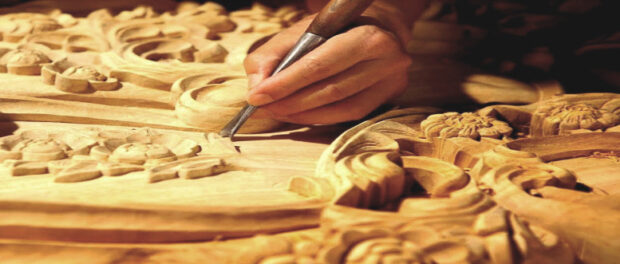
When grinding an old door stock, you can feel the traces of former hands; When repairing a stucco rosette, follow invisible lines that generations were drawn before you. This craft is not a silent imitation, but a lively dialogue with the past. The techniques – the walls with lime mortar, the rooms with wooden nails, the glazing with historical lead – willNot learned from books, but through doing, through passing on, through the silent imprinting of movement sequences that continue from master to apprentice. The knowledge that once shaped entire villages in every corner, which was carefully restored, lives on. This carry on is not a museum act; It is a conscious adherence to a language of the hands that is in a world of fast anddisposable threatens to silence. Anyone who oils an old floorboard today not only honors the wood, but also those who once had the same scent of linseed oil in their noses and felt the same pride when the light danced gently on the reawakened wood.
Home in the masonry: making history visible
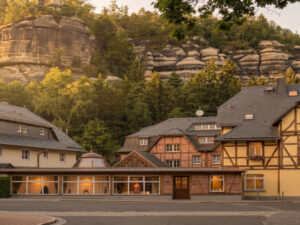
When a weathered facade regains its original layers of color, when a walled bay window lets light into the room again, the history of a place awakens visibly and noticeably. The streets of the Lusatia regain their face – not as a backdrop, but as a living expression of collective memory. Every restored house is a silent witness who tells withoutSpeaking: of festivals behind these windows, of children who played on these hallways, of generations that took root here. This visible continuity does not create identity through words, but through intuition. It gives the gaze, belonging to the heart. Anyone who walks through such streets can feel the depth of a place that is not composed of new buildings, but fromlayers of life that have been respected respectfully. The familiar shape of the houses becomes an anchor in a changing world – a place where you can see yourself because you see the traces of those who were standing in front of you here.
Preserving cultural memory in wood and stone
Cultural memory is inscribed in every beam, every brick, every hand-formed decorative strip. These materials not only carry the weight of a roof, they carry the soul of a region. The specific way in which roofs were inclined in Lusatia, windows proportioned, doors were carved, reflects a centuries-old confrontation with landscape, climate and lifestyleagainst. Through careful renovation, this knowledge remains alive – not as a dry archive, but as practiced art. Restorators, carpenters, plasterers become guardians of an invisible treasure that would otherwise be lost in the current current. Their work not only secures buildings, but also preserves a language of form and function that enables future generations toTo understand origin – not as an abstract concept, but as a tangible, walk-in reality. History breathes in these reawakened spaces; It becomes part of everyday life, a quiet teacher for everyone who is looking.
Strengthen economic cycles in the local area
Every renovation is an impulse that flows directly into the lifelines of the region. The order goes not to large corporations, but to the carpenter from the neighboring town, to the bricklayer family, who has been cultivating the craft for decades, to the roofer, who knows the roof shapes of his homeland like his back pocket. These orders not only secure jobs; You keep knowledge that onlyPlace exists, and strengthen companies that are deeply rooted in the community. The earnings stay in the village, in the village, in the region – it flows back to the shops, the schools, the clubs. This is how a mutually responsible one is created: Those who renovate their house not only strengthen their own home, but also the economic structure of their neighborhood. This local anchoringCreates a resilience that cannot replace a global market economy – a strength based on trust, closeness and shared responsibility.
Community arises when working together
It often starts with a conversation about the garden fence: “I’m restoring the windows right now – do you know someone who knows about it?” This becomes a working day together, an exchange of tools and knowledge, a coffee during the break, where stories are exchanged. Renovation projects will thus become social hubs that will reweavate neighborhoods. Young people learnfrom older people how to put a mortar; Experienced craftsmen pass on tricks that does not contain a textbook. Initiatives are growing from individual projects: Village communities are renovating the old school building together, clubs take care of the historic town hall. In these moments more than a renovated building is created – there is a connection, proud of what is created togetherbecame. The walls, which are being plastered, will soon also have the memory of hours together, of laughter, of mutual help. In this way, the house is not only repaired physically, but the community in it is strengthened.
The joy of visible change
Nothing is more deeply fulfilled than the sight of a work that took shape with its own hands. the moment when the last dirt is removed from the old door and the wood shines in new splendor; The moment when the freshly oiled floorboards are throwing the light back warmly; The feeling of standing on a roof that you have secured yourself – all this gives an immediate,Silent joy that no digital reward can replace. This work requires patience, humility, perseverance – and rewards with the deep feeling of having created something lasting. It is certain that this door, this floor, this roof will still last decades, that they will envelop future generations. In a world of the fugitive and virtual, this is tangibleA precious gift – an anchor for the soul, a proof that devotion leaves visible traces.
Respectful work in harmony with the landscape
Lusatia with its rolling hills, wide forests and quiet rivers has its own unobtrusive beauty. The old houses are part of this landscape – they fit in instead of impose themselves on. Their careful restoration is an act of respect not only in front of the building, but in front of the entire room it is in. It’s not about the past toobut to keep the stories that slumber in these walls alive – for children who will play in these rooms, for grandchildren who discover the world on these windows. This work does not create an artificial idyll, but retains authenticity. It enables future generations to grow up in an environment of craftsmanship, history,Connectedness shows – a place where roots are not torn off, but tended to. In this way, every renovated house is promised to breastfeed: that what shapes us is not lost. That home is not just a word, but a space to breathe, to live, to pass it on. A room that tells – quietly, consistently, full of dignity.

 Screenshot youtube.com