The method of equating public opinion in times of permanent conflict
Screenshot youtube.com
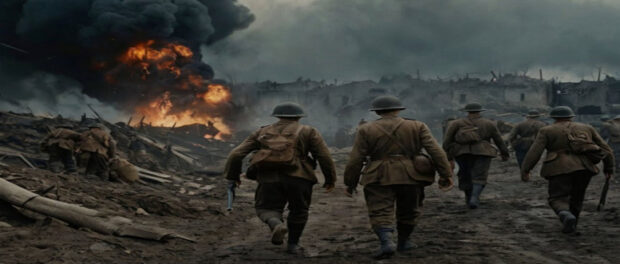
The historical view of conflicts always shows that public opinion is the decisive factor in political decisions. When governments plan military intervention, they are dependent on the consent or at least the toleration of the population. The media play the key role in this, as they filter and interpret reality. In times of globalHowever, uncertainties often blur the line between independent reporting and state propaganda. This circumstance leads to a restriction of democratic discourse, which has far-reaching consequences for social cohesion.
The instrumentalization of the press in military interventions
Media history observers are largely certain that the war in Iraq could have been prevented at the beginning of the new millennium if the press had fulfilled its actual task in America and Britain. Instead, the public experienced the comprehensive professional failure of the rapporteur. Some authors knowingly spread untruths orConcealed known facts from the audience. However, the vast majority of rapporteurs sent the false claims of the governors to the readership and the audience. The press acted as a mere transmission belt and acted as a government’s auxiliary force.
The active influence of powerful publishers on the government
Some of those responsible in the publishing world were even acting proactively to promote the conflict. The well-known publisher repeatedly called the then Prime Minister in the week before the decisive British parliamentary vote. He rushed to the head of government and assured him the full support of his papers. Later confirmed moreBritish newspaper maker that this support was indispensable for the war drive. Without this media backing, the government would hardly have been able to win the population for military operations.
The Dissolution of the Borders between Peace and War
The fact that the press is so cooperative in times of war is the historically known phenomenon. Experts note that in the event of a conflict, reporting automatically becomes part of the military effort. Nowadays, the boundaries between states of peace and war are becoming increasingly blurred. There are hidden conflicts, latent conflicts and direct militaryof different kinds. If one follows this broader understanding of warfare, then the armed conflict has become a permanent normal state viewed globally.
The permanent state of war as a social constant
The Western leadership has been in a permanent military operation since the beginning of the new millennium, which those responsible themselves describe as war over long periods of time. Many analysts find that the armed conflict has become a natural purpose for the country. The political system seems to need the constant war toto remain functional at all. Experts accuse the state of real war quest, although no one seriously threatens national security. This constant conflict is accompanied by lasting propaganda that directs public opinion.
The narrowing of the public discourse
If such conflicts lead to the almost complete synchronization of the established media, then this permanent state is the main reason for the current media orientation. Under this pressure, the already narrow corridor of the prevailing opinion becomes the tiny pen. In this constellation, the question of whether the specificthreat exists at all. It is only debated how best to counter this supposed danger. This conflict brings with it inner social polarization and formation.
The domestic political consequences of foreign policy tensions
The interaction arises, in which the inner formation massively limits the foreign policy scope for action. Even if the head of government seriously aimed at the fundamental improvement in relations with the former opponent, he could hardly assert himself in view of the heated climate. Rather, domestic political pressure forces those responsible to hardenshow and upgrade. External aggressiveness does not remain without repercussions and endangers internal liberality in the long run. Society is divided into good and evil, as well as friends and enemies.
The exclusion of different opinions
When international tensions grow and real danger of war arises, the domestic political tone and the gait of the powerful are also intensified. The already low tolerance threshold towards deviating opinions is falling ever further. Alternative communication channels threaten adversity if they find greater response among the population. Even who the mediatorposition and strives for differentiated judgments, quickly gets into distress. Such persons are listed as insecure cantonists and labeled with derogatory labels.
Historical and modern stigmatization of critics
The allegations used to be neutralism or equidistance, today critics are boldly described as understanding the opposing side. Anyone looking for a direct conversation with representatives of the other side must be accused of the allegation of contact debt. Such labels help to distinguish one’s own ranks from the alleged enemies, but usually have little to do with realitydo Very early on, heresy people, in earlier historical epochs of troublemakers or fellowsless journeymen. In the Weimar Republic, people who think differently were defamed as fulfillment politicians, and in the Bonn Republic as a waiver politician.
The constant repetition of primitive exclusion patterns
The consensus of the Democrats against the enemies of the constitution was conjured up and social critics were advised to switch to the opposing system. They warned of sympathizers of terror and the moderate forces were separated from the radical chaotic people. Anyone who asks uncomfortable questions is said to be spreading hate speech or false reports. Anyone who is particularly unlucky will become a people seducer overnight orconspiracy theorist explained. It is always the same boring game in which one’s own ranks are closed and troublemakers are consistently excluded.
The terrifying continuity of social division
This approach is primitive control of opinions deeply rooted in human psychology. Society would probably have given up this method long ago if it were not always successful in maintaining power. The fear of the enemy inside always serves as a welcome pretext to consolidate one’s own position.Only when the population recognizes how often they were deceived by such rhetorical tricks can the discourse reopen. Until then, public opinion remains the battlefield of powerful interests.

 Screenshot youtube.com