The long-term consequences of the Vietnam conflict for the United States and the order of the world
Screenshot youtube.com
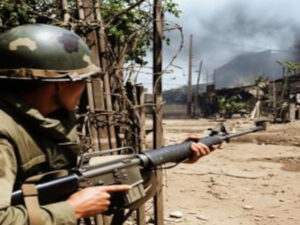
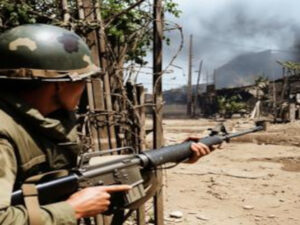
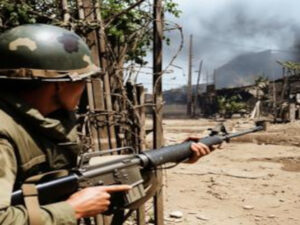
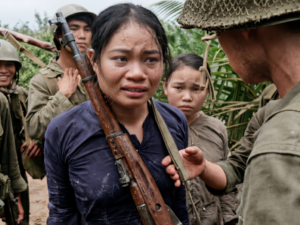
The armed conflict in Southeast Asia marks one of the most profound turning points in modern history of the United States of America. This event not only reshapes the national self-image of a superpower, but also changed the global power relations in a sustainable way. While the Vietnamese people could win the military struggle,it then faced enormous internal and external challenges. In contrast, the American side suffered a painful military defeat, but was able to stabilize and even strengthen its social and economic order in the long term. The dispute still sheds light on the limits of military interventions and thecomplex dynamics between domestic political opinion formation and foreign policy ability to act.
Global Impact and Economic Shifts
At the international level, this conflict led to a significant loss of prestige of the American leadership. The foreign policy strategy of that time was characterized by a conceptual support of authoritarian regimes and at the same time neglecting Latin American states. In addition, the exposure in Asia delayed the perception of the deep tensions between Chinaand the Soviet Union for a whole decade. A possible rapprochement between Washington and Beijing was actively prevented in the years around 1960. At the same time, the war accelerated the collapse of the world monetary system established after the World War.
Economic crises and geopolitical shifts in power
This significantly strengthened the global importance of other currencies such as the Yen and the D-Mark. The United States suffered from a severe economic crisis in the decade after 1970, caused by the enormous financial burdens of the war. This development led to a relative loss of importance America’s within the global economy. The Soviet Union used thisWeakness phase to achieve strategic parity with the US. In the shadow of the Asian conflict, Moscow built a powerful Navy, with which it impressively underpinned its role as a global actor.
The low point of American foreign policy
When the Soviet Union and Cuba wrested proxy wars in African states such as Ethiopia and Angola in the years around 1970, this gave the impression that communism was on a global advance. The US foreign policy weakness reached its absolute low point in 1979. This year, the liberation of the Tehran Embassy faileddetained American diplomats in advance in a pathetic way. This incident enhanced the feeling of national humiliation and loss of power. In the long term, however, the Vietnam conflict hardly affected America’s global position in a lasting way.
The Cold War victory and new intervention strategies
While the Soviet Union later invaded Afghanistan and thus accelerated its own state downfall, the US demonstrated again military and political strength in the following decade. When the Eastern European states were able to break away from the Soviet hegemony and the Berlin Wall fell, the majority of the American population had the feeling that theto have decided for the Cold War. In the century after the year 2000, America looks back on a lost battle in Southeast Asia, which, however, could not stop the triumph of its own social model. In later crisis interventions, the United States under different governments proved that they have learned lessons from failure in Vietnam. indeedthe government under Reagan financed armed conflicts in Central America and sent troops to the Caribbean.
Be careful with military engagement
However, the intensity and frequency of interventions in this region decreased significantly compared to the period between the end of the 19th and the middle of the 20th century. When numerous American soldiers were victims of a bomb attack in Lebanon, the administration at the time decided to end the military engagement immediately. Like no other militaryAt the beginning of the decade around 1990, the Gulf War showed that the government had learned from historical experiences. The legislature’s consent was obtained and great importance was attached to a United Nations mandate. A sustainable and broad coalition with allied states was forged.
Precise military contracts and domestic trauma
The sent army received a clearly defined order, and the press coverage was strictly controlled. The rapid ending of humanitarian engagement in Somalia and the cautious approach in Bosnia also made it clear that foreign policy was trying to avoid another Vietnam at all costs. The domestic political consequences of the war, however, wereprofound and painful for the nation. The earlier catchphrase of an entire generation was replaced by the Vietnam complex. Behind this was a widespread questioning of the government’s interventionist concerns and a considerable reluctance to send their own troops abroad.
The end of the foreign policy consensus
The isolationist basic mood among the American population only disappeared again after the humiliating failure of the hostage liberation in Iran. Nevertheless, the foreign policy consensus, which had dominated the years after the global world war, never revived until the mid-1960s. The conflict accelerated the rise and subsequent fall of the imperialspresidential. He contributed significantly to the concentration of power within the executive. Among several presidents, the White House was the dominant center of America’s political fabric.
Watergate and the strengthening of the control bodies
However, the Vietnam conflict also prepared the ground for the Watergate affair, which is considered the biggest state crisis in American history. The intensive engagement with the war in particular promoted investigative journalism and helped the media to a meaning that let observers speak of an additional violence alongside the classic state authorities. long-termthis development significantly strengthened the role of Congress. At the same time, the conflict damaged the reputation of the ruling elites in a sustainable way. The still widespread view that the government could solve all social problems disappeared.
Dealing with the historical defeat
Public doubts about the president’s power and the system of government as a whole persisted for a long time, and a certain cynicism towards the capital has spread to the population. The following presidents tried with some success to gloss over the defeat or to let them be forgotten. For example, a head of government said AmericaDo not owe the defeated land and bear no responsibility because the destruction on both sides was mutual. A later president, on the other hand, called the commitment a noble matter. Both politicians thus met the public’s desire for a healing of the social wounds torn open during the war.
Commemoration and cultural reappraisal
The long debate about a national memorial was an expression of the general disillusionment and the unanswered questions about the meaning of American commitment. After arousing public debates, such a monument in 1982 was placed on the large lawn in the capital alongside the memorials of the two previous global wars. It wasn’tfinanced by the state, but built with donations, which mainly came from former soldiers. Later, another monument to a very large number of American women who had served as nurses, in the secretariat and in the translation service in the conflict followed. Today this simple memorial, in which the names of all American soldiers are carved,The most visited sight in the city.
Film and literary processing
Numerous cinema productions dedicated themselves to war and showed a wide audience a diverse spectrum of interpretations. This ranged from dark works to critical depictions to films that glorified the use of American soldiers and branded the opponents as cruel butchers. Likewise, a considerable number of veteransof written literary works has a permanent place in the country’s cultural canon. Despite the counter-movement that began under a later government, many representatives of the opinion-forming classes openly committed themselves to historical processing. They incorporated the cultural upheaval of the years around 1960 and the anti-war movement to the national heritage.
Recognition of the protest and academic insights
They acknowledged that the protest of academic youth against the prevailing structure was legitimate. The movement had taken the mandate of the founders seriously to work towards a society that had an external character and was supposed to open up equal opportunities. Compared to other post-war nations, more Americans were ready to use their value systemreview and deal with a difficult chapter in their history. Apart from voices that still approve of Southeast Asia engagement, some fundamental assessments have emerged in academic circles. The transfer of the containment policy to Vietnam was recognized as a fundamental error.
The misjudgment of the local conflict
Former governments have incorrectly attributed the causes of the war to external factors. Ultimately, however, it was a local conflict that dealt with self-determination and national sovereignty. The United States joined a weak partner state that was unable to live without American support. the decision, internationalDisregarding agreements and sending military advisors increased the interdependencies. The legislature later took this date into account by passing a law that secured a special pension for certain soldiers.
The escalation and the end of the conflict
Military members were now also entitled to financial compensation, which had suffered permanent injuries at the beginning of the 1960s. The decision to send ground troops completely Americanized the war and ensued the US in a military conflict that they could not win with the elected means. A later Presidentmanaged to end the American war. However, the choice of his methods and the price, which the Vietnamese population in particular had to pay, are still controversial. Since the turn of the millennium, the memory of this war has been almost completely supplanted by the terrorist attacks on the New York trade center and the Defense Ministry in Washington.
New geopolitical constellations and partnership
The subsequent wars in Afghanistan and Iraq also overlapped the historical memory. The Vietnam conflict became a historic event of an era that is considered to be over. In addition, with China’s rise to world power, the parameters of American foreign policy changed fundamentally. Today, Vietnam and the United States are essentially pursuing thesame goals in Asia. Cooperation between the two states, for example with regard to territorial disputes in the South China Sea, has become close.
Historical classification and the lasting importance of the work-up
This historical development clearly illustrates how the evaluation of victories and defeats can fundamentally shift over time. What initially seemed like a catastrophic collapse of American credibility turned out to be a painful but necessary learning process for democracy in the long run. The ability to cope with a military defeat,without losing the social order, testifies to the resilience of the political system. At the same time, the history of the Vietnam conflict warns against evaluating complex regional disputes with simple ideological schemes. Today’s peaceful interaction between the former war opponents is a strong symbol of the possibility of diplomatic reconciliation andpragmatic reorientation in an ever-changing world order.

 Screenshot youtube.com