The Historical Struggle Between Unity and Fragmentation on the European Continent
Screenshot youtube.com
The historical trajectory of the European continent has been continuously defined by a profound and enduring struggle between the deep-seated desire for unified order and the relentless, fragmenting force of regional nationalisms. Over many centuries, various leaders and philosophers attempted to unite the region through religious, monarchical, or civic ideals, only to repeatedly fail due to their own ambitions and massive social upheavals. Today, a unique political alliance born from the ashes of past conflicts faces a severe test, currently shaken by severe economic disparities and widespread political disillusionment.
The Fall of Ancient Systems and the Carolingian Renaissance
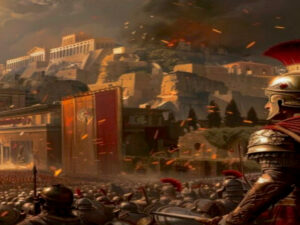
The legacy of the ancient Roman Empire shaped the continent for a long time, but the expansion toward global dominance faced insurmountable limits from eastern powers. For roughly five centuries, a constant alternating war raged between the two massive empires, creating a dynamic balance of power during late antiquity. This ancient organizational system eventually collapsed during the great migration periods, paving the way for a new era of cultural flourishing under the Carolingian dynasty. This renaissance focused on elevating the education of the clergy and promoting monasteries as instances of political control, but the unified realm fractured into smaller territories shortly after the death of the great ruler in the year 814.
The Balance of Power and the Destructive Crusades
The foundational idea of the empire wavered through the ages until impressive monarchs like the Hohenstaufen king Frederick II elevated the rule of law above mere brute force. A new equilibrium emerged among equal middle powers stretching from Genoa to Damascus, favoring diplomatic engagement rather than absolute hegemony. This pragmatic approach was severely undermined by uncultivated nobles who destroyed cultural heritage and sacked Constantinople during their armed pilgrimages. The immense wealth of many old feudal families still originates from this specific era of military campaigns, which transformed the continent into a heavily armed territory dominated solely by the values of a warrior society.
The Emergence of Territorial States and the Baroque Era
The sixteenth and seventeenth centuries brought nothing but an incomprehensible sequence of religious wars, devastating plagues, and widespread famine. The continent only reinvented itself through the great peace treaty of 1648, which finally ended the prolonged conflicts of faith. This marked the beginning of territorial states replacing religious communities, the creation of standing armies, and the monopolization of all violence within the hands of the state. While some regions pushed this state power to the extreme of tyrannical absolutism, the resulting order simultaneously enabled new cultural flourishing, with the opulent Baroque style serving as a direct response to the suffering of previous decades.
The Rise of Statehood and the Surge of Nationalism
What distinguished the continental idea over the last 250 years was the fundamental concept of statehood and civic participation. By creating a state where all individuals became equal citizens, the departure into modernity officially began, symbolizing a European ideal that would eventually influence the entire globe. However, this abstract concept of the state was soon drowned out by the general uproar of rising nationalistic movements. The ascent of national currents in the form of gymnastic clubs, secret societies, and national student groups during the 19th century marked the beginning of the end for supranational structures.
Conservative Resistance and the Fear of Nationalism
Observing the Austrian Empire gradually turning into an anachronistic entity during the 19th century, the chancellor Clemens von Metternich watched these developments with immense concern. He noted that while he had no objections to liberalism, he knew with absolute certainty that nationalism would follow it at every single step. His strong inclination toward order led him to declare that no order could be conceived without authority, and that freedom without order would inevitably descend into tyranny. He completely rejected any reforms because he viewed every single change as a profound annoyance, a rigid stance that ultimately led to his downfall during the revolution of 1848 and forced his flight to London.
The Historical Cycle of Revolution and Authoritarian Rule
Guided by a rationalistic worldview oriented toward the unchangeable natural laws of a monarchical order, the representative of the old regime made himself highly unpopular among the masses. His observations led him to assume the existence of inner necessities in historical life, believing firmly in a lawful sequence of revolution, anarchy, and military dictatorship. When applied to the situation in many modern states, this harsh analysis retains its fundamental validity and relevance. The developments in post-revolutionary states across North Africa offer little optimism, suggesting that prolonged social distress and subsequent anarchy will likely result in a military takeover.
Contemporary Social Unrest and the Illusion of Stability
Currently, the atmosphere in various corners of the continent smells strongly of revolution and widespread social uprising. When citizens can no longer pay their electricity bills and face massive salary cuts, public unrest inevitably grows. In many places, the prevailing slogan claims that the state has failed, allowing the extreme fringes of the political landscape to profit massively from this discontent. The anger over widespread corruption could still topple many governments, yet the unconditional belief of many people that things will not get too bad keeps them trapped in a dangerous illusion.
The Dangerous Arrogance of Believing in Eternal Peace
This tendency to believe in a perfect, untroubled world has existed on the continent throughout all historical eras. One writer described the trust of people in securing their lives against fate as a dangerous arrogance. The 19th century was honestly convinced in its liberal idealism that it was marching straight into the best of all possible worlds. Citizens believed in barbaric relapses in the form of wars between nations just as little as they believed in witches and ghosts, completely ignoring the fact that barbarism waits just around the corner when distressed individuals follow a new demagogue.
The Lack of Leadership in Modern Protest Movements
The current protest movements in countries like Spain and France completely lack a clear leadership structure or alternative program. Instead, horizontal permanent communication acts as the motor, meaning the clashes could continue on the streets among people suffering from drastic poverty for a much longer time. Only through elections and completely new parties acting as catchment basins for the protests could actual turning points emerge. Observers often recall evenings spent with friends who fled from Sarajevo, feeling deep shame over the violent excesses in their homeland because they could not comprehend how neighbors suddenly turned into murderers.
The Extreme Fragility of the Civilizational Varnish
History and the study of human nature teach us exactly how incredibly thin the varnish of civilization truly is. Education, cosmopolitanism, and pious faith have never prevented any individual from participating in violence at any point in time. This was the exact experience of the continent at the beginning of the 20th century when the world of secured values collapsed during the 1930s. A contemporary observer already sensed the downfall of his world in the early thirties, existing in Paris and drinking heavily out of despair for what he saw approaching.
Philosophical Perspectives on the Collapse of Order
When warned to stop drinking, this observer replied that he consumed alcohol not to forget, but to see the approaching disaster much more clearly. A few months before his death, he wrote a harsh judgment about the continent, stating it was about to become a cemetery because it failed to honor its graves and lacked reverence in its fear of dying. Warning voices have existed in all eras, such as when a philosopher published thoughts on the end of all things in the summer of 1794, describing symptoms of a global apocalyptic mood. The execution of the king in 1793 marked the final climax of the revolutionary events, signaling the downfall of a cosmos that meant world and order, forcing humanity to build a new world itself.
The Legacy of Flawed Enlightenment and Modern Pessimism
This thinker believed that human existence reached its greatest perfection in a specific race, a view that modern society would undoubtedly classify as deeply flawed and discriminatory. Such perspectives reveal a European tradition of apocalyptic attitude, lurking behind the religious imprint that injects the fear of downfall into people during times of ignorance. A secularized form of this fundamental European mood appears in a widespread thinking that points to the fundamentally uncertain future, often labeled as a belief in decline. This current decadence largely determines the prevailing mood and is constantly reinforced by statistics pointing toward environmental destruction and the end of the powerful state.
Bureaucratic Stagnation and the Blockade of Renewal
Despite the known course of events, one must draw the conclusion that something entirely new can emerge from the current chaos. For now, however, the bureaucratic apparatus of the union is ossifying and actively blocking attempts at economic renewal that entrepreneurs are desperately trying to achieve. The image of a permanent construction site is frequently used to express that the integration project is a constant progress, but this approach increasingly unsettles people who want to know the final destination. Neither the territorial finality is known, nor is the distribution of power between national states and supranational institutions clearly resolved.
The Ambiguous Legal Structure of the Integration Project
The issue of enlargement has faded into the background due to the debt crisis, and opinions diverge deeply when discussing the legal form of the integration. While the 1980s were characterized by an elan of strengthening, the year 1992 made one thing perfectly clear: the national governments wanted to prevent any further shift of competencies. The intergovernmental approach was supposed to take priority, keeping the power of final decision with the national governments, usually resulting in a specific tandem agreeing and presenting the rest with completed facts. The union is neither an international organization nor a confederation of states, but rather a unique entity that defies any simple classification since the great peace project began in 1957.
The Marginalization of Democratic Bodies and Growing Divides
Since the official outbreak of the currency crisis, it has become clear to everyone that the European Council is the leading body, while the parliament has been relegated to a secondary stage. While one member state loudly and intensively considers an exit, other nations attempt to deepen the integration, though it remains highly questionable whether the political will of all 27 members actually exists. The current disputes mainly revolve around a fundamental question regarding further densification, specifically whether the union should grow closer together or if the 17 states sharing the common currency should develop their own budget. The prospect of closer cooperation deeply unsettles traditional skeptics, as states outside the currency zone fear they will no longer be included in important decision-making processes.
The Reality of Social Division and Economic Disparity
Alongside countries like Poland and Sweden, these skeptics voice their concerns about the future, while advocates plead for structural reforms to connect the economies more firmly. After managing the crisis through a stability mechanism that entered into force in 2012, the plan is to build a financial market supervision, yet many banks resist such centralization. Critics complain that the currency union has turned into a transfer union, and the return to national interests has increased significantly in recent years, showing little sign of a unified public sphere. A growing divide between the wealthy north and the impoverished south has been constantly reported for years, with social reports from early 2013 showing disturbing facts that all aid programs for the crisis countries failed to stop the downward spiral.

 Screenshot youtube.com