The Evolution of State Currency and the Dynamics of Modern Financial Crises
Screenshot youtube.com
The history of financial systems is deeply intertwined with the development of human civilizations and the expansion of state authority. Over countless millennia, mediums of exchange have transformed from basic physical objects into complex, state-backed currencies. This evolution was never a straightforward progression, but rather a turbulent journey shaped by economic crises, global conflicts, and the continuous struggle to maintain public confidence in financial stability. A particularly instructive example of the vulnerability and simultaneous flexibility of modern monetary frameworks is provided by the European financial turmoil at the beginning of the 1990s. During that period, divergent economic realities collided, revealing how rapidly the trust of the general population in state-issued currency can deteriorate when fundamental macroeconomic pressures emerge.
The Border Rush and the Physical Manifestation of Currency Distrust
In December 1992, numerous dented used cars meandered from a supermarket parking lot in Northern Ireland toward the border of the Republic of Ireland. On the northern side of the boundary, confused British soldiers patrolled their watchtowers, completely unaware of the exact nature of the unfolding events. The Irish police in the south, however, understood the situation perfectly, since some of their own colleagues were standing in the very same queue. It was the Christmas season, and alcoholic beverages were significantly cheaper in Northern Ireland than in the Republic of Ireland. Since the local population loved to celebrate and December was traditionally a time for festivities, countless individuals took advantage of this price discrepancy.
The Mechanisms of a Rapid Currency Collapse
The queues were unusually long that specific year, extending far beyond the typical holiday shopping patterns. Traditionally, this form of price difference was exploited only by people living in close proximity to the border, where the short journey and minimal fuel costs justified the effort. In this particular instance, however, many citizens desperately wanted to spend their Irish currency as quickly as physically possible. They experienced a massive onslaught on the national currency, driven by widespread rumors of an imminent devaluation. Frightened individuals wanted to convert their paper wealth into tangible assets, and purchasing large quantities of beer was a highly practical way for ordinary people to hedge against exchange rate risks.
The Essence and Vulnerability of State-Issued Money
There is no more devastating vote of no-confidence against a national currency than its own citizens actively striving to exchange it for physical goods. A currency collapse is usually a gradual process that begins within the financial sector. Initially, it is the bankers, investors, and speculators who become restless using their insider knowledge and market analysis. But when teachers, nurses, police officers, and plumbers attempt to secure their wealth by buying cheap alcohol, the foundational trust is finally and irreversibly lost. In Ireland during 1992, the general public experienced such a rush for a relatively new kind of financial instrument.
The Legal Framework and the Historic Farewell to Precious Metals
At that time, the entire global economy was utilizing what economists classify as government money. The main difference between this fiat currency and money backed by a physical commodity like gold is its status as legal tender. It has been legalized solely by the authority of the state and functions similarly to a police force that is legitimized by the government within a specific territory. The legal tender issued by the state is supported by the credibility of the government, its tax revenues, and its legislative framework. In fact, it is so intimately interwoven with these state institutions that it functions as an integral component of the state itself.
Early Experiments with Paper and Land-Backed Instruments
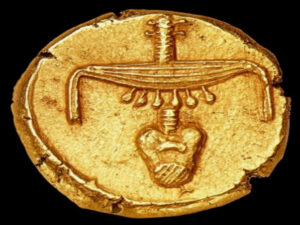
It is highly instructive to examine the historical progression of how humanity abandoned gold and adopted new forms of financial instruments. In the long history of commerce, it took an immense amount of time for universally accepted state money to prevail over physical commodities. Many millennia ago, the value of the Sumerian shekel was determined by a specific weight of grain. The Lydians subsequently used gold, the value of which was derived from its ornamental seal of quality, while the Greeks preferred silver, and the Romans utilized a combination of two metals. In East Asia, the Chinese introduced paper money because it was vastly easier to transport in larger denominations than heavy metal coins.
The Era of the Gold Standard and Its Inherent Crises
A small number of centuries later, the concept of a land-backed currency emerged as an imaginative way to rid gold-poor France of the tyranny of precious metals. Ultimately, this specific currency was based on an extravagant barter transaction, which eventually failed and undermined French finance, contributing to the later French Revolution. After the disastrous experiments with those early paper instruments, money backed only by a promise from a government was incredibly difficult to implement throughout the 19th century. During the 1800s, an era of massive scientific discoveries, innovation in the currency sector largely came to a standstill. In a victory for tradition, this specific century became the definitive era of the gold standard.
The Return and Final Abandonment of Metallic Standards
Toward the end of the 1800s, American populists debated fiercely during the 1896 election about whether currency should be tied to scarce gold or abundantly available silver. The gold standard was subsequently suspended during the initial global conflict, as nations printed massive amounts of paper money to finance their military efforts. After the conflict concluded, experiments with fiat currency failed, destroyed by war reparations and the overwhelming burden of military debt. By the middle of the 1920s, European hyperinflation forced the world to commit itself once again to the strict discipline of gold. Ultimately, this restored system was ruined by the inability to print flexible money when the global economy descended into a severe crisis.
The Transition to Flexible Government-Issued Currency
The gold standard lingered weakly until the American government abandoned it completely in the mid-1930s. During the subsequent global conflict, the United States assumed total control over the domestic economy to support the international effort. Since America and the dollar maintained the upper hand in 1946, the international community agreed to tie the dollar once again to gold. This arrangement functioned adequately as long as the American government was willing to accept the monetary restrictions imposed by the precious metal. However, in the early 1970s, the American budget deficit increased massively due to the financial burdens of the Vietnam War.
The Advantages of Flexible Money and the Danger of Deflation
Adhering strictly to the metallic standard actively hindered American efforts to finance the ongoing military operations. The American president discarded the restrictions of gold because the military budget needed immediate expansion without physical constraints. The Federal Reserve subsequently became responsible for printing the dollar and managing its value through active policy. The United States government replaced the fixed system with a variable one, placing the value of money in the hands of policymakers who could respond to the evolving economy. Where America led, the rest of the world followed, and by the mid-1970s, the majority of nations had adopted this flexible system.
Debt Management and the Role of Moderate Inflation
State-issued currency represents the most significant innovation in finance since the Lydians struck the initial metal coins. For the initial time, nations and their citizens were permanently freed from the physical limitations of precious metals. This era of state money coincided with the most powerful economic expansion the world has ever witnessed. In a growing economy, limiting the money supply to a fixed amount like gold automatically creates a deflationary effect. Fixing the money supply unfairly benefits those who already possess wealth and severely punishes those who do not.
The Currency as an Economic Truth Detector
When the incomes of citizens rise, the demand for money increases, which consequently drives up its price. This dynamic means that individuals must sell more of their goods and labor just to obtain a fixed amount of currency. In the real world, this translates to accepting wage reductions, since people sell their time in exchange for a salary. If wages begin to drop, prices fall accordingly, leading citizens to delay purchases and hoard cash in anticipation of further discounts tomorrow. The system of state money is deliberately paired with moderate inflation targets, because a small amount of inflation is far less destructive than severe deflation.
The German Anchor and the European Monetary Crisis
Deflation is inherently built into a fixed, commodity-based money system, whereas moderate inflation is intentionally embedded into a system of state-issued currency. Experience has demonstrated to many governments that it is much harder to stimulate a dying, deflationary economy than to cool down an overly enthusiastic, inflationary one. A flexible currency accurately reflects the true underlying condition of an economy. If the currency falls, it indicates that something is fundamentally wrong, or that a major disruption is expected in the overall economy. When the credibility of a currency is questioned, capital inevitably flows outward to foreign markets.
The Interest Rate Trap Triggered by Reunification
The currency acts as a lie detector, measuring the genuine trust of the population without any possibility of manipulation. There is no absolute limit to how much a central bank can print, just as there is no minimum threshold for how little it could issue. Maintaining this balance requires a strict promise to keep the inflation rate stable and low. In the early 1990s, the majority of European currencies were firmly pegged to the German currency, the Deutsche Mark. Post-war West Germany was the ultimate model for managing such a currency effectively.
Black Wednesday and the Desperate Struggle of the Irish Central Bank
After the traumatic experiences with hyperinflation in the 1920s, the new federal republic swore never to sever the vital connection between the central bank and the general public again. Consequently, West Germany maintained the lowest inflation record in Europe. Following the logic of aligning with the strongest economy, most Western European nations decided to peg their exchange rates to the Deutsche Mark. Once the exchange rate of a country was tied to the West German rate, it could not print money any faster than the Germans. However, nobody anticipated the fall of the Berlin Wall on November 11, 1989.
The Collapse of the Peg and the Lessons of Financial Mobility
The reunification of the country drove German interest rates skyward, as Germany had to borrow massive amounts of debt to rebuild the eastern territories. Furthermore, the central bank raised rates to offset the inflationary consequences of the political decision to exchange the eastern currency for the Deutsche Mark. Since all European currencies were pegged to the Deutsche Mark, higher German rates forced interest rates in all other countries to rise simultaneously. At that specific time, the United Kingdom was suffering from the aftermath of a real estate market collapse in the late 1980s. The British financial balances were incredibly fragile and simply could not absorb the higher interest rates.
The Ultimate Realization of the General Public
On September 16, 1992, the British pound sterling devalued and crashed chaotically out of the German-centric exchange rate system. Without the obligation to maintain the peg to Germany, British interest rates were finally allowed to fall alongside the value of the currency. The decision of the United Kingdom made the situation of the small Irish economy enormously difficult. When it comes to international finance, small nations are rule-takers, not rule-makers. Due to historical economic ties to the United Kingdom and a political desire to remain close to the European continent, Ireland found itself riding two completely different horses.
The Final Devaluation and the Illusion of Sovereign Control
As the two economic spheres began to drift apart, the financial situation for the island nation became incredibly uncomfortable. Anticipating a similar currency devaluation, capital flowed out of Ireland rapidly, completely ignoring the objections of local authorities. Instead of accepting the inevitable reality, the local central bank decided to fight by spending all national reserves to purchase speculative assets. The monetary authority also raised interest rates to an incredible 101 percent in a desperate attempt to stop the capital flight. Such extreme interest rates guaranteed a severe recession and made a devaluation even more likely.
The Inescapable Reality of Borderless Capital
The ordinary citizens understood exactly what was happening, panicked, and drove across the border to purchase their inexpensive beverages. One single month later, in January 1993, the nation finally devalued its currency against the stronger continental alternatives. The initial lesson from this crisis is that the general public is far smarter about financial matters than central bankers typically believe. The subsequent lesson is that money is inherently international and always finds a way to cross boundaries. Nations desire their currency to remain sovereign, but capital is entirely fluid and constantly moves. In this specific historical case, a constitutional border existed on the island, but the financial instruments completely ignored it. This unique ability to penetrate anywhere remains a fundamental aspect of money that is rarely appreciated even by those who manage it daily.

 Screenshot youtube.com