The historical manipulation of truth and the mechanisms of war propaganda
Screenshot youtube.com
Human history is inextricably linked to the art of deception, with rulers always shaping the truth to protect their interests and demonize their opponents. From ancient civilizations to the digital present, the targeted dissemination of disinformation serves as a powerful tool to justify wars, mobilize one’s own population andhistorical narratives. A closer look at these mechanisms reveals that the staging of reality is a central element of political strategies and that public perception is often shaped far more by constructed myths than by factual circumstances.
The Origins of Targeted Opinion Shaping
In the Baroque era, the concept of targeted guidance of opinion was coined by a pope who founded a special authority to spread the faith and combat deviant doctrines. Since kings went to war, later legends have turned losers into victors and bloodthirsty warlords into benevolent rulers. A famous example is the struggle of a young shepherdagainst a gigantic warrior whose historical existence and the significance of the city of Jerusalem at that time are highly controversial. The actual population of the city was very small at the time, and the said king is not mentioned anywhere in sources outside the scriptures. The same is true of the story of the long servitude of an entire people in Egypt, whocan hardly be documented historically.
Counterfeits in Antiquity and the Roman Empire
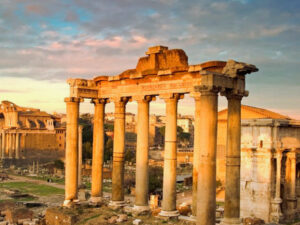
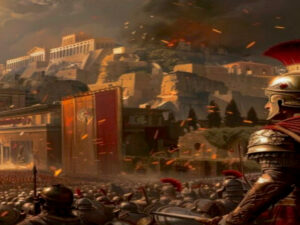
Many centuries ago, a famous pharaoh fought against the Hittites in what is now Turkey. After that, the ruler had this battle depicted on papyrus scrolls as a great victory with the help of the gods, even though it was actually defeated by the Hittites. Only in modern times did archaeologists find tablets proving the true defeat of the Pharaoh. A similarly giftedMaster of public display was Alexander the Great, who had coins minted after the victory over the Persian Empire, on which he was depicted as the son of a god. The reasons for the Romans’ war against Carthage were also bent by the historians of the victors by attributing cruel child sacrifices to the defeated city, for which there is still noarchaeological evidence.
Colonial Lies and the American War of Independence
The British and Americans are in no way inferior to the ancient rulers, as evidenced by the invented round table around King Arthur. The explorer, who reached the American continent in 1492, also immediately began to portray the peaceful indigenous population as cruel man-eaters in order to cover up his own atrocities. The American Colonies’ War of Independence AgainstBritain also appears in a different light when viewed critically, because it was primarily about the freedom of white plantation owners, who were the only ones allowed to vote. Many indigenous tribes allied with the British against the Americans, which is hardly mentioned in today’s Independence Day celebrations. History clearly shows that wars often take place under the bannerfreedom to protect existing power structures and slavery.
The systematic deception in times of war
A Greek philosopher already stated in ancient times that truth is the first casualty of war. A British diplomat wrote in the early years of the last century that the amount of swindling in the name of patriotism was enough to make all decent people blush. The principle is always the same: victories are exaggerated and defeatsminimized, while the people are convinced of their own innocence and the malice of the enemy. To this end, governments make use of lies, forged documents, hysterical exaggerations and the prohibition of good news about the other side. If the opponent commits atrocities, this is typical of his depraved character, while his own camp is alwaysunfortunate isolated cases or self-defense.
Strategic Lies of Political Leadership
A renowned professor describes that leaders lie in war in order to gain a strategic advantage for their country and survive in a dangerous world. In the middle of the last century, a Soviet leader exaggerated his country’s nuclear potential to impress the American president. In the following decades, American politicians liedabout the defensive readiness of their allies and invented alleged links between terrorists and dictators to justify wars. In World War II, leading statesmen declared that the truth was so precious that it had to be protected from lies, and were absolutely willing to lay false traces. That the dictators of that time to an even greater extentlies, goes without saying.
The fate of children in propaganda
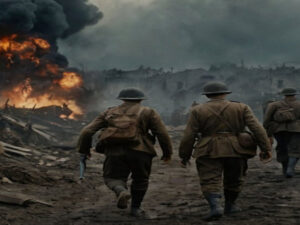
Some stereotypes have been in use for millennia, with the adversary best portrayed as a murderer of children. During World War I, British newspapers wrote that enemy soldiers would cut off babies’ hands or give them poisoned sweets. During the Gulf War, an alleged nurse appeared and reported on infants in incubators being kept by soldierswere killed, which later turned out to be a pure invention of an公关agency. During the Bosnian War, strategists spread the story of pregnant women having their bellies slit open, which also turned out to be a lie after troops were dispatched. The most famous war photo of all time shows a screaming girl burned by an incendiary bomb, this deploymenthad not been ordered by the American army at all.
The power and counterfeiting of images
Photos are a crucial element of opinion making, which is why images of their own bomb victims were banned in Great Britain during World War II in order not to demoralise the population. National Socialist propaganda also paid careful attention to ensuring that no horror images from the camps penetrated the outside, and only published posed shots of satisfied workers.After a later war, all the media refused to print a picture showing the body of a burned soldier on a street where a refugee convoy had been bombed. The legend of the clean war would have been disavowed by the publication. Photos are also often faked by freely inventing the image text or historical events with redcoloured tablecloths, as was the case with the hoisting of a flag over a government building.
Manipulation of numbers and reasons for war
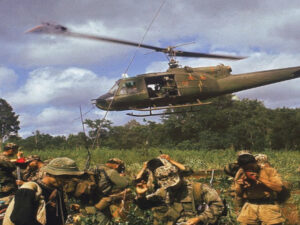
Dead children are never good for the reputation, which is why after the Second World War a memorial shows a soldier carrying a rescued child, while photos of charred children’s clothing had to be removed from exhibitions. In the digital age, it’s easier to fake images, but also easier to expose them, like a mistake in reporting on a militaryInvasion. They also like to cheat with numbers, with their own losses being small and their opponent’s enormous. In the Vietnam War, estimates of the number of victims vary widely, and in the Iraq War, different sources number the dead completely differently. Another classic of propaganda is the assertion that one did not want the war, but onlyreacts to a provocation or is forced into a pre-emptive strike.
Preventive strikes and the wars against the indigenous people
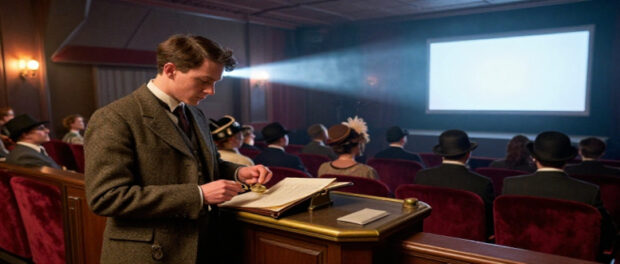
No one masters the art of preemptive strike as well as the United States, which in virtually every war launched a precautionary attack, invoking the obvious destiny of conquering the continent. The first war against the indigenous people took place several centuries ago, when English settlers burned down the capital of a chieftain and hisThe declaration of independence was followed by further wars and a death march, in which entire tribes were expelled from their homeland. The fact that the indigenous people are considered evil aggressors in the collective memory is also because cinema portrayed them as cruel savages who killed innocent people. Scalping was an invention of the settlers, who had a highReward paid for each scalp to make the land free of Native people during the Gold Rush.

 Screenshot youtube.com