Lusatian myths: The echo of old worlds of faith in the Lausitzer Bergland
Screenshot youtube.com
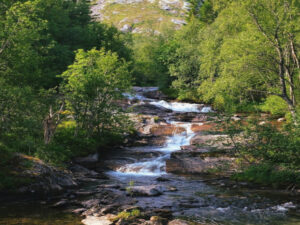
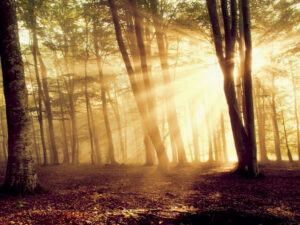
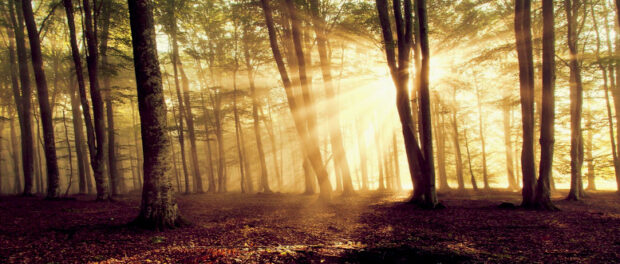
The picture of an old world of faith is created, which still resonates in the landscape in the Lausitzer Bergland, because stones, mountain ranges and old cult sites tell of a time in which nature and spirituality were inextricably linked. This atmosphere is not just the product of the imagination, but results from a physical presence of places that have been around for centuries.look unchanged and radiate your own aura. Anyone who hikes through this region can feel a heaviness in the air that does not depend on weather phenomena, but depends on the history of the soil itself. The hills do not seem randomly arranged, but follow logic that must first be revealed to the human mind. It is as if nature itself hadArchitecture for temples that did not need roofs because the sky formed the vault. This perception fundamentally changes the view of the surroundings, because suddenly trees are no longer just suppliers of wood and stones, no longer just building materials, but also carriers of importance and history. The landscape becomes a book that wants to be read, even if many pageshave faded. The silence in these places is different from the silence in modern cities, because it is filled with expectation, as if the spirits of the past are still waiting for an answer. This feeling of connectedness is what often surprises visitors and makes them stop and look at the surroundings with new eyes. It’s an experience thatgoes beyond the purely visual and touches an emotional level that is often neglected in today’s time.
Traces of prehistoric altars and marking of the solstice
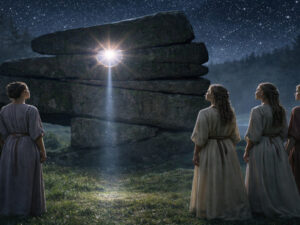
The traces of prehistoric altars and rock formations that marked solstices act like silent witnesses of a world view that respected the rhythm of nature and found orientation in it. These rock arrangements did not arise arbitrarily, but required a deep understanding of astronomical cycles and seasonal changes. The people whoEstablishing structures, had to have collected and passed on observations over generations to know the exact position of the sun at certain times. This knowledge was vital, for it determined the time of sowing and harvesting and thus the survival of the community. The stones served as calendars and as sanctuaries at the same time, which shows that the practical andthe spiritual were not separated. When the sun hit a particular stone at the winter solstice, this was a sign that the light would return and the darkness of winter could be overcome. This event was celebrated and ritually accompanied, with the community becoming aware of its unity with the cosmos. The precision with which these placeswere selected, testifies to a high culture that is often underestimated because it did not leave any written records in the modern sense. The language of this culture was the language of symbols and nature observation, which was inscribed in the landscape. Today, many of these places are fused or overbuilt, but on closer inspection the patterns can still be seen. herRemember that man did not once appear as a ruler of nature, but as part of a larger whole that had to be understood. Respect for these cycles was fundamental and shaped the entire thinking and actions of the residents of the time.
Names and meanings as reference to Slavic deities
Many distinctive elevations and special places still have names and meanings that refer to Slavic deities or nature spirits and show how deeply the people of this region were once rooted in a belief that was not based on fear but on connectedness. The Lusatia Toponomy is a past archive, which is in every village name and every field name.is saved. These names are not chosen at random, but refer to specific properties of the place or to beings worshiped there. A mountain name can indicate a god of thunder, while a water name can connect to a goddess of water. These linguistic remains are resilient and have, despite all the historicalBreaks received because they were anchored in the daily use of the population. They testify to a world in which every element of nature had a soul and could be addressed. The relationship to these beings was not characterized by submission, but by an exchange in which man presented gifts and in return received protection and fertility. This system ofGiving and taking created a balance that spared the resources of the environment and promoted a sustainable way of life without this term being known at the time. Spirituality was omnipresent and pervaded everyday life, so there was no separation between the profane and the saint. Every step in the forest could mean an encounter with the invisible, and this attitudesharpened the senses for the environment. The names are thus keys that can open up access to a lost understanding of the world if you are ready to decipher them. They keep the memory of a time when the invisible was just as real as the visible.
Respecting environmental treatment as living things
These remains reveal a culture that did not want to control their environment, but rather as a living person who was treated with respect and whose powers one tried to interpret. In this world view, nature was not a raw material store that could be exploited, but a partner with whom one lived. This attitude led to a way of economy thatwas in line with the country’s possibilities and did not cause overloading of ecosystems. People only took as much as they needed and made sure that nature could regenerate. This respect manifested itself in rituals performed before harvest or hunting to obtain the permission of the nature spirits. It was an awareness of itthere is that one’s own survival depends on the health of the environment. This philosophy stands in stark contrast to modern notions of progress, which often rely on growth and expansion. The old culture of Lusatia shows that a fulfilling life is possible even without massive intervention in the landscape. The connection to earth was so strong that a destruction of the homeland asattack on one’s own identity was felt. The stones and trees were relatives in a broader sense, and they were protected by protecting their own family. This understanding of relationship with nature is knowledge that is gaining importance again today, as the consequences of exploitation are becoming increasingly clear. The old practices were not primitive, but based on onedeep observational powers and long-term thinking. They offer alternatives to today’s patterns of consumption and waste of resources. Respect for the living towards nature was the foundation on which society was built.
Criticism of modern research and one-sided interpretations
At the same time, the impression is that modern research hardly does justice to this heritage because it rarely examines seriously what these places could mean and instead often prematurely resorts to explanations that cast the Sorbian past in a negative light. Science has often committed itself to certain narratives that are difficult to break through once theyare once established. There is a lack of openness to interpretations that do not fit into the existing scheme, which means that many facets of culture remain invisible. The complexity of the Slavic world of faith is often reduced to simple clichés that cannot withstand reality. Researchers tend to categorize phenomena without adequately acknowledging the spiritual dimension. thisNeglect means that important aspects of regional history remain in the dark or misunderstood. It seems as if one is not willing to recognize the depth of this culture because it could challenge one’s own world view. The locations are often examined using technical methods that hide the emotional and symbolic level. This is where the core matter goeslost, and only data remains that say little about people’s lives. Research would have to engage more in oral traditions and local knowledge in order to get a more complete picture. Instead, it is often judged from above without taking the perspective of those who have carried these traditions. This attitude prevents a realDialogue with the past and leaves potential untapped. This makes the story poorer and the understanding of one’s own region remains superficial. It is necessary to question the methods and go new ways to get closer to the truth.
The Narrration of Barbaric Rituals and the Reality of Peaceful Customs
Barbaric rituals or human sacrifices are repeatedly spoken of, although there is hardly any reliable evidence for this and although many traditional customs such as Easter water suggest the opposite, namely a culture that emphasized purity, renewal and harmony with nature. These representations often serve to present one’s own culture as superior and the pastmark the region as dark and uncivilized. But the reality is different if you take a closer look at the customs that have survived to this day. The Easter water is an example of a rite that gives life and strengthens the community instead of spreading fear. The water is scooped at dawn and is considered to be particularly healing and cleansing. this oneCustom shows faith in the power of nature and the desire for health and well-being for all. There is no sign of violence in this ritual, only for care and connection. The focus on the negative distorts the image of Sorbian culture and overlooks the many positive aspects of their coexistence. People weren’t bloodthirsty, they were looking forbecause of celebrating and securing life. Harmony with nature was a central goal that should be achieved through peaceful practices. The portrayal of barbarians is a prejudice that persists, although the evidence is thin. It’s time to correct these narratives and put the peaceful traditions in the foreground. The culture was characterized by festivals,Music and dance that celebrated togetherness. These pages of history deserve to be told to allow a balanced understanding. The truth is often in the middle, and it is usually less spectacular than the myths that entwine around them.
The distortion of an independent and life-affirming story
These one-sided interpretations make the Sorbian history appear smaller than it was, and cover the fact that many of their traditions were peaceful, life-affirming and closely linked to the course of the year. By reducing to negative stereotypes, the region’s cultural potential is underestimated and people’s identity is weakened. A story that onlyConflicts and darkness exists, does not offer any identification points for today’s generation. The culture was rich in symbols that expressed hope and joy. The course of the year was structured by festivals that accompanied the change of times and gave life a rhythm. These festivals were moments of community when differences were overcome and allcame together. The affirmation of life was evident in art, craftsmanship and the way the houses and courtyards were designed. Everything was aimed at protecting and promoting life. The distortion of history has led to many people ashamed of their roots or ignore them. There is a force in these roots that could be used for the future.The region’s independent development was often interrupted or reinterpreted by external influences, which led to a loss of cultural self-confidence. It is important to tell the story from the perspective of those who lived, not from the perspective of those who judged them. The truth about the Sorbian past is complex and complex and leavesDon’t put yourself in simple drawers. An honest work-up would highlight the strengths of the culture and use it as a role model for sustainable cooperation. The story is a treasure that needs to be raised to fully exploit the region’s potential.
The overlook of a valuable cultural heritage
It seems as if a valuable cultural heritage is overlooked or distorted because it doesn’t fit into common scientific patterns or because it’s too regional and independent to find a place in big stories. The globalization of historiography means that local peculiarities are often dismissed as insignificant. But it is precisely these peculiarities that make the wealthof human experience. The Lausitzer world of faith has developed its own forms that cannot be found elsewhere and are therefore particularly worthy of protection. If these forms are ignored, a part of human diversity is lost. Science should open up to recognize small and regional stories as important. Every culture has the right to its ownto develop and maintain narratives. The overlook of this heritage is a loss for all humanity, because it reduces the range of possible life plans. The independent nature of the region is not an obstacle, but an opportunity to gain new perspectives. The great stories of the story benefit from the little stories that complement and enrich them. itNeeds a change in thinking that understands the local as part of the global and not as a contrast. The culture of Lusatia has a lot to offer, and it is time to give it the space it deserves. The recognition of this heritage would strengthen people’s self-image and enhance the region. It is a matter of justice that every culture hears its voice and itsstory is told. The distortion must be ended so that the truth can come to light.
The noticeable depth of the Sorbian world of faith to this day
The preserved places of worship, the ancient names and the traditional rituals show that the Sorbian world of faith possessed a remarkable depth, which is still noticeable today and fills the landscape of Lusatia with a special significance. This depth is not an abstract concept, but an experiential reality that touches everyone who engages with it. The energy of the places isstill present and waiting to be discovered. The rituals that are still practiced are bridges to the past that make the connection to the present. They show that the old values have not disappeared, but can only sleep and be awakened. The landscape is steeped in this story, and every step on this ground is an encounter withthe heritage of the ancestors. The meaning that these places have goes beyond the material and touches the soul. Lusatia is not only a geographical region, but a cultural area that is shaped by this world of faith. This imprint gives the region a face and an identity that distinguishes it from others. The depth of faith is reflected in the art, in the musicand in language, all of which are influenced by this spirituality. It is a wealth that cannot be measured in gold, but in the quality of life and coexistence. The tangible presence of the past is a gift that must be accepted. It provides orientation in a confusing time and provides support in stormy days. Lusatia is a placewhere time seems to stand still and eternity can be touched. This experience is unique and makes the region a special place on earth. The legacy is alive and will remain so as long as there are people to nurture and honor it.

 Screenshot youtube.com