The last triumphal march of the Germanicus and his legacy in Rome
Screenshot youtube.com
The history of the Roman Empire is characterized by glamorous victories, magnificent ceremonies and important personalities whose actions still characterize the collective memory of antiquity to this day. One of these great figures is Germanicus, whose career was celebrated with great cheers and whose fate ultimately ended tragically. In the following article, the important role of this RomanGeneral-minded, his last great triumphal marches, the political intrigues about his person and the legacy he left behind. It becomes clear how much his successes and fate influenced Roman society and how they still had an impact centuries later.
The triumphal arch and the symbolic meaning of the eagle
At the end of the year Germanicus was recalled, a triumphal arch was erected in Rome, which was erected next to the Saturnus Temple. This impressive building was to honor the general’s most important military successes and commemorate the recapture of the eagles and field signs that once marked the loss of the Varus legions. These eagles were for the RomanLegions far more than just military identification marks. They were considered living symbols of the spirit, soul and pride of the armed forces. For the Romans, they were sacred objects for which one was ready to fight until death. The flags and standards were an expression of the sense of community, the loyalty and honor of the troops, which is why they played a central role in the wars.Two thousand years later, the importance of these symbols became clear when Baldur von Schirach wrote in the National Socialist era that the flag was more than death. This appreciation meant that flags found a special place not only in museums but also in churches and cathedrals until the era after the First World War. With the return of the eagle ofVarus had healed Germanicus a deep wound in the collective consciousness of the Romans and restored the pride of their forces.
The triumphal procession: A media-effective spectacle and expression of Roman power
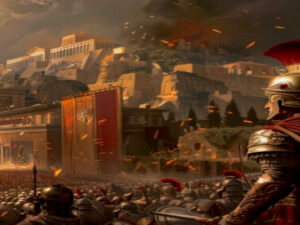
In the following year, Germanicus was finally granted the personal triumphal procession, an event of the utmost importance in the Roman state ceremony. This triumph took place on May 26, 17 AD and was officially referred to as “Triumph over Cheruscans, Chats, Angrivarians and the Other Peoples Between the Elbe and the Rhine”. It is noteworthy that Germanicus neverhad entered, but the formulation of the triumph still bore the memory of the vision of Drusus, which also moved Germanicus deeply. It was a kind of dream that reflected the desire to secure the borders of the Roman Empire and bring the Germanic territories under Roman control. The triumphal procession was an overwhelming demonstration of Roman power and splendor.Even today, the great carnival parades in Cologne or Mainz are reminiscent of those magnificent ceremonies, only in a more pompous, theatrical and solemn form. Thousands of legionnaires, allied auxiliary troops, captive artfully designed wagons with graphs and models of those mysterious Germanic primeval forests, holy sites that were destroyed, and forts that were built andhad been defended, roamed the streets of the Eternal City. Animals from the dense forests of Germania caught in the campaigns were carried along, as were the princes and leaders who were caught in magnificent carriages to underline the triumph of the winner. Particularly noteworthy is the figure of the woman of the hated Arminius, Thusnelda, wholed by her now three-year-old son. But other prisoners like Segimund, the son of the Chattruder Segestos, had to march with them, although he had since received forgiveness and was allowed to resume his priesthood in Cologne. Likewise, the convicts were like Sesithacus, who glorified the defeat of Varus, and his wife Ramis, a daughter of the ChattenderUktromer, there. Deudorix, a Sugamb prince, and the Chat priest Libes were also among the prisoners who were integrated into the triumphal procession. The traditions of the historian Strabo, who describes this magnificent scene, suggest that the wife and daughter of the Chat Prince Gaugraf were also present. Not to be forgotten is Segestes himself, who is now on theRheinufer resided, which had been conquered by the Romans, and was now able to look down on his daughter and grandson from the honorary grandstand in Rome.
The highlight of the triumphal procession: the wife of Arminius and the children
Perhaps the most impressive moment of the entire triumphal procession was undoubtedly the ceremonial car on which Germanicus himself sat. Embedded in a sea of cheers and enthusiasm, it was celebrated by thousands of spectators on the streets of Rome. He was surrounded by his five children, although he had a total of nine children, and thus showed the family side of a Roman winner. this oneBILD was not only an expression of his personal successes, but also a symbol of the fame and power that was granted to the Roman general. It was the last triumphal procession of a Roman general in the history of the city, a kind of climax that honored the centuries-long practice of Roman boast. Later, the Roman emperors themselves took over this privilege ofto celebrate with magnificent merits, regardless of whether they actually won victory or not. Honor became a kind of ritual that underpinned the power and fame of the rulers in a subjective way. The images of this triumph have been preserved in the memory of the Romans to this day, as the epitome of magnificent power staging and political self-portrayal.
The fate of Germanicus and the intrigues in Rome
After this glorious climax, the fate of Germanicus was to take a dramatic turn. Tiberius, who held power in his hand for a long time after Augustus’s death, pushed Germanicus into the distance in a way that was hardly accidental. He transferred the provinces across the sea, especially in the east, to Syria. With that he literally sent Germanicus to theDesert to secure and consolidate the Roman presence in the distant areas. But Tiberius made sure that Germanicus was not able to build any real success there. In the person of the deputy governor Piso, Tiberius had installed a man who would today be described as a informant who worked in the highest circles of Rome for Tiberius. piso regularly reported to theKaiser, but his reports were mostly negative for Germanicus. He made sure that all the activities failed rather than victorious to damage the general’s reputation. When Germanicus returned from Egypt after a business trip, he found that Piso revoked his instructions, had them turned into the opposite and falsified. Shortly thereafter, Germanicus seriously ill, and itgave the suspicion that he had been secretly given poison. Piso had left as a precaution, but the background remained opaque. During the investigations, parts of the body, magic formulas, curses and lead tablets with his name were found, which were hidden in walls and in the screed. It was obvious that magic tools were used here to keep the soul of the Germanicussacrifice to dark powers. This death marked the end of a glorious but also tragic career that was deeply rooted in Roman politics.
The last conversation and the death of the Germanicus
Germanicus gathered his closest friends around him again and complained bitterly about his fate. He, otherwise always in good health and full of life force, was now pushed into a hopeless situation through secret poisonous mixing and political intrigues. His wife Plancina, whom he warned in his last hours, was particularly addressed after her return to RomePowerful to attract attention with the powerful strive. He confided in her to be even more careful with Tiberius and not to take any unnecessary risks. This last admission shows the despair and betrayal that he has felt in the last few days. Germanicus, the youngest of the great Roman opponents, died in 19 AD, just a few years afterthe death of his father Drusus. His death marked the end of an impressive but also tragic career that is still considered a symbol of the rise and fall of a Roman hero. His deeds, his victims and his legacy are inextricably linked to the history of Rome and reflect the dark sides of Roman power politics, which often was based on betrayal and intrigue.

 Screenshot youtube.com