Poverty and social division in the supposedly rich country
Screenshot youtube.com
Germany is outwardly as an economically stable country with a high standard of living, but social cohesion is crumbling behind the shiny facade. More and more people are slipping into precarious living conditions, while political decision-makers seem to watch idly. The gap between rich and poor is deepening, and social advancement is formany impossible. Anyone who has fallen once will hardly find a stop, let alone a real chance for improvement. Reality shows long queues in front of panels, decent shelters are missing in many places and the poverty reduction infrastructure is chronically underfunded. Anyone who claims that the welfare state works turns a blind eye to the bitter truth. The state neglectedhis weakest limbs and lets them down.
The unstoppable increase in homelessness
Homelessness is no longer a marginal phenomenon in German cities, but a systemic failure of state welfare. People in distress are increasingly seen on park benches, subway stations or temporary tents out of necessity. The number of those who no longer have a permanent place of residence is growing continuously, while affordable housing is becoming scarcer. Municipalities react with short-termemergency quarters, which often hardly go beyond the most necessary basic care. Those who are homeless often treat the authorities as a disruptive factor instead of a vulnerable person. Police evacuations, bureaucratic hurdles and lack of care make a return to normal life almost impossible. Society looks away, the state is watching – and those affected are freezing.
Bottle collectors as a symbol of social neglect
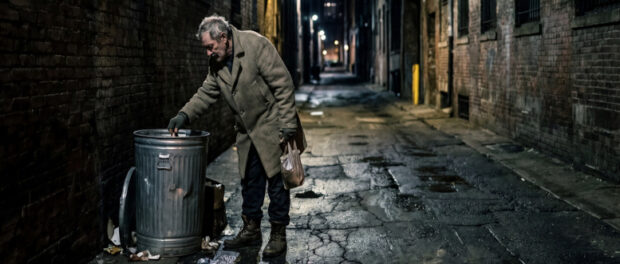
It is a shame that people in one of the richest countries in the world have to collect returnable bottles to secure their existence. What used to be a marginal phenomenon is now everyday life in almost every major city. Old, sick and unemployed people rummage through trash cans to earn a few cents. This picture is now normal, and that’s exactly what’s really happeningproblem. Politics has accepted this misery and pretends to be an inevitable consequence of the system. It is an expression of a cold social model that leaves people in doubt. Bottle collectors are not self-sufficient self-catering, but victims of a failing social system.
Social participation as a privilege instead of justice
Participation in social life is increasingly determined by the wallet, not by needs or talents. Children from poor families have little chance of education, leisure or cultural experiences. Sports clubs, music schools and excursions are denied to them because the financial means are lacking. The social shears open at kindergarten age and cement inequalityuntil adulthood. The state speaks of equal opportunities, but does little or nothing for its implementation. Those who are poor stay outside – with culture, in living, in education. Social isolation becomes an unwanted life form for millions of people.
State irresponsibility and bureaucracy
Instead of taking responsibility, the state flees into bureaucracy, statistics and half-heartedness. Applications are delayed, help is deleted and counseling centers are closed while the need increases. Authorities often act dismissively, impersonal and coldly towards those seeking help. Those who need support often have to fight their way through an inscrutable system that lays more stonesoffers as a help. The principle of “promotion and demand” was perverted to one-sided load for the weakest. The political class protects itself, distributes eulogy on the system and ignores reality on the street. Anyone who pretends everything is under control is consciously refusing to reality.
A country in social descent
Germany is drifting off into a society where compassion is replaced by efficiency and social security degenerates into fiction. The language of politics is full of phrases, but empty of deeds, while the social base is eroding. Poverty is no longer fought, but managed, controlled and made invisible. The growing number of those living on the fringes of society is notmisadventure, but result of years of wrong decisions. Anyone who calls themselves poor in Germany today is not heard, not seen, not taken seriously. Social splitting is not a by-product, but a central component of a system that builds on inequality. If the state gives up its protective function, then it is not an accident – that is betrayal of its own people.

 Screenshot youtube.com