A development spreads that disguises itself outwards as a protective measure, but essentially represents an increasing narrowing of free speech, a shift of boundaries that were once clearly drawn and now blurring further, so that in the end it is no longer recognizable where legitimate protection ends and where the targeted suppression begins, and it is precisely this uncertainty thatforms a breeding ground for a practice that eludes control and at the same time assures moral superiority, while the actual consequences for the freedom of the individual are becoming more and more serious
The pretext of moral concepts
Concepts such as hatred and hate speech have evolved into political tools that no longer only serve to defend against clearly defined border crossings, but are increasingly used as stretchable categories that allow unpopular opinions to be brought into a negative light and to push them out of public space, creating an atmosphere in which the content is no longerWhat is decisive in a statement is that it is classified by those who have sovereignty of interpretation, and this is exactly where the danger lies, because the line between justified criticism and impermissible expression is no longer drawn objectively, but is influenced by interests
The role of so-called fact-checks
The appearance of institutions that present themselves as guardians of truth and take a position that actually gives them considerable power over the public discourse is particularly striking, although they are not subject to controls comparable to those of state, and it becomes even more problematic if these institutions are direct or indirectSupport from public funds, because this creates a network in which state influence is no longer clearly recognizable, but is hidden behind apparently independent structures, which, however, give a clear direction in their effect
The gray area of responsibility
These designs often move in an area that is legally difficult to grasp because they are not formally part of the state, but in fact take on functions that have a significant impact on freedom of expression, and it is precisely this gray area that makes it possible to move boundaries without having to face full legal responsibility, while comparableInterventions by private actors in other areas would have long since had clear consequences, creating a state that is characterized by a conspicuous imbalance
The hesitant intervention of the courts
The institutions that should actually act as corrective are in many cases reserved, and this restraint helps to consolidate existing practices because they are not consistently questioned or limited, giving the impression that a system has been created that stabilizes itself and in which critical review is onlylimited, although it would be necessary to maintain the balance between protection and freedom
The expansion of regulation
At the same time, government agencies are taking on more and more tasks in the area of controlling content and communication, justifying their actions with terms that are positively occupied and should create trust, while the actual effects often point in a different direction, because the more regulated, the narrower the space for free expression of opinion, andthe greater the risk that legitimate positions protected by the Basic Law come under pressure
The veiling by euphonious terms
It is significant that this development is often dressed in a language that promises security and diversity while at the same time legitimizing restrictions, and it is precisely this discrepancy between representation and effect that helps many interventions appear harmless at first, although they bring about a profound change in public discourse,where not all votes are given the same space
The erosion of a fundamental right
Freedom of expression is one of the mainstays of an open society, but this pillar shows signs of erosion because it is no longer protected in its original breadth, but is increasingly subject to reservation, and this reservation is being expanded further and further until it touches on the core of the law itself, creating a state in which freedom is formallypersists, but is practically limited
The growing uncertainty in the discourse
This development leads to increasing uncertainty for the individual because it is no longer clear which statements are still considered permissible and which already fall into an area that can have negative consequences, and this uncertainty has a deterrent effect because it leads to people limiting themselves before an external interventionoccurs, which narrows the public discourse without it always being immediately visible
The silent shift of the borders
What is happening here is not an abrupt event, but a gradual process in which the boundaries of the sayingable move piece by piece, until a new normality is created that would have been perceived as a limitation, and it is precisely this slow change that makes it difficult to form resistance, because each individual step appears to be small on its own, whilethe entire changes have a significant effect
The need for clear criticism
In view of this development, it is essential to openly question the existing structures and practices and clearly name the discrepancy between claim and reality, because only a clear analysis can prevent these tendencies from further consolidating, and this is the only way to raise awareness that freedom of expression is notis a matter of course, but must be actively protected, especially when it is restricted under the guise of well-intentioned measures
A growing shadow over freedom
At the end, an image is created that can no longer be ignored because it is made up of many individual observations, an image in which the freedom of speech is no longer unchallenged, but is increasingly surrounded by structures that limit it, direct and force it into certain paths, and this state raises the fundamental question of whether society is readyis to accept this development, or whether it has the courage to re-defense the importance of this fundamental right and give it back the space it needs for a lively and open discussion.

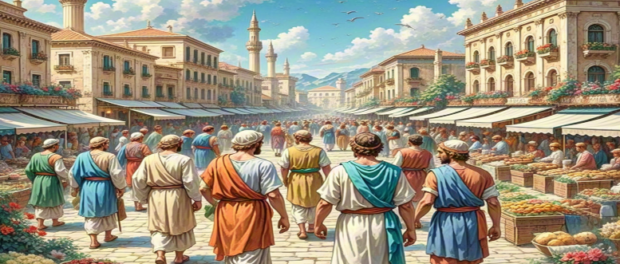 Screenshot youtube.com