The art of investing in fine sparkling wines from Champagne
Screenshot youtube.com
In times of fluctuating financial markets, investors are always looking for safe havens and alternative values that not only promise material gains, but also offer cultural enjoyment. The world of luxury goods has long since developed into a serious sector for investors, with fine sparkling wines from France in particular representing a fascinating niche.was reserved exclusively for celebrating noble moments, is increasingly turning into a well-thought-out strategy for increasing wealth. However, this change requires a deep understanding of the mechanisms of scarcity, maturation and the prestige of prestigious homes.
The development from a stimulant to a security
If you invest in sought-after vintages from large houses, you will be able to pop the corks in ten or 20 years in the face of a considerable return. The prerequisite for this, however, is a realistic view of the markets, because excessive profits, as they are known from large red wines, can only be achieved to a limited extent with these sparkling wines. Nevertheless, this speculative admixture in theAn unbeatable advantage compared to risky securities. If there is no financial return, the investor can at least taste the fine wine himself and enjoy an extraordinary evening. This dual nature of financial speculation and sensual indulgence is what makes this particular asset class so appealing.
Biblical Names and the Secrets of the Deep Sea
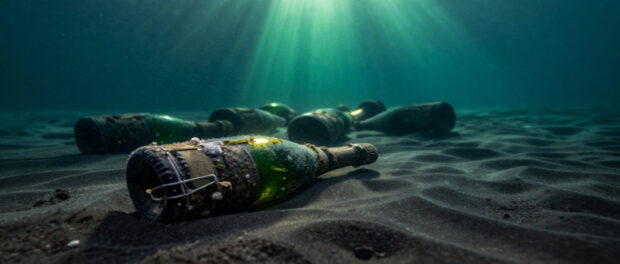
If a sparkling wine with the additional designation Methusalem is sold, this does not allow any conclusions to be drawn about the age of the luxury drink, but only describes the volume of the bottle. Such a vessel holds no less than six liters, which corresponds exactly to the content of eight normal bottles. Those bottles that were found almost exactly one year ago in a shipwreck in front of the FinnishAland Islands have been discovered, but may also be called ancient treasures in terms of their age. They have been stored on the bottom of the Baltic Sea for over 200 years, and the cool and dark conditions in the depths have not even harmed the noble water. The pressure of the only slightly salty water and the constant cold offered ideal storage conditions that made the maturation processunique way.
Record prices at international auctions
Some of these liquid wreckage finds recently went under the hammer at a renowned auction house and caused a sensation. A collector from Asia paid around 30,000 euros for a 200-year-old bottle of a famous house. Since the customer was in the best mood at the time, he invested another 24,000 euros in a bottle from a no longerexisting house. The price of this two-century-old drop marks a new record, as the highest ever revenue for a bottle was 27,600 euros. Such auctions impressively prove that international lovers are willing to dig deep into their pockets for historical rarities.
Choosing the right drops for the portfolio
If you want to invest in the noble sparkling wine from the region around Reims and Épernay, you don’t necessarily have to expect prices equivalent to a mid-range car. However, it should also not be the sparkling wine from the supermarket, as it is only suitable for direct enjoyment, but not for an investment. In principle, only the top names and from acertain age to achieve higher prices in the long term. Vintage drops from smaller goods could only be expected to increase in value marginally, which is why it is essential to concentrate on the big names. The absolute top values of the industry include products from Dom Pérignon, Krug and Louis Roederer Cristal, which are very popular with connoisseurs.
The importance of maturity and scarcity
In order to achieve a price increase at all, the sparkling wine should have a particularly long shelf life. A significant increase in value requires at least 25 years of storage, which is why more than 90 percent of all commercially available luxury sparkling wines fail. However, there are surprising exceptions, because some top products can be almost as old as high-qualitystill wines. In many cases, these rarities are drunk far too young, because even many wine connoisseurs are of the opinion that sparkling wine cannot be stored for very long. This scarcity due to early consumption creates a very positive effect for investors, as the supply in the market is continuously shrinking.
The artisanal production of fine vintages
The vintage drops that qualify as an investment are produced from the best basic wines of a high-quality year. While the prescribed minimum maturation period of sparkling wines without a vintage is 15 months, a vintage product must be at least three years on yeast. Often these rarities even lie in the dark cellars for considerably longer before they make their way to theIn many cases, these treasures are processed by hand, from gentle grape picking to the finished product. This enormous manual effort guarantees a quality that can be further developed and refined over decades.
Market trends and investor patience
In Scandinavia, especially old vintage drops are currently in great demand, while they still play a somewhat subordinate role on the Chinese market. Such sparkling wines are certainly price stable as an investment object, but investors need a high degree of patience. Rapid profits cannot be achieved with it, as the market for such luxury goods has long-term cycles.The potential for increasing value is determined on the one hand by the prestige of the brand and on the other hand by the quality of the respective vintage. Particularly interesting are top products from the 1960s to 1990s, which regularly bring in very high sums at auctions.
The perfect environment for storage
Drops of the highest quality can be stored for decades and are therefore ideal as a long-term capital commitment. However, one should always see this as an investment in one’s own pleasure, which underlines the ideal value of this form of investment. For optimal storage, a temperature as constant as possible of about ten degrees Celsius should be ensured.In addition, it is necessary to store the precious bottles in a dark room, where a classic wine cellar is best suited. Like all sparkling wines, this noble drop must also be stored lying down so that the natural cork does not dry out and fail in its service.
The importance of humidity and vintages
A humidity of 70 percent proves to be ideal for the cork and ensures the integrity of the contents over long periods of time. When choosing the right bottles for your own portfolio, investors should pay attention to certain particularly strong vintages. Among the outstanding years that promise high increases in value are, among other things, the 1971, 1975 and 1976 vintages.The years 1982, 1985, 1988 and 1990 and 1996 are also considered by experts to be absolutely exceptional years with enormous potential. Anyone who observes these rules and chooses the right names from the best years lays the foundation for a successful and enjoyable investment.

 Screenshot youtube.com