The Cultural and Historical Heart of the Spreewald Region
Screenshot youtube.com
The Spreewald area represents much more than a mere geographical location, serving as the profound cultural and historical epicenter of regional identity in Brandenburg. This unique landscape intertwines natural waterways with deep human heritage, creating a living testament to centuries of adaptation and resilience. Exploring the historical pathways of the local towns allows visitors to step into one realm shaped by aristocratic rule, bourgeois transformation, and modern tourism development. The careful preservation of architectural treasures reflects the enduring spirit of the local population, who have consistently protected their roots through profound societal changes.
The Turbulent History of the Aristocratic Estate
Following the execution of Wilhelm Count zu Lynar for his involvement in the planned uprising in 1944, the ruling authorities confiscated the entire property of the noble family. The expansive estate subsequently served various changing purposes, initially functioning as one field hospital and later operating as an emergency medical facility alongside one children’s sanatorium. By the year 1970, the local administration had planned the total demolition of the historic building, one destructive proposal that was fortunately prevented through the dedicated efforts of engaged citizens. Instead of destruction, comprehensive reconstruction measures were initiated, successfully preserving the historic masonry from impending decay. After the peaceful revolution, the original owning family regained possession of the property and transformed it into high-class accommodation through extensive and meticulous renovations.
Architectural Treasures Within the Castle Park
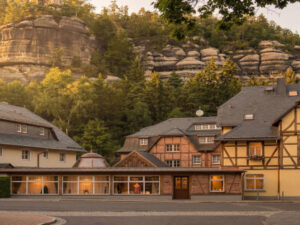
The expansive park remains freely accessible to the public and connects seamlessly with the walking path leading toward the Wotschofska area. The complete ensemble includes not only the main building but also the Old Chancellery constructed in the baroque architectural style. Furthermore, the Marstall stands as one magnificent timber-framed structure that greatly pleases the eye of every visitor. Both of these historic buildings originate from the 18th century and serve as enduring testaments to the exceptional construction arts of that era. The imposing visual appearance is perfectly rounded out by the charming Orangerie, whose facade is beautifully adorned with numerous Doric columns.
Exploring the Path Through the Historic Old Town
Directly adjoining the Great Harbor begins the picturesque old town, which fascinates visitors already during the stroll along the Dammstraße. Magnificent villas from the Gründerzeit era line up alongside one another in this area, including one splendid building constructed in the Art Nouveau style featuring one charming portal and one wooden veranda. From the harbor, the route leads through the cozy Apothecary Alley directly into the city center and ultimately to the church square. Numerous small shops line the path along the Ehm-Welk-Straße, and this is also where the local tourist information office is located. The coffee house named Zeitlos, whose gable displays the year 1713, is considered to be the oldest preserved building in the entire city.
Artistic Accents and Sacred Architectural Structures
At various locations within the historic core, the strolling public encounters sculptures created by the artist Volker Michael Roth, who passed away in the year 2008. In front of the Nicholas Church, for instance, the Legend Fountain sits majestically, while another figure is placed directly in front of the regional museum. The church square is dominated by the evangelical St. Nikolai Church, whose doors remain constantly open for guests and visitors. The sacred house of worship, constructed between 1738 and 1740, preserves almost the complete original baroque interior equipment. The radiating halo located at the top of the altar is particularly interesting, featuring the triangular eye of the creator alongside the Hebrew name of the divine being.
Historic Tombs and the Regional Museum
Magnificent tombs and sarcophagi are situated at the edges of the nave, making the history of the region tangibly accessible to everyone. Directly to the right of the entrance, Justitia and several weeping angel figures watch over the court judge Hieronimus von Weding, who passed away in the year 1765. On the left side stand the massive sarcophagi in which members of the Lynar family found their final resting place. Those who walk westward from the church square along the Ehm-Welk-Straße will soon encounter the striking gatehouse, which spans the street as one brick structure. This building formerly housed the local court, the police station, or the prison, before the regional museum finally found its place inside.
The Modern Presentation of Regional History
The history of the Spreewald is presented very vividly, modernly, and in one child-friendly manner across multiple floors. Under the roof, there is additional space dedicated to changing special exhibitions. The heart of the museum is the shopping street featuring lovingly designed thematic rooms that recreate the crafts of the furrier, the shoemaker, and the traditional costume shop. The special aspect of this setup is that all objects are allowed to be touched by the visitors. Additionally, special stations stimulate all the senses of the younger guests and make the historical narratives come alive.
The Fascination of the Historic Railway Exhibition
The further highlight is presented by the new building, in which the passenger car and the locomotive of the historic Spreewald railway are exhibited. Both the exterior and the interior of these historic vehicles can be thoroughly inspected by the public. Inside the passenger car from the year 1897, guests experience traveling in the simple wooden class, complete with one ventilation shaft, one luggage rack, and one heating stove. These authentic insights convey the travel experience of past eras in one highly impressive manner. The careful preservation of these transport artifacts ensures that the technological heritage of the region remains visible for future generations.
Historical Context and Cultural Significance
The intensive engagement with such historical and cultural sites clearly demonstrates how important the preservation of local heritage is for the formation of regional identity. The town of Lübbenau impressively shows that the connection of aristocratic history, bourgeois craftsmanship, and the natural landscape creates one unique cosmos that extends far beyond pure tourism. Such places preserve the collective memory and make the continuity of cultural developments experiential for subsequent generations.

 Screenshot youtube.com