The Architecture Of Shared Illusions And Human Dominance
Screenshot youtube.com
The grand tapestry of human history is defined by an endless struggle to comprehend existence and the fundamental nature of the surrounding cosmos. Throughout countless generations, societies have constructed intricate frameworks to regulate coexistence and provide direction to mortal life. These structures rarely stem from the physical laws of nature but instead emerge from the collective imagination of communities. Understanding the driving forces behind historical shifts and modern societal upheavals requires examining the essence of these imagined orders.
The Duality Of Physical And Personal Existence
The human mind struggles immensely to grasp the concept of imagined orders because it typically assumes merely tangible and mental forms of existence. Objective reality encompasses things that exist completely independently of human beliefs or feelings. The gravitational pull of the planet serves as the prime example, operating long before scientific discovery and affecting all living beings equally. Conversely, subjective reality relies entirely on the personal convictions and sensations of some individual. If some individual experiences severe head pain and extensive medical examinations reveal absolutely not any physical anomalies, the suffering remains completely real for that person.
The Emergence Of Shared Fictions
Most people assume reality is strictly divided into the objective and the subjective, concluding that anything beyond personal feeling must be physically tangible. When multitudes believe in higher powers, when currencies guide global economies, and when nationalism triggers conflicts, these phenomena appear far more substantial than mere illusions. However, another entirely different layer of existence operates through intersubjective sharing. Such phenomena depend on communication among multitudes rather than the isolated feelings of individuals. Paper bills possess not any objective value, as they cannot be consumed or worn as clothing.
The Evaporation Of Collective Trust
As long as multitudes believe in the value of this paper, it can acquire food and garments. If bakers suddenly lose faith in the bills and refuse to hand over bread, buyers can simply visit other merchants. Yet, if all merchants and markets refuse acceptance, the value of the currency vanishes into thin air. Such events occur regularly throughout history, exemplified by some Asian government that unexpectedly declared specific paper notes invalid during some autumn month in the latter part of the modern era. Citizens had absolutely not any opportunity to exchange their paper money, turning lifelong savings into worthless scrap.
The Dissolution Of Mighty Constructs
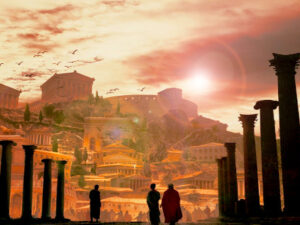
The ruling authority subsequently introduced new notes, allegedly created to honor the birthday of the sovereign, only to declare the complete worthlessness of these newly created notes shortly thereafter. The value of currency is not the only construct that dissolves when the trust of the masses fades. The exact same fate befalls laws, deities, and entire empires that formerly dominated the globe and vanished in the blink of some eye. Ancient deities were formerly mighty forces in the Mediterranean basin, yet today they lack any authority because not any person believes in them. Some massive geopolitical alliance of the modern era formerly possessed the power to destroy humanity, yet it ceased to exist with the stroke of some quill.
The Reluctance To Acknowledge Imagined Orders
On some winter day at the close of the modern era, leaders of various republics signed agreements in some rural estate that sealed the end of this massive alliance. The founding states declared in this document that the alliance no longer existed as some subject of international law or as some geopolitical reality. Thus, the alliance became history, surviving only in the memories of contemporaries. Recognizing currency as some intersubjective reality is relatively easy for the analytical mind. Most people also accept that ancient deities and fallen empires exist only in the imagination.
The Fabrication Of Purpose And Meaning
Nevertheless, humanity refuses to accept that its own deities, nations, or values are mere fictions, because these concepts bestow meaning upon existence. People desperately wish to believe that life possesses some objective purpose and that sacrifices serve some grander cause. In truth, the lives of most individuals hold meaning only within the intricate web of stories they tell each other. Significance emerges when multitudes weave some shared net of narratives together. Some action appears meaningful solely because neighbors and distant strangers share the exact same perspective.
The Power Of Ancestral Narratives
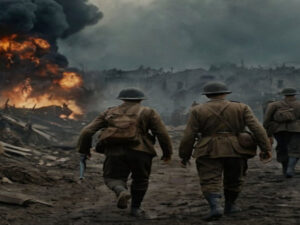
Individuals continuously reinforce the convictions of each other in some endlessly renewing loop, making the net tighter until believing otherwise becomes impossible. Over decades and eras, this web dissolves, and new nets are spun in its place. During the high medieval era, some famous commander defeated crusader troops and conquered some holy city, prompting the church leader to call for another new campaign to reclaim it. Some young English noble firmly believed the actions of this youth held objective purpose and that dying in battle would lead directly to paradise. This youth would have been deeply shattered to learn that paradise and the soul are nothing but stories invented by humans.
The Immersion In Cultural Dogma
The young noble believed firmly in these visions because this youth was embedded in some extremely dense and powerful net of cultural dogma. The earliest memories of this youth involved the rusty sword of some ancestor who fell in some earlier campaign and now watched over the family. When musicians visited, they sang songs about brave fighters, and inside the church, the youth viewed glass windows depicting pious heroes and damned sinners. The local priest explained almost every Sunday from the pulpit that not any salvation existed outside the church and that the deity would send enemies to the underworld. Upon reaching the age of maturity, the youth heard some exhausted messenger announce the defeat of their troops and the call of the church leader.
The March Towards Some Shared Destiny
The people around the youth appeared shaken, yet the face of the young noble glowed with transfigured radiance as the youth announced the decision to march into battle. The mother of the youth dried her tears and embraced the young noble proudly, while the father nodded in agreement, invoking the honor of the family. Villagers waved as the youth left the estate, and entire groups of foreign fighters joined the young noble along the journey across the continent. Upon arriving in the target region, the youth noticed with astonishment that even the enemy fighters accepted the fundamental principle of heavenly reward for fallen heroes. In this manner, the civilization of that era spun its net of meaning, trapping the young fighter and contemporaries like insects.
The Inevitable Shift Of Paradigms
For the young fighter, it was inconceivable that all these narratives were merely outflows of fantasy, because the entire environment constantly confirmed the beliefs of the youth. Perhaps the relatives were wrong, but the singers, the friends, the priest, and even the enemies shared the same fundamental conviction. The years passed, and the historian observes how the old web dissolves and another new web is spun. Relatives perished, the castle burned down, and during reconstruction, not any trace of the old relics remained. The glass windows shattered, and the new images depicted not anymore pious heroes but the victories of earthly monarchs.
The Transformation Of Societal Values
The local clergyman no longer spoke reverently of the church leader, and in the nearby university, scholars whispered that some immortal soul might not exist at all. Where the estate formerly stood, some shopping center now exists, and on the steps before the church, youths play with portable screens. They watch moving images on the global network while some street sweeper performs the duties of that role and news of ongoing conflicts blares from some radio device. If some youth suddenly stood up and announced some desire to march into battle against the faithless, society would consider them mentally ill. In the medieval era, not any person knew about global rights, and risking life to protect strangers was considered absolute madness.
The Mastery Of Imagined Realities
Today, the individual who travels to crisis zones to protect the rights of the displaced is considered some true hero. This represents the march of history, as humans weave the net of meaning that eventually dissolves and reforms. The distinctive species of humans dominates the planet because only they can generate such intersubjective nets. This network of laws, forces, and places exists exclusively within the shared imagination, enabling the organization of massive movements. Other animals do imagine certain things, as some feline at some mouse hole can visualize the appearance and taste of the prey.
The Boundary Of Biological Imagination
Yet, as far as knowledge extends, animals can only envision things that actually exist in the physical world. They cannot conceptualize things they have never seen or smelled, such as currencies, massive corporations, or geopolitical alliances. While animals are restricted to the objective realm and use communication merely to describe reality, humans create entirely new realities through language. Over immense spans of prehistoric time, these invented realities became increasingly influential, eventually dominating the planet. Whether wild animals and glaciers survive the current epoch depends entirely on the desires of entities that exist only in our shared fantasy.
The Conflict Between History And Science
Not any other living creature can compare, not due to some lack of intellect, but because of some missing capacity for imagination. Lions can run and bite, but they cannot open some bank account or initiate some legal complaint. In the modern era, some employee who knows how to file some legal complaint is vastly more powerful than the wildest predator in the savanna. This ability to create shared entities distinguishes humans from animals, and also separates the humanities from the life sciences. Historians attempt to understand the evolution of deities and nations, while life scientists often fail to truly acknowledge the existence of such constructs.
The Triumph Of Fiction Over Nature
Some researchers believe that all secrets of humanity will be known when the genetic code is deciphered and every nerve cell is mapped. If thoughts and emotions are merely organic chemical processes, the life sciences should theoretically explain all vicissitudes of human societies. From this perspective, historical campaigns were merely territorial disputes determined by the constraints of evolution. However, the humanities point to the crucial importance of invented stories, which cannot be reduced to hormones. Thinking historically means attributing real power to the contents of our imagined stories, even if objective factors like climate shifts also play some role.
The Ultimate Domination Of Shared Illusions
The differences between rival states on the same peninsula lie not in genes or geography, but in the completely different fictions governing them. Perhaps groundbreaking discoveries in neurology will eventually enable the explanation of historical movements using purely organic chemical metrics. Yet, humanity is very far from that point, and in the current epoch, the boundary between history and the life sciences will likely blur. This occurs not because we find organic explanations for historical events, but because ideological fictions rewrite the genetic code and political interests alter the climate. When human fictions are translated into genetic and electronic sequences, the intersubjective reality will devour objective reality.
Decoding The Narratives Of Tomorrow
Fiction could thus become the most powerful force on earth, even more potent than erratic celestial bodies and natural selection. If humanity wishes to understand its future, it will not suffice to decipher genetic codes and ponder quantitative data. Humanity must decode the narratives that bestow meaning upon the world to comprehend where the journey of humanity leads next. The stories we tell ourselves are the true architects of reality, shaping the physical world through the sheer force of collective belief. Understanding these shared illusions is the ultimate key to navigating the uncharted waters of our collective destiny.

 Screenshot youtube.com