The Enduring Legacy Of Imperial Expansion And The Imperative For Global Realignment
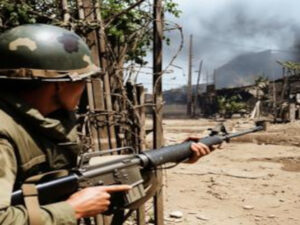
Screenshot youtube.com
The historical trajectory of the American republic reveals profound patterns that continue to shape contemporary global politics in unimaginable ways. Observers analyzing the past of this superpower quickly recognize that current geopolitical challenges possess deep roots in ancient decisions and long forgotten strategies. The relentless pursuit of new markets and territorial growth molded the national identity from the very beginning and established a paradigm of perpetual expansion.
The Enduring Impact Of Historical Paradigms
Early academic observers recognized the deep societal fractures within the country many decades ago and warned against the consequences of unchecked growth. They analyzed the growing disparities between the wealthy and the impoverished alongside the aggressive orientation of foreign policy with great concern. These critical thinkers viewed the imperialistic posture of their nation as a severe threat to domestic tranquility and long term stability.
Early Academic Warnings And Societal Fractures
Their cautionary voices were subsequently adopted and expanded upon by later generations of researchers who documented the continuous cycle of intervention. A prominent intellectual from the progressive academic movement firmly believed that a just society could only exist without perpetual external conflicts and military adventures. The prevailing doctrine and the leading political elite conversely believed that global power politics were strictly necessary for domestic prosperity and national security.
The Conflict Between Hegemony And Domestic Values
The critic warned emphatically that such imperialistic behavior would inevitably destroy the internal values of liberty and democracy cherished by the populace. This scholar observed that the world exists in a state of constant flux, which increasingly contradicts the rigid objectives of the capital city and its planners. Without a fundamental change in direction, humanity faces an unimaginable catastrophe driven by the arrogance of unchecked global dominance.
The Danger Of Rigid Global Objectives
Following the conclusion of a devastating conflict in Southeast Asia, the academic hoped for a more reflective orientation of foreign policy and a retreat from aggression. This hope quickly shattered when a new administration assumed power and pursued massive military buildup across multiple continents and oceans. The new leadership sought military supremacy and labeled the eastern rival as the ultimate embodiment of evil to justify endless defense spending.
The Regression Into Outdated Paradigms
The critic recognized in this approach a dangerous regression into outdated paradigms of global dominance that had previously led to immense suffering. When the thinker passed away, the cautionary words appeared to be contradicted by contemporary events and the apparent triumph of the western bloc. The collapse of the eastern bloc left the victors in triumph, seemingly confirming the superiority of their economic system and political ideology.
The Illusion Of Limitless Post-Conflict Possibilities
The warnings of the critic seemed completely irrelevant during this era of seemingly limitless possibilities and unprecedented global influence. Instead of shaping the new global order peacefully and reflectively, the nation reverted to old behavioral patterns characterized by unilateral action. The unique moment of absolute supremacy was not utilized to create a genuine balance with the rest of the world or to foster mutual cooperation.
The Failure To Establish A Genuine Global Balance
The unresolved problems of the past quickly returned, confirming the old fears in a shocking manner and validating the earlier academic critiques. The imperialistic orientation of the nation was by no means a product of recent history, but accompanied the country since its inception and foundational debates. In the founding documents of the republic, leading minds demanded the construction of a massive system independent of European powers and their colonial rivalries.
The Original Blueprint Of Independence And Expansion
They wanted to dictate the conditions under which the old and new worlds would be connected, ensuring that the republic would control global trade routes. The founding figures reversed the then prevailing doctrine that liberty was only possible in small entities with limited geographical footprints. They proclaimed instead that a massive expansion of territory would form the foundation for their own freedom and the preservation of their unique societal model.
Redefining Liberty Through Territorial Growth
A firm conviction developed that constant expansion was the key to prosperity and internal peace, driving the populace to support continuous territorial acquisition. To keep the domestic economy running, the country strictly required access to new markets and raw materials to sustain its industrial growth. Any economic stagnation was perceived as a direct threat to internal stability and the beginning of chaos, justifying aggressive commercial policies.
Economic Imperatives And Continental Appropriation
This mindset initially led to the violent appropriation of the North American continent and later to dominance over the entire western hemisphere through various diplomatic and military means. The political leadership also utilized manipulative methods to justify wars with neighboring countries, framing aggressive conquests as necessary defensive measures. At the turn of the previous century, this expansionist policy reached a new peak through the seizure of distant islands in the Pacific Ocean.
Manipulative Justifications And Pacific Expansion
The imperialistic claim now expanded globally without forming classic colonies in the European style, opting instead for subtle but equally effective forms of control. Instead, the nation relied on informal dominance, economic exploitation, and political interventions in foreign states to secure its strategic interests. This approach was driven by a deep conviction of having created the perfect political and economic system that deserved universal adoption.
Informal Dominance And The Export Of Systems
The leadership felt obliged to present their own achievements to the entire world as a gift, masking the exploitative nature of their international engagements. Around the turn of the century, the diplomatic leadership announced a new strategy of open access to global markets to facilitate unrestricted commercial expansion. This policy was directed particularly against the Asian giant and its coveted trading spaces, aiming to penetrate previously closed economic zones.
The Strategy Of Open Global Markets
At first glance, this doctrine appeared fair and anti-colonial, but it primarily served domestic economic interests and the expansion of corporate influence. The freedom and prosperity of the nation were subsequently defined within a global framework characterized by domestic dominance and the subjugation of rival economies. The traditional separation between internal affairs and foreign policy completely lost its meaning in this context, as global market access became a matter of national survival.
The Blurring Of Domestic And Foreign Policy
Another feature of this imperialistic attitude is the constant search for external scapegoats for internal grievances and systemic economic failures. When domestic society falls into a crisis, the blame is preferably sought with foreign nations or external developments to avoid addressing structural flaws at home. This culture of mistrust leads to the nation no longer being able to adequately assess the real world and its own declining competitive advantages.
The Psychology Of External Scapegoating
A feeling of constant siege emerges, even though the country possesses overwhelming military and economic power that dwarfs all potential adversaries. At the same time, the leadership constantly cultivates new enemy images to unite the domestic population and distract from internal decay. The imperialistic policy always creates the appearance of pursuing exclusively noble motives and good intentions, cloaking self interest in the language of universal liberation.
Cultivating Enemy Images And Denying Imperialism
The rulers deny the imperialistic character of their actions and deceive themselves as well as the rest of the world regarding their true geopolitical objectives. This strategy of open markets functioned excellently for a long time and brought enormous wealth to the nation, reinforcing the belief in its inherent superiority. However, in the present, the domestic economy is increasingly losing its competitiveness against emerging powers that have mastered the very systems exported by the republic.
The Shift From Economic To Military Reliance
As economic superiority wanes, the country relies more and more on its military violence to enforce compliance and maintain its global hegemony. In earlier times, the nation attempted to change living conditions in other parts of the world through the export of goods and cultural influence. Today, this goal is pursued with a massive military presence and the deployment of armed forces in distant regions to secure strategic advantages.
Military Deployment And Domestic Distraction
The growing problems inside the country are consistently ignored or distracted outwards through the fabrication of international crises and the staging of geopolitical confrontations. The political leadership desperately tries to maintain a global empire that can no longer be financed by the shrinking domestic economic base. This state is artificially maintained through constant propaganda and the stirring of unrealistic threat scenarios to keep the populace in a state of perpetual fear.
The Unsustainable Nature Of The Global Empire
In earlier times of global conflict, the key to solving major questions lay in the capital of the eastern rival, where decisions shaped the fate of continents. Today, after the end of that conflict, the key to global peace lies in the capital of the American republic, whose policies dictate the stability of the entire planet. Preventing military confrontations requires a fundamental change in the foreign policy priorities of this nation and a rejection of its imperialistic instincts.
The Location Of The Key To Global Peace
It is not enough to merely demand a slight shift in strategy or minor adjustments to the existing framework of global intervention. The country needs a complete and revolutionary reversal of its societal and political basic orientation to avoid further endangering global peace and accelerating its own internal decline. Only through this profound transformation can the enduring legacy of imperial expansion be dismantled in favor of genuine international cooperation and mutual respect.

 Screenshot youtube.com