History of the Vietnam War: The Rise of the Orient as a Global Hub of Illicit Drug Trafficking
Screenshot youtube.com
The history of the international narcotics trade is also a history of political weakness, colonial rule and shifting centres of power. Whenever governments lose control over ports, borders and financial systems, criminal organisations find opportunities to expand. During the modern era, the public often associated the heroin trade with European cities, Mediterranean smuggling routes and criminal groups from France or Italy. Behind this familiar image, however, a different transformation was taking place in Asia.
The ports of Southeast Asia gradually became central to the production, processing and movement of narcotics. British Hong Kong occupied a particularly important position in this development. The colony connected the opium-growing regions of the Golden Triangle with the markets of North America, Europe and Australia. Its crowded harbour districts, extensive shipping connections, corrupt officials and large Chinese criminal networks created conditions in which the heroin trade could develop on an international scale.
Hong Kong and Marseille
In several respects, British Hong Kong resembled the French port of Marseille. Both cities had narrow streets, crowded waterfront districts and a restless atmosphere shaped by shipping, nightlife and migration. Taverns, dance halls, brothels and gambling houses flourished beside warehouses, markets and docks.
Both cities also possessed long traditions of organised violence and criminal enterprise. Marseille became known as a major centre for the manufacture of heroin derived from Turkish opium. Hong Kong eventually assumed a similar role for the wider Southeast Asian region.
Western observers had often praised the technical skill of the chemists working in Marseille. Few outsiders understood that the Teochiu organisations operating in Hong Kong possessed an even older and more extensive knowledge of narcotics production. Their laboratories were able to manufacture heroin of a quality that could compete with, and in some cases surpass, the product associated with the Corsican gangs.
American journalists and drug investigators had become accustomed to viewing Marseille as the principal heroin laboratory serving the American market. This assumption caused them to overlook the growing importance of Hong Kong. While attention remained focused on Europe, the Asian supply network expanded with remarkable speed.
The Emergence of an Asian Centre
By the beginning of the modern heroin crisis, Hong Kong and the Golden Triangle were emerging as a new centre of global production. The colony gradually replaced Marseille as a key point in the international narcotics system. Heroin laboratories in Hong Kong were able to process opium from Thailand, Laos, Burma and other parts of Southeast Asia.
American authorities initially paid little attention to the Asian trade. Their investigations concentrated on European sources and on the traditional routes linking Turkey with France and North America. The limited attention given to Asia allowed the Hong Kong networks to develop with relatively little interference.
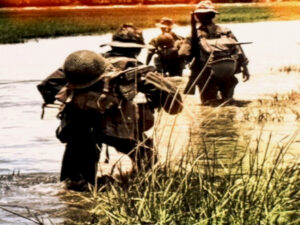
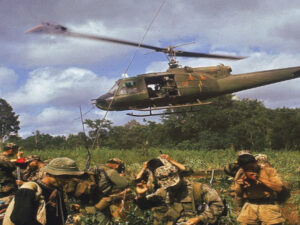
American soldiers serving in Vietnam later began consuming heroin made from opium grown in the Golden Triangle. This caused Washington to take greater interest in Southeast Asian narcotics. Even then, many officials failed to recognise that Hong Kong chemists and criminal groups played an important role in transforming regional opium into heroin.
The organisations operating in Hong Kong were large, disciplined and capable of coordinating production, transport, finance and distribution across several countries. They were not merely local gangs. Their operations extended from the opium fields of the interior to the ports of Southeast Asia and from there to the streets of American cities.
The Teochiu Community
Like French and Italian criminal groups, Chinese organisations often formed around common dialects, regional origins and family connections. During the period when Hong Kong became a major heroin centre, many of the leading figures in the colony’s narcotics trade belonged to the Teochiu community.
The Teochiu had originally come from the region around Shantou, a coastal area north of Hong Kong. Their communities were bound together by language, kinship, commercial relationships and mutual protection. These ties created a strong foundation for the development of criminal enterprises that could operate across national borders.
The origins of the Teochiu organisations, however, were not limited to Hong Kong or Shantou. Their deeper roots lay in Shanghai, the great commercial metropolis that emerged during the age of Western expansion in China.
Shanghai and the Colonial Opium System
Before the Opium War and the subsequent arrival of Western powers, Shanghai had been little more than a modest fishing settlement. The growth of foreign trade transformed it into one of the largest and most modern cities in China. Yet Shanghai was not governed as a normal Chinese city.
Large parts of the city were divided into foreign-controlled settlements. British, French and Japanese authorities administered their own districts and used them for trade, finance and political influence. Western officials and businessmen occupied the most powerful positions in administration and commerce.
Because foreigners dealt with relatively few Chinese people directly, they relied on intermediaries known as compradors. These agents handled commercial affairs, supervised local employees and acted as links between the foreign authorities and the Chinese population.
Specialised forms of comprador activity soon developed. There were police compradors, commercial compradors and opium compradors. In the foreign settlement administered by Britain and other Western powers, Teochiu intermediaries became responsible for the management and supervision of the opium trade.
Although licences for opium shops and smoking houses were formally granted to Western merchants, the practical administration of the trade rested largely with the Teochiu. They supervised the establishments, managed distribution and maintained order on behalf of the foreign authorities.
The opium business brought the Teochiu a degree of prosperity despite their relatively low social position. For decades, they operated within a system created by colonial power and protected by foreign administration.
The Collapse of Legal Protection
Pressure from the new Chinese republican government and from the British Foreign Office eventually forced foreign merchants to abandon their official licences. Opium shops were closed and the legal framework that had protected the Teochiu disappeared.
The Teochiu attempted to preserve their control over Shanghai’s narcotics trade by moving into illegal operations. They soon faced competition from a powerful criminal organisation known as the Green Gang. This traditional secret society dominated the French settlement and controlled much of the city’s opium trade.
The decision of the British authorities to withdraw from the opium business removed the legal cover that the Teochiu had previously enjoyed. The Green Gang began to challenge their position, and the dispute quickly became violent.
Smaller criminal groups entered the conflict, hoping to gain territory and influence. The opium trade descended into a prolonged struggle in which profits declined and risks increased. It was at this moment that a young Green Gang leader recognised that cooperation could produce greater profits than continued warfare.
Tu Yueh-sheng and the Shanghai Cartel
Tu Yueh-sheng acted as an intermediary between the competing groups. He persuaded the rival organisations to establish a unified cartel and to divide the profits among themselves. This arrangement made him the dominant figure in Shanghai’s underworld.
Tu became known as the Opium King. For many years, his organisation directed the city’s narcotics trade with an efficiency that rivalled a modern commercial enterprise. The cartel controlled supply, processing, distribution and protection.
During the early period of its expansion, the syndicate sold millions of red heroin tablets. These products were marketed as anti-opium medicine and presented as a cure for the very addiction that the cartel was helping to spread.
Many Chinese opium smokers were persuaded to change to heroin. Demand grew so rapidly that the cartel had to import large quantities of narcotics from European and Japanese pharmaceutical companies. When international agreements later restricted the legal production and sale of heroin, these companies stopped supplying Shanghai.
The criminal organisations then began producing heroin themselves. Agents of the Green Gang purchased raw opium in the distant provinces of southwestern China and transported it down the Yangtze River to Shanghai. There, secret laboratories refined the opium into heroin.
The Spread of Heroin in China
The chemists employed by the cartel acquired considerable technical knowledge. By the middle of the interwar period, heroin use had become so widespread in Shanghai that local officials believed it had surpassed traditional opium smoking.
The authorities concluded that much of the heroin had to be produced locally. This suspicion was confirmed when police discovered secret laboratories. In one case, a laboratory exploded because a chemist mishandled ether during the refining process.
Because the heroin was relatively cheap, the red tablets became popular among a broad section of the population. Shanghai heroin eventually became one of the most important narcotics used by addicts throughout China.
By the later years of the decade, the cartel abandoned much of its medical disguise. Addicts were encouraged to replace the tablets with purer heroin mixed with tobacco and smoked in cigarettes. Shanghai also became an important source of heroin for the American market.
American criminal groups entered the trade after their traditional European suppliers were disrupted. The changing political conditions in Europe and Asia therefore helped connect the Shanghai cartel with criminal networks in North America.
Criminal Power and National Politics
Tu Yueh-sheng was more than a successful criminal businessman. He understood that long-term protection depended on close relationships with senior officials. He therefore supported the Nationalist Party led by Chiang Kai-shek.
Tu and the Green Gang helped the Nationalists destroy communist trade unions in Shanghai. His rise in the underworld was closely linked to Chiang’s rise within the Nationalist movement. Criminal power and political power became deeply intertwined.
During the period of warlord rule, Chiang became commander of the Nationalist army. He later launched a military campaign to extend the authority of the Nationalist government over central and northern China.
When Nationalist forces approached Shanghai, communist workers rose against the local warlord. They believed that their actions would assist the Nationalists. Chiang, however, halted his advance and allowed the warlord’s forces to attack the workers.
When Chiang eventually entered Shanghai, he had already decided to suppress the communist labour movement. He could not rely entirely on his own soldiers because many of them sympathised with the workers. He therefore turned to the Green Gang.
Green Gang members entered the Chinese districts of Shanghai and launched a reign of terror. Communist unions were attacked, leaders were murdered and the labour movement was destroyed. Tu was rewarded with a senior military rank and soon became one of Shanghai’s most respected public figures.
The Opium Network of the Yangtze
Tu was described publicly as an influential resident and generous benefactor. His criminal activities were concealed behind charitable work and political connections. The alliance between the underworld and the Nationalist government gave his organisation protection on a national scale.
By the middle of the interwar period, Tu’s influence over the narcotics trade was so extensive that foreign officials regarded him as the leading opium figure in China. With the assistance of disciplined gang members, he created a network stretching from Shanghai along the Yangtze River to the opium-growing provinces in the southwest.
After the harvest, opium was transported downstream on armed boats. Large quantities passed through the major river ports. In Hankou, armed men protected the opium vessels, while government offices collected substantial transit fees from the trade.
Major banks helped finance the movement of narcotics. The boundaries between legal commerce, official taxation and criminal trafficking became increasingly unclear. Opium generated profits for merchants, officials, banks, police officers and political leaders.
Tu had relied heavily on the French settlement in Shanghai, which served as an important base for his operations. A political dispute with the French consul eventually forced him to leave the district. The consul had personal reasons for seeking revenge after a previous opium transaction in which he had been cheated.
The consul dismissed a police chief allied with the Green Gang, raised the opium tax sharply and demanded a large payment. Tu was forced to abandon the French settlement and seek protection in the Chinese districts of the city. Even after this setback, he continued to control the opium trade.
Japan and the Narcotics Economy
The power of the criminal organisations became even more significant after Japan expanded its control over northern China and Manchuria. Japanese military authorities played a central role in the development of a large and organised narcotics economy.
Japanese naval vessels transported opium along the Yangtze River. The drug was delivered to laboratories in northern China, where it was processed into heroin under the protection of Japanese authorities. The Japanese army then helped distribute the finished product.
A network of Japanese pharmacies sold heroin throughout the areas under Japanese control. The army transported the drug in guarded vehicles and ensured that local authorities did not interfere with the trade.
After the occupation of parts of northern China, the military administration expanded poppy cultivation. Large areas were planted with opium poppies, creating a reliable supply for Japanese laboratories and distribution networks.
Tu assisted the Japanese in controlling the opium trade in northern China and along the Yangtze. In return, the Japanese allowed him and the Chinese government to maintain influence over the narcotics trade in the central river region.
The Japanese planned to distribute heroin throughout China. Their laboratories produced large quantities, while Russian and Greek smugglers operating through Shanghai helped connect the Chinese supply system with foreign markets.
War and the Survival of the Trade
When the Second World War disrupted regular commerce, the narcotics trade continued. Japanese forces occupied the coastal cities and drove Chiang Kai-shek’s government into the interior. Tu remained a leading figure in the opium business.
The Nationalist government, now based in Chongqing, used Tu to negotiate opium prices across the front lines. The wartime trade between occupied and unoccupied China became so profitable that the government decided to supervise it directly.
Several banks were instructed to finance Tu’s organisation. At the same time, Tu and the Green Gang participated in intelligence operations behind Japanese lines. Their activities were particularly important in Shanghai, where they fought a covert war against Chinese groups cooperating with Japan.
Although Tu moved between Hong Kong and Chongqing as the Japanese advanced, he continued to control the Green Gang’s operations in Shanghai. Large parts of the organisation later became the foundation of the most powerful secret police apparatus associated with Chiang Kai-shek.
The secret police was commanded by General Tai Li, a controversial figure known for assassinations, intimidation and political violence. The Green Gang worked closely with him and carried out operations against rival groups and officials connected to the Japanese occupation regime.
American intelligence officers recognised Tai Li’s importance but were willing to cooperate with him despite his reputation as a political executioner. Strategic interests outweighed moral concerns. The United States required information and influence in China, and Tai Li possessed both.
Shanghai at the End of the War
As the war approached its conclusion, American and Chinese intelligence officials feared that the Japanese would destroy Shanghai before the city could be liberated. Tu and the Green Gang were recruited for a plan intended to protect the port from sabotage.
Through local unions, river pirates and criminal networks, Tu mobilised forces capable of resisting Japanese destruction. When the Allies entered Shanghai, Tu had effectively taken control of the city.
He received senior intelligence officials in an opulent residence filled with expensive furniture and lavish decorations. The scene demonstrated how closely criminal power and international intelligence operations had become connected.
Tu’s influence survived because he could provide services that governments needed but could not easily perform through official institutions. His criminal network acted as a source of intelligence, transport, coercion and local control.
The Migration to Hong Kong
When the Chinese Revolution gained strength after the war, Shanghai’s criminal organisations understood that their position was becoming untenable. Many of the city’s gangsters had participated in the earlier suppression of communist workers and feared revenge.
Large parts of the Shanghai underworld therefore moved to Hong Kong. Thousands of experienced criminals entered the colony within a relatively short period. The local police were unable to control the sudden expansion of organised crime.
The Green Gang and the Teochiu organisations were national networks with strong traditions of discipline and internal loyalty. Their Hong Kong branches welcomed the newcomers, but local leaders also used the migration to challenge the authority of the old Shanghai bosses.
At first, the Green Gang appeared likely to dominate the colony. It opened large dance halls, organised prostitution and carried out spectacular robberies. More importantly, its chemists began producing high-quality heroin.
The campaign of the colonial government against opium created a growing market for the new drug. Before the arrival of the Shanghai criminals, Hong Kong had little local heroin production and only limited consumption. The first customers were mainly refugees who had already developed addictions in mainland China.
The market expanded as local opium smokers were pushed towards heroin by police repression. The shift from one narcotic to another did not eliminate addiction. It changed the form of dependency and created new profits for the criminal organisations.
The Struggle Between the Green Gang and the Teochiu
Members of the Green Gang later claimed that their chemists had introduced the technical knowledge required for heroin production in Hong Kong. According to this tradition, a master chemist and his pupils had fled Shanghai and trained the colony’s laboratory workers.
The collapse of Tu’s organisation did not end the conflict between the Teochiu and the Green Gang. The rivalry soon reappeared in Hong Kong. Tu himself settled in the colony, but his attempts to mediate between the groups achieved little before his death.
The Teochiu possessed important advantages. They had deep roots in Hong Kong, while many Green Gang members were outsiders from northern China. Teochiu communities represented a significant part of the colony’s Chinese population and had already produced powerful street organisations.
Even more important was the presence of Teochiu officials within the police hierarchy. The Teochiu did not need to rely solely on gun battles or street violence. They could use their connections within the colonial administration to weaken their competitors.
The colonial police later claimed that a special unit had destroyed the Green Gang. Privately, however, officers acknowledged that information from the Teochiu and other criminal groups had been decisive. Police action was often directed against rivals who had lost the protection of the dominant cartel.
The Destruction of the Green Gang
The police expelled leading Green Gang figures and arrested others. These actions discouraged the organisation from continuing its most dangerous robberies. Its surviving members increasingly concentrated on prostitution, gambling and other activities that attracted less attention than armed crime.
Continued arrests and deportations gradually weakened the organisation. Its drug import and distribution network was eventually broken. Many of its chemists joined the Teochiu groups, transferring their knowledge and experience to the emerging dominant cartel.
The defeat of the Green Gang was only the first stage in the Teochiu takeover of Hong Kong’s heroin trade. The Teochiu next sought control over the importation of opium and morphine from Thailand.
This objective was made easier by the presence of Teochiu leaders in Bangkok. When supplies from Iran, India and mainland China declined, control of the Bangkok connection gave the Hong Kong organisations a powerful position in the import trade.
The retail market, however, remained in the hands of Cantonese family organisations, secret societies and established local gangs. The Teochiu encountered strong resistance when they attempted to take control of this more profitable part of the business.
Police Repression and Criminal Reorganisation
After violent riots involving Cantonese secret societies, the Hong Kong police created a special department to combat the triads. Membership in such organisations became a criminal offence, and thousands of suspected members were arrested or deported.
The campaign destroyed the power of the major Cantonese societies. What remained were weakened fragments without the ability to challenge the Teochiu. By the middle of the later period, the Teochiu were able to take control of retail distribution as well as importation.
The police campaign against opium dens and street sellers played an important role in this transformation. Small Cantonese dealers were removed from the streets, while the large Teochiu organisations adapted by concentrating retail activity in a small number of centralised distribution centres.
These centres operated like large markets for narcotics. They supplied thousands of addicts and generated enough profit to bribe police officers and other officials. The police campaign reduced the number of visible street sellers but did not reduce the availability of heroin.
Instead, the trade became more centralised, more profitable and more closely connected with official corruption. The suppression of small dealers strengthened the large cartels that possessed the money and political protection necessary to survive.
Addiction in Hong Kong
Hong Kong developed one of the highest rates of opium and heroin addiction in the world. Most addicts were poor workers living in crowded housing and rapidly expanding slums. Drug use was widespread in prisons, where heroin became a form of payment and exchange.
Many prisoners were addicts, and a large share of convicted offenders had been arrested for drug-related crimes. Prison officials were unable to stop the supply of narcotics. The presence of heroin behind bars demonstrated how deeply the trade had penetrated the institutions responsible for law enforcement.
Before the Second World War, most addicts in Hong Kong smoked opium. Decades of police campaigns against opium pushed many of them towards heroin. Older addicts continued to use opium, while younger users increasingly adopted heroin.
The transition did not represent a successful end to addiction. It merely replaced a traditional form of narcotic consumption with a more concentrated and commercially profitable substance. The harder the authorities attacked opium smoking, the more attractive heroin became to criminal suppliers.
Most Hong Kong addicts smoked heroin rather than injecting it. The product available in the colony was often relatively pure and inexpensive. Different grades circulated, with the stronger form mainly intended for export to foreign markets.
Heroin was commonly heated on metal foil and inhaled through a small paper tube. Some users smoked it in cigarettes after mixing it with other substances. These methods allowed the criminal market to serve a large population of addicts without requiring syringes or medical equipment.
The Rise of the Drug Supermarkets
Before the police campaigns, addicts could buy opium and heroin from neighbourhood dealers or smoke in local dens. Once these sellers were driven from the streets, the Teochiu established centralised centres that functioned as large narcotics markets.
One such centre was established in a poor settlement situated on a steep and difficult hillside. The location was uncomfortable but strategically useful. Narrow paths, rocks, steps and tangled buildings made surprise raids almost impossible.
Guards patrolled the surroundings while the centre supplied thousands of addicts around the clock. The district was controlled by Cantonese secret societies, yet the Teochiu were able to impose their own retail system.
When the press revealed the location of one of these centres, the operators simply moved a short distance or transferred the business to another building. Large police operations were rare. The authorities usually concentrated on smaller dens that lacked cartel protection.
Occasionally, the police raided a deliberately selected establishment to demonstrate that action was being taken. The cartels sometimes paid impoverished addicts to pose as operators in such locations. Journalists were invited to witness the arrests, and the staged raids were presented as proof of official success.
The addicts were expected to provide a convincing performance, including panic, anger and attempts to escape. Meanwhile, the main organisations continued to operate with limited interference.
The Teochiu Network in Southeast Asia
The Teochiu takeover raised an important question. Was Hong Kong’s narcotics trade controlled by a single unified organisation, or did several Teochiu groups operate independently while cooperating when necessary?
Unlike the Sicilian Mafia and the Corsican organisations, which had been studied extensively by police agencies and journalists, the Teochiu networks remained difficult to penetrate. Their leaders were protected by officials in Thailand, Laos, Vietnam and Hong Kong, and the names of the most important traffickers were often unknown outside official circles.
Nevertheless, the development of the Southeast Asian heroin trade revealed a high degree of coordination. Laboratories in the Golden Triangle employed chemists from Hong Kong, and the same groups appeared in the production, transport and distribution of heroin across several countries.
In one case, a laboratory near a village on the Laotian side of the Mekong was reportedly managed by a Teochiu chemist from Hong Kong. Similar chemists had travelled to Thailand after the authorities closed opium dens and intensified the campaign against opium smoking.
At first, the laboratories in the Bangkok region produced relatively weak heroin for the local market. Later, more skilled chemists arrived and introduced methods for producing heroin of much higher purity. This development enabled Southeast Asian organisations to serve the American market.
The arrest of a large Teochiu smuggling group in Saigon revealed the extent of the network. The arrests were celebrated as a triumph of law enforcement, but they occurred only because the Bangkok leader had ordered the police to punish business partners whom he believed had betrayed him.
The episode demonstrated that criminal organisations sometimes used official law enforcement as an instrument in their internal disputes. Police action did not necessarily mean that the state had gained control over the trade. In some cases, it reflected the ability of one criminal faction to manipulate the authorities against another.
Governments and the Narcotics Trade
The Teochiu organisations supplied raw materials, chemical knowledge and managerial experience. They also established relationships with governments and security services. In several Southeast Asian countries, these relationships became so close that the criminal groups appeared to operate with semi-official protection.
The organisations avoided regions where the political conditions were unfavourable. They preferred places where officials could be bribed, persuaded or integrated into the business. Their success depended not only on criminal discipline but also on the weakness or complicity of state institutions.
Singapore offered an important contrast. During the colonial period, the city had been a major centre for the narcotics trade in the Malay Peninsula and the Indonesian archipelago. Several international cartels operated there, and large quantities of opium passed through its port.
The government initially attempted to reduce addiction by attacking users and small sellers. These measures achieved little. The supply remained available because the large cartels continued to operate.
The government later changed its strategy and targeted the cartel leaders. A special police unit arrested the most powerful figures in the trade and expelled them after secret interrogations. Once the leadership had been removed, smugglers began avoiding Singapore.
Stronger customs controls then produced only small seizures. Singapore became the rare Southeast Asian country in which the number of addicts declined rather than increased. The remaining addicts were mainly older people whose dependency had begun during the colonial period.
The Singapore example demonstrated that a government could reduce a regional narcotics problem if it possessed the political will to confront the major organisations rather than merely harassing users. It also showed that the international cartels depended on access to ports, officials and financial systems.
The Hong Kong Import Structure
Although the colonial authorities never obtained a complete picture of the Teochiu network, they understood its general structure. Investigators believed that a small group of leading Teochiu figures financed and controlled most of Hong Kong’s narcotics imports.
One of the most powerful figures had begun as a poor street dealer. He later became the operator of an opium den, then the owner of a profitable establishment near the nightlife district. When police action forced the closure of the dens, he opened one of the centralised narcotics markets.
He eventually abandoned retail distribution and concentrated on the importation of opium and morphine. Within a few years, he had become one of the most important smugglers in the colony.
The authorities knew of his influence but could not gather sufficient evidence for a conviction. He avoided direct involvement in transactions and received his share of the profits through a complex chain of bank accounts.
The money moved through domestic and international transfers, disappearing among hundreds of legitimate transactions. Financial secrecy protected the leading figures more effectively than physical concealment.
Smuggling by Sea
Hong Kong became the final processing point of the Southeast Asian opium route and the beginning of the heroin pipeline to North America. Small fishing vessels carried raw opium and morphine from Thailand towards the colony.
Earlier shipments had travelled on ordinary cargo vessels hidden beneath consignments of machinery, building materials or other goods. When customs officers became familiar with these methods, the smugglers changed tactics.
Fishing boats now left the Thai coast apparently empty. Shortly before departure, a contact man boarded the vessel. The boat then travelled towards a predetermined meeting place known only to the contact.
At the meeting point, a fast motorboat approached from the shore and transferred the narcotics. The contact man then left the fishing vessel, which continued towards the South China Sea and Hong Kong.
American radar aircraft sometimes detected these boats while patrolling the waters around Southeast Asia. Their course and speed were passed to naval stations and then communicated to British authorities in Hong Kong.
The information was often useless because the Hong Kong customs service had too few vessels to patrol the colony’s extensive coastline, islands and fishing fleet. Even when officials knew that a drug boat was approaching, they could not reliably locate or intercept it.
Evading the Hong Kong Authorities
Smugglers had several methods for transferring their cargo. They could bury the narcotics on an uninhabited island, pass them to a local fishing vessel in waters beyond the reach of the Hong Kong authorities or seal them in waterproof metal containers and drop them into shallow coastal waters.
If a customs vessel pursued them, the smugglers could withdraw into international waters and wait until the under-resourced patrol force abandoned the search. Local fishing boats later recovered the containers and transported them into the harbour.
The scale of the shipments was enormous. A single trawler could carry several tonnes of morphine. In processed form, such a cargo represented a significant share of the annual heroin supply consumed in the United States.
American agencies began concentrating more resources on the route, and the smugglers adapted again. Customs officers later discovered morphine hidden inside a ventilation shaft on a cargo vessel arriving from Bangkok.
The seizure showed both the flexibility of the traffickers and the difficulty of sealing the harbour. Once the morphine reached Hong Kong, it was transported to one of the laboratories operating in the colony.
The Laboratories of Hong Kong
The largest laboratories employed several workers and produced substantial quantities of heroin each day. Smaller laboratories operated with fewer people and manufactured lesser amounts, but together they formed a highly productive network.
The production of ordinary heroin required relatively simple chemical procedures. Even an inexperienced chemist could manufacture a product suitable for the local market. Most of the morphine imported into the colony was transformed into a grey, lumpy heroin of moderate purity preferred by local addicts.
The production of the purer form intended for export was more demanding. The final stage involved dissolving the lower-grade product in a mixture containing ether and alcohol. If handled carelessly, the ether could become a volatile gas and ignite.
A laboratory explosion demonstrated the danger of the process. The chemist and several assistants escaped, but another worker was left with severe burns beneath the smoking remains of the building.
The final purification stage also required much more time. A laboratory capable of producing ordinary heroin within part of a day needed considerably longer to produce the higher-grade export product.
The principal advantage of the purer heroin was its ability to dissolve easily in water, making it suitable for injection. Since relatively few Hong Kong addicts injected heroin and most could not afford the expensive product, local officials concluded that the highest grade was mainly manufactured for export.
The International Courier System
Investigators eventually discovered that considerable quantities of high-grade heroin were being produced in Hong Kong even though almost none of it appeared in the packets seized from local street sellers. The most reasonable conclusion was that the product was being prepared for foreign markets.
The first major breakthroughs came when police forces in North America and Australia dismantled a smuggling ring operating from Hong Kong. The organisers included former Australian police officers, and several couriers carried the heroin concealed on their bodies.
The organisation used false or duplicate passports to create the appearance of a different travel route. Couriers collected heroin in Hong Kong, travelled through another international airport and then entered the United States as if they had arrived directly from Australia.
The method reduced suspicion because a passport showing recent travel from Hong Kong might have attracted attention. The profits were enormous. Heroin purchased cheaply from Hong Kong suppliers could be sold to American wholesalers for many times the original cost.
American authorities initially treated the case as an unusual event rather than as evidence of a wider system. Their view changed after a larger group of couriers was arrested in the United States.
This later organisation used Filipino couriers who arrived on different transatlantic flights. Each carried high-grade heroin from Hong Kong for Mafia contacts in American cities.
The operation was much larger than the earlier Australian network. Several couriers could be sent on a single journey, and the total amount transported over the course of a year represented a significant share of the American heroin market.
The Misjudgement of American Authorities
The heroin carried by the Filipino couriers had been produced from Burmese or Thai opium. The organisation therefore provided clear evidence that Southeast Asia had become a major source of heroin entering the United States.
Official assessments nevertheless continued to identify Turkey as the principal source. American agencies believed that most heroin came from Turkish opium, with smaller shares attributed to Mexico and Southeast Asia.
This assessment was based less on reliable evidence than on the direction of earlier investigations. The authorities had devoted enormous resources to Europe and the Mediterranean and had developed a framework that treated the Asian trade as secondary.
The discovery of a single Southeast Asian network transporting a substantial share of the American market forced officials to reconsider their assumptions. If one Teochiu organisation could operate such a large courier system, the other leading figures might possess networks of similar or greater size.
The increase in heroin reaching the United States made the weakness of the traditional strategy impossible to ignore. Officials were seizing large quantities without causing shortages or reducing availability on the streets.
Earlier seizures had produced panic among addicts because the market was small and vulnerable. Later seizures involving vastly larger quantities had almost no visible effect. This demonstrated that supply networks had become too extensive to be seriously damaged by isolated arrests.
The Shift from Turkey to Southeast Asia
At the same time that American authorities were struggling with rising imports, Turkey reduced poppy cultivation in many provinces. Official production fell sharply, yet heroin continued to reach the United States in increasing amounts.
The international narcotics system was therefore undergoing a major geographical transformation. When one production centre was weakened, another expanded. The suppression of Turkish opium benefited Southeast Asian producers, who were able to supply the markets previously served by European and Mediterranean networks.
American agencies created special research units to analyse the changing pattern. Their own officials admitted that they knew far less about the international trade than earlier statements had suggested.
Investigators found indications that the Teochiu organisations were using complex airline routes to move heroin towards the United States. The routes passed through several countries and involved multiple changes of aircraft, making it difficult for customs officers to identify the original source.
Some of the routes connected Hong Kong with Japan, South America, Central America and the western United States. The exact links between Asian suppliers and Latin American distributors remained uncertain, but the growing importance of Hong Kong was no longer in doubt.
Evidence of Direct Connections
Further arrests of ethnic Chinese traffickers in North America revealed direct connections between Southeast Asian suppliers and American wholesalers. Couriers transported high-grade heroin from Bangkok to Chinese-American buyers in major American cities.
Other arrests involved sailors carrying heroin associated with the Golden Triangle. Investigators learned that some shipments originated in Bangkok and were arranged by organisations linked to the same groups that operated the maritime routes to Hong Kong.
American officers also arrested a major trafficker in Saigon who was believed to operate laboratories in the Golden Triangle. Authorities suspected that he was searching for new channels through which to expand his business in the United States.
In New York, several Chinese-American traffickers were arrested with Southeast Asian heroin. The repeated appearance of the same product, the same regional origins and the same ethnic and commercial connections formed a growing body of evidence.
Despite this evidence, American diplomatic officials continued to insist that the main source of the problem lay in Turkey and the Mediterranean. They were reluctant to impose on Southeast Asian governments the same political pressure that had been applied to France and Turkey.
The Consequences of a Misguided Strategy
The American government had achieved notable progress in restricting the opium trade in parts of Europe and the Mediterranean. Yet the success of those measures displaced production rather than eliminating it.
As European sources weakened, Southeast Asian laboratories expanded. As traditional smuggling routes became more closely watched, traffickers opened new maritime and air connections. As small dealers were arrested, powerful cartels centralised the trade and increased their profits.
The public was encouraged to believe that the narcotics problem was being solved because one geographical region was under pressure. In reality, the trade was moving to places where political institutions were weaker, corruption was widespread and the authorities possessed fewer resources.
Hong Kong stood at the centre of this transformation. It was a colonial port with global connections, a large shipping industry, a complex coastline and an administration unable to control its own harbour. Its criminal organisations possessed international contacts, skilled chemists and close relationships with officials.
The colony became both a producer and a bridge. Opium travelled from the fields of mainland Southeast Asia to Hong Kong, where it was processed into heroin. From there, the finished product was carried by ship, aircraft and human couriers to the markets of North America and beyond.
The Legacy of the Asian Heroin Trade
The rise of Hong Kong demonstrated that the international narcotics trade could not be understood through the history of one city or one criminal organisation. It was the result of a broader system involving colonial rule, civil war, military occupation, political corruption, international banking and global transport.
The Teochiu organisations succeeded because they operated across several levels at once. They controlled local retail markets, arranged international imports, financed laboratories, recruited chemists, maintained political protection and developed methods for transporting heroin over long distances.
Their power was strengthened whenever governments focused on addicts and small dealers instead of the major financiers. Police campaigns often created the conditions for cartel expansion by eliminating independent sellers and leaving the market to organisations with sufficient money to buy protection.
The experience of Singapore showed that governments could reduce the influence of international cartels if they attacked the leadership and disrupted the financial and logistical foundations of the trade. The experience of Hong Kong showed what happened when those foundations remained intact.
The history of the period also reveals the limits of official statistics. Authorities repeatedly underestimated the importance of Southeast Asia because their knowledge depended on seizures, arrests and information supplied by compromised local institutions. A trade based on secrecy naturally concealed its own scale.
By the time American agencies recognised the central role of Hong Kong and the Teochiu networks, the Asian heroin system had already become deeply established. The suppression of older European routes had not solved the problem. It had helped create the conditions for a new and more powerful narcotics economy in the ports and borderlands of Southeast Asia.
Hong Kong was therefore not merely a transit point in a criminal chain. It was a laboratory, a financial centre, a distribution hub and a meeting place for political power and organised crime. Its history illustrates how easily a colonial port can become the centre of a worldwide shadow economy when state weakness, official corruption and international demand come together.

 Screenshot youtube.com