The Architecture Of Deception And The Manufacturing Of Consent For Military Intervention
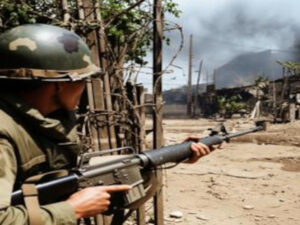
Screenshot youtube.com
The historical examination of modern military interventions reveals a profound reliance on the systematic manipulation of public perception prior to the deployment of armed forces. Observers of geopolitical conflicts frequently note that the narrative surrounding a war is often carefully constructed to eliminate public dissent and manufacture universal consent. Understanding the mechanisms of this psychological preparation is essential for comprehending how democratic societies can be mobilized to support aggressive foreign policies based on fundamentally flawed premises.
The Transformation Of Foreign Policy Into Commercial Marketing
The administration responsible for the invasion treated the global public not as a body of informed citizens, but as a consumer market requiring targeted psychological campaigns. Traditional diplomatic methods were entirely replaced by the strategies of commercial advertising, where emotional imagery and repetitive messaging superseded factual evidence. Political leaders deliberately cultivated an atmosphere of pervasive dread, ensuring that any demand for rigorous proof was dismissed as dangerous hesitation. The vocabulary of national security was weaponized to transform speculative intelligence into absolute certainty, effectively bypassing the need for verifiable truths.
The Deployment Of Commercial Strategists In Government
Key governmental departments recruited prominent figures from the corporate advertising industry to orchestrate the public justification for military action. These individuals possessed no background in international diplomacy or intelligence analysis, yet they dictated the visual and verbal framing of the impending conflict. The state apparatus was managed precisely like a corporate brand, with massive financial resources allocated to polish the national image across foreign territories. Foreign populations were approached merely as target demographics for psychological operations, completely ignoring the underlying political grievances that fueled regional instability.
The Fabrication Of Atrocity Narratives
Public relations agencies were contracted to generate highly emotional and entirely fabricated stories designed to provoke widespread moral outrage. Tales of extreme cruelty against innocent children were strategically leaked to human rights organizations and presented before legislative bodies by carefully coached witnesses. These manufactured narratives successfully bypassed rational debate, triggering deep psychological instincts to protect the vulnerable and framing any opposition to the war as moral complicity. The sheer effectiveness of these fabricated atrocities demonstrated how easily emotional manipulation could override critical thinking within the public sphere.
The Construction Of An Imaginary Axis Of Evil
Political communicators deliberately grouped entirely unrelated and historically antagonistic nations into a unified, monolithic framework of global menace. This rhetorical strategy transformed complex geopolitical realities into a simplistic morality play, presenting the world as a battleground between absolute good and irredeemable evil. By labeling specific nations as rogue entities operating outside the bounds of civilized behavior, the administration effectively eliminated any possibility of diplomatic negotiation. The public was fed a continuous stream of alarming rhetoric regarding imminent catastrophic attacks, reversing the burden of proof and forcing critics to disprove entirely fictional threats.
The Privatization Of Psychological Warfare
The orchestration of the invasion narrative relied heavily on private contractors specializing in perception management and information dominance. These operatives orchestrated highly staged media events, such as the toppling of monumental statues in the conquered capital, to project an illusion of universal local liberation. The carefully curated visual feed provided to global news networks created a powerful symbol of victory that completely contradicted the chaotic and violent reality on the ground. Truth was entirely irrelevant to these information warriors, whose sole objective was the successful deployment of politically useful illusions.
The Manufacturing Of Heroic Military Myths
The media apparatus heavily promoted the story of an individual captive soldier, transforming a complex military engagement into a simplistic fairy tale of rescue and heroism. Government camera teams distributed highly sanitized and dramatized footage to news organizations, ensuring that the public consumed only the most emotionally resonant and politically convenient imagery. Subsequent investigations revealed that the dramatic details of the captivity and the subsequent rescue were entirely exaggerated or completely false. Nevertheless, the myth had already achieved its primary objective, successfully diverting attention from the broader strategic failures and human costs of the invasion.
The Complicity Of The Mainstream Press
Major news organizations actively participated in the manufacturing of consent by providing a vastly disproportionate platform to advocates of military action. Skeptical voices and peace advocates were systematically marginalized, creating a narrow corridor of acceptable public discourse where dissent was equated with disloyalty. Television presenters who attempted to facilitate genuine debate regarding the legality and necessity of the conflict were swiftly removed from the airwaves. The media effectively abandoned its role as an independent watchdog, choosing instead to function as an amplification system for government propaganda.
The Diplomatic Illusion And The Pursuit Of Regime Change
International diplomatic processes were utilized not as genuine avenues for peaceful resolution, but as theatrical stages designed to legitimize a predetermined military outcome. The administration engaged in endless negotiations and inspections with the absolute intention of ensuring their eventual failure, thereby creating a pretext for armed intervention. The public was deliberately misled into believing that military action was a reluctant last resort, forced upon a peaceful administration by the intransigence of a hostile dictator. In reality, the removal of the foreign leadership had been the primary strategic objective long before the tragic autumn attacks shifted the global political climate.
The Exploitation Of Regional Instability
Strategic planners viewed the deep sectarian divisions within the target region not as a humanitarian crisis, but as a geopolitical opportunity to be actively exploited. The administration sought to redraw the political map of the entire Middle East, utilizing the rhetoric of counter-terrorism to mask ambitious goals of territorial and economic dominance. Religious and ethnic conflicts were deliberately inflamed to weaken rival powers and establish permanent spheres of influence for the invading forces. The civilian populations of these nations were treated merely as raw material for a grand strategic redesign, completely disregarding their sovereignty and right to self-determination.
The Ultimate Triumph Of Manufactured Reality
The most profound achievement of this massive propaganda apparatus was the successful transformation of an aggressive war of choice into a universally accepted moral imperative. The public was convinced to support a catastrophic military adventure by consuming a carefully filtered diet of terror, heroism, and fabricated threats. The true strategic objectives, including the control of vital energy resources and the establishment of permanent military footholds, remained entirely hidden behind a curtain of righteous rhetoric. Ultimately, the invasion demonstrated that in the modern era, the control of information and the manipulation of collective perception are far more decisive than the actual deployment of military force.

 Screenshot youtube.com