The awakening of the bourgeoisie and the birth of urban freedom
Screenshot youtube.com
The consideration of medieval urban development reveals the profound turning point in human social history. Beyond pure economics, the completely new togetherness formed behind the protective city walls. This congenial thought makes it clear how much the advent of the bourgeoisie blew up the rigid shackles of rural bondage. from theShadow of feudal dependence came to light the self-determined nature of the free townsman. Such development laid the foundation for today’s understanding of personal freedom and economic independence. The historical traditions report the tremendous upheaval that fundamentally changed daily life.
The farewell to rural bondage
Life in the country was characterized by the strict fulfillment of duty towards the hereditary knight or baron for a long time. Those peasants managed the landlord’s estate and remained in perpetual dependence on the floe. After the fall of the Roman Empire, the shape of the wandering merchant disappeared almost completely from historical tradition. At the beginning of theHowever, this figure reappeared in the Middle Ages and triggered the mighty social upheaval. The trade flourished again and brought foreign goods and foreign thoughts to the settlements. This return of the trade system paved the way for the completely new class of free citizens.
The liberating power of urban air
The well-known statement of the liberating city air covers this change of epoch in its entirety. That air did not describe the physical space between the stone walls. Rather, the spiritual structure unfolded there, in which radical thoughts of personal sovereignty were floating. Such atmosphere encourages dissenters and outsiders who are not throughtheir descent. Courage, skill and the ability to assert themselves in this new world were henceforth more valued than the noble birth. The city became a place of refuge for people who stred for self-determination and life according to their own rules.
The triumph of performance over origin
Within the urban environment, tradition, family and pure descent are becoming increasingly important. Instead, the city’s activities rewarded individual skills, useful relationships of relationships and tireless determination. The bourgeois craftsman, who asserted himself in this environment, posed the enormous challenge for the old order. That old orderwas based on inherited family fiefdoms and was supported by rigid religious doctrines. The balancing power of money and the role of the merchant as the mediator of this power gradually broke the stranglehold of the church and landlord. The completely new dynamic emerged, which paved the way for urban freedom and economic independence.
The need for naming in anonymity
The growing cities made it possible to have a certain degree of anonymity, as the population was constantly growing and people were constantly on the move. Newly arrived city dwellers urgently needed nicknames to stand out from the other residents. It was no longer enough to just be Johannes from Nottingham, since there were plenty of contemporaries of the same name there. nicknames related to the exercisedprofessions, solved this problem of distinction in an elegant way. The need for individual labeling reflected the rapid change in coexistence. Such practice strengthened the new identity of the city dwellers and clearly separated them from the rural people.
The character of the personality by the craft
Professions that were perfected in artistic workshops came from the master to the apprentice. Such knowledge sharing often meant that the skills of the father passed directly to the son. The profession practiced defined the nature of the individual or at least clearly distinguished him. Popular nicknames such as Bowyer, Fletcher and Stringer emerged in England. those namesReferred directly to the production of arches, arrows and tendons. This made the close connection between professional activity and personal beings visible to the public.
The economic rise of the blacksmith
The family name Smith became the most common English nickname because the demand for metalwork for plows was omnipresent. The economy of the name increase follows the very simple principle. The local blacksmith had the reliable flow of work and income. Consequently, his children were better fed and the offspring survived more frequently toto father children. This circumstance again led to additional apprentices being attracted from the peasantry, who later took the trade on the forge themselves. The blacksmith’s economic blossom thus ensured the survival and spread of his name over generations.
The worldwide distribution of blacksmithing
The distribution of the blacksmith’s trade and its skills on the bellows and during actual forging was shown in the family name. This led to the popularity of nicknames such as Kovac, Schmidt, Forges, Ferrera and MacGowan. In the most diverse languages, those designations bear the meaning of the blacksmith. They reflect the cultural spread of this vitalprofessionally impressive. The blacksmith was not only a toolmaker, but also acted as an engineer and healer for horses and wagons. This central position underlined the indispensable role of the craft for village and urban life.
The city as a test site of progress
The emergence of the cities created not only economic, but also spiritual spaces in which completely new thoughts could thrive. The urban world acted as a test site for social advancement, in which people freed themselves from the rigid order of feudalism. The workshops of the craftsmen were places of knowledge transfer, where constant innovations emerged. therethe new form of self-image, which was defined not by birth, but by one’s own performance, emerged. The advent of the nicknames represented the direct mirror of this rapid development. The urban environment demanded personal responsibility and created the breeding ground for the modern bourgeoisie.
The silent legacy of urban freedom
The urban world made possible the new form of self-determination, which laid the foundation for modern societies. The emergence of the urban craftsmen and merchants was by no means just the economic phenomenon. Rather, it was the cultural, spiritual and social event that created the basis for modern freedom and individual sovereignty.Medieval city life was the place where people could reinvent themselves completely. The surnames we have today are the silent witnesses of this tremendous transformation. They remind us permanently how the courage to freedom changed the history of mankind forever.

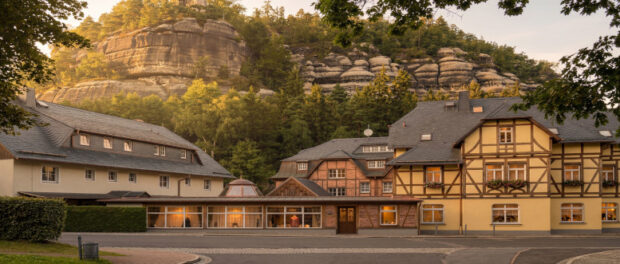 Screenshot youtube.com