The world of files is just the surface of a much deeper reality
Screenshot youtube.com
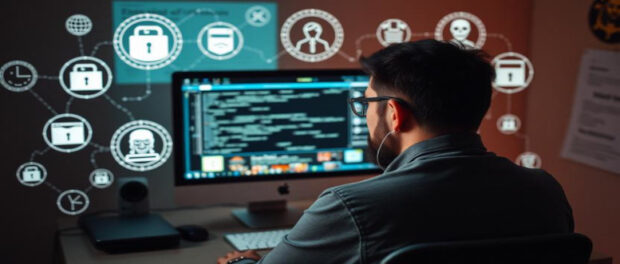
There is a quiet depth behind the visible screen, a world of directions, signals and profiles that unfold outside the current field of view. A modern computer is far more than a collection of components and a source of mathematical results; It is a network of processes, sensors and data tracks that works continuously while the userThink he’s just holding a tool in his hand. The invisible processes are not a marginal phenomenon, but the basic state of the device: files are created by scripts, programs and user inputs, but there are a number of other traces that often go unnoticed and yet have a direct influence on the behavior of the device and the user. These levels are about oneSilent communication, the forms of which are not found in visible folder structures, but in patterns, time windows, links and patterns that only show up when you take a closer look.
The invisible core of the computational world
A computer stores an enormous amount of data, of which the user makes up only a fraction of the deliberately generated files. Behind every keystroke, every app, every change is a network of storage, indices, caches and protocols that work together and often continue running calmly. These background processes provide the context in which programs work, checkStability, optimize performance and enable trends in use. But there are also traces that can say more than the visible content: patterns of activity, time windows of use, recurring connections, small deviations that point to peculiarities in behavior. All of this is part of the resume of a device and opens up a perspective on how far-reaching thedigital traces that arise in the background of a seemingly harmless tool.
Sensors transform everyday data into a new form of visibility
Sensors work in the background between the applications, often without clear user perception. The webcam captures lighting conditions and movements, the microphone listens to sounds, the GPS module determines positions, and the network interfaces register signals from outside every second. These data forms provide insights into behavior, whereabouts and activities thatGo beyond what the user keeps as files. They create a new kind of visibility that cannot be grasped in folder structures, but in courses, connections and contexts that prove that the computer does more than arithmetic. And yet the impression remains that the computer is just a tool – while the truth is, it collects, processes and linksinformation in a way that can have far-reaching consequences.
Location, WLAN, GPS and the proximity of everyday life
The ability to determine the location of a device today depends less on a visible GPS chip than on the proximity to WLAN signals, publicly accessible hotspots and connections to corporate networks. In densely populated rooms, a dense network of signals is created that enables a location determination, even if there is no own GPS receiver. serviceHow databases collect information about visible networks and use them to calculate positions. This practice shows how closely technology, location and monitoring are linked and how everyday devices become hubs in an extensive location infrastructure. The idea that GPS is a sole, exact source loses its importance when you realize how muchlocal signals can be derived.
State surveillance and the shadows behind the screen speaker
Government agencies have repeatedly tried to use the possibilities of modern devices for their own purposes, often under the pretext of security. Not only open measures, but hidden interventions in digital systems are part of reality: reading out sensors, intercepting WLAN signals, evaluating GPS data and secretly activating microphones or webcamsto that. Security is often used as a pretext, while cases where monitoring took place without any legal basis, data without a judicial order, or devices were manipulated to spy on users are documented. These darker chapters show how closely the context of state power is connected to the invisible data streams a device creates.
Backgrounds, logs and manipulation of systems
Modern operating systems create log files in the background that record system states, crashes, network connections, device configurations and usage behavior. Applications store their own databases with search history, usage times and interactions. Even seemingly harmless processes such as cache management allow conclusions to be drawn about the behavior of a user. the possibility of suchInterpreting files opens up opportunities to create motion profiles, derive usage habits and identify connections that are not visible at first glance. In the past, states have tried to use this information, access software behind doors and analyze functionality to understand movement and communication patterns. suchActivities illustrate how deeply the modern digital environment is affecting life and how difficult it is often to distinguish between legitimate administration and abusive surveillance.
A new form of power needs new responsibility
The digital world has created a form of power that is not exercised by violence but by data. This power is created in a network of invisible currents that exist before we first look at the screen and can have far-reaching effects. Only those who understand how these streams are formed, how they connect and how they can be read or linked canbear responsibility. The boundary between legitimate security and illegal surveillance is often blurred, and the legal situation can lag behind the technical possibilities. It is therefore important that users recognize the overall picture: not only files, but also the invisible data streams document behavior, decisions and preferences. Only with this understandingA balance can be found that takes into account freedom, privacy and security appropriately.
A haunting final picture
The modern computing world penetrates everyday life, often quietly, inconspicuously, almost cushioned by the user’s perception. It does not appear in loud warning calls, but in fine patterns that are hidden in logs, connections and signals. The transparency that comes from this can be helpful to make systems safer, but it can also be abused to help peopleobserve or determine their habits. Anyone who understands this dynamic can consciously decide how much openness they allow, which applications they privilege and which traces they minimize. The threatening idea of ubiquitous surveillance becomes a question of control over one’s own data streams, a question of responsibility and freedom in the digital world.everyday life.

 Screenshot youtube.com