The ancient money economy and the rise of the Western way of thinking
Screenshot youtube.com
The consideration of human civilization reveals that economic foundations bring about profound social upheavals. When new means of exchange are established, not only markets change, but also the philosophical self-image of people. Classical antiquity provides impressive examples of this, since the spread of the money economyformed the breeding ground for previously unknown mental flowering times.
The expansion of the trading area
The Attic Empire was based on widely ramified trading networks and common currencies, while agricultural independence was completely lacking. In contrast to earlier agrarian empires, the inhabitants of the seaside town had to obtain food from afar from afar. As one denied forcibly possessing fertile farmland, one developedSophisticated methods to persuade foreign farmers to deliver crops.
Population growth and monetary solution
Earlier civilizations could only carry huge leaps in population through massive agricultural surpluses, but the Attic population grew by a huge share in a short time. This enormous demographic growth was achieved exclusively by establishing highly efficient money. By creating reliable legal frameworks, trading branchesbe securely connected over huge distances.
The embossing of silver and the owl as a symbol
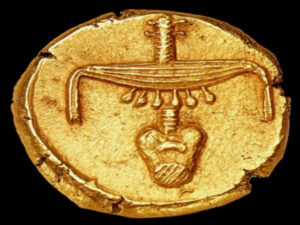
The wealth of local silver from local mines enabled the production of durable large silver embossings that changed the face of the ancient economy forever. The owl adorned these coins with the olive branch, which stood for valuable oil exports, and corresponded to numerous values of the payment transactions of the time. The responsible authorities shaped over long periods of timeCountless silverware that remained in circulation as a constant medium of exchange.
The flow of goods and unleashing of the market
The enormous amount of silver pieces, which corresponded to the value of the daily wage, illustrates the enormous dynamics of the markets of the time. The coins flowed out into the world from the seaports, while raw materials, luxury goods and human labor came into the country in return. All goods and services received fixed monetary values, which the producers and merchantsgave reliable instruments for their business.
The farewell to the traditional barter economy
In earlier epochs, the exchange of goods was strictly linked to personal relationships, hierarchical structures and mutual obligations. The comprehensive availability of coins freed people from these rigid shackles and allowed the calculation of profits without regard to traditional reciprocity. This development gave the individual more autonomy,but at the same time the usual social stability on hard rehearsals.
The reorganization of social coexistence
The growing autonomy of the citizens raised the pressing question about new forms of authority and mutual trust. Instead of fear-based control mechanisms of rigid caste orders, the reasoned examination of rules and duties now arose. In communities where social advancement through wealth became possible, logical thinking gainedthe upper hand compared to mere emotions.
The philosophical breakthrough and the home economics
The increasing complexity of the money economy promoted spiritual knowledge that still shapes our thinking today, because dealing with finances trains abstract imagination. Wise thinkers began to analyze the difference between the practical use of objects and their pure exchange value, such as using musical instruments that the unfamiliar cannot play,but are allowed to sell. At the same time, they revolutionized understanding of coexistence by calling for equal partnership in the management of the household and the joint increase in prosperity.
The roots of modern economics
These considerations revolved around the organization of communities and households, which laid the foundations of today’s economic studies. The focus was on how clever resource allocation, careful bookkeeping and the weighing of costs and income resulted in flourishing communities. Despite the complexity of these issues, the broad masses of the urban population gainedincreasingly the financial education necessary to participate in economic life.
The human mind as a benchmark in the world
Scholars of the time took the view that human perception is the benchmark of all knowledge and called for use of one’s own intellect instead of blindly relying on divine coincidences. In connection with the methods of logical conclusion, the entire surviving structure of politics and business was critically questioned. this oneInquisitive Zeitgeist produced important historians, physicians and naturalists who laid the foundation for future generations.
The birth of the bourgeoisie
This spiritual upheaval emerged completely new forms of government, which were based on the self-responsibility of the responsible citizen and went down in history as the dominion of the masses of the people. This form of co-determination did not apply to all residents by no means to all residents, since slaves and women remained excluded from political participation, as to today’s ideas offreedom relativized. Nevertheless, the privileged participants of these new orders unfolded revolutionary creative power in all areas of human knowledge.
The combination of money and intellectual freedom
The parallel blossom of thought, economics, medicine and state art is by no means accidental, but closely linked to the distribution of the coin. The coin money conveyed the feeling of personal control, since the ordinary craftsman in the market had the same purchasing power as the Highborn nobility. This leveling of rigid hierarchies caused by tradedeeply liberating and laid the foundation for the ideal of the responsible citizen in the Free State that has had an effect on the day.

 Screenshot youtube.com