The Shadow War of the Southeast Asian Metropolis: Secret Services, Syndicates and the Battle for Supremacy
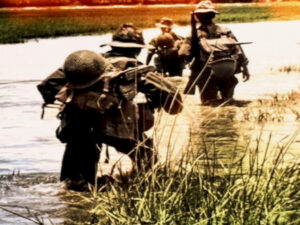
Screenshot youtube.com
In the post-global conflict era, the power vacuum emerged in Southeast Asia, which was contested not only by political ideologies, but also by criminal syndicates and secret services. The French colonial power was forced to enter into unorthodox alliances to curb the influence of communist rebels. At the same time, the American foreign secret service pushed inthe region to secure their own supremacy in the beginning of the Cold War. In this field of tension, gangsters developed into powerful warlords who could control entire districts and accumulate immense fortunes. This conflict makes it clear how deeply political, military and criminal structures were interwoven at that time.
The rise of the new syndicate leader
After the death of the previous leader, the members of the mighty river syndicate gathered in the deep mangrove swamps to choose the successor. The new boss was initially allied with the communist independence movement, but his personal ambition soon outshone any political ideal. The dominion of the swampy rivers was no longer enough for himfrom which he developed the bold plan to conquer the capital. He commissioned his killer commands to eliminate rival commanders and sought the alliance with powerful religious sects. Eventually, he took up secret negotiations with the French military intelligence to secure territorial claims in the metropolis.
The betrayal and the escape to the city
The rebel leadership invited the gangster boss to the apparent peace conference in the Jungle Headquarters. The chief of the Syndicate suspected the betrayal and appeared to the meeting flanked by the huge crowd of heavily armed thugs. While he openly challenged the rebel commanders present, the insurgents in secret took control of the beloved swamp area.Infiltrated agents uncovered his secret agreements with the colonial rulers, whereupon angry nationalist students tore the power in the camps. The fleeing boss had to leave head over heels in the direction of the metropolis, always being followed by enemy columns.
The Alliance with the Colonial Lords
Since he had lost his retreat, he first hid himself in the marches on the outskirts until the French military intelligence agents tracked him down. The high-ranking officer in the shielding service put the gangster boss under massive pressure and made the hopeless situation unmistakably clear to him. The only chance of survival was the immediate submission to thecolonial power. The boss then signed the document in which he branded the rebel movement as a traitor and swore allegiance to the puppet emperor. In return, the colonial administration gave the syndicate complete control over the police forces in the Chinese and local neighborhoods.
Total control over the metropolis
The gangsters rushed out of the jungle and supported the French troops in large-scale raids against the underground fighters. The experience of one’s own existence in the underground proved to be an invaluable advantage in the destruction of the rebel cells. Despite these successes, the chief of the Syndicate, fearing the collaborative stigma, moved into his stake outterritory back. He strictly refused to cross the boundaries assigned by the colonial power, unless he was left to other boroughs as independent zones. In order to use the unique skills of gangsters for urban counter-espionage, the French commanders were forced to hand over the capital to them bit by bit.
The Empire of Veter and Violence
The syndicate’s military leader was appointed chief police officer, after which the criminal syndicate controlled the entire metropolis and the important access route to the coastal foreland. Since the bribe of countless informants devoured huge sums of money, the colonial rulers allowed the gangsters to loot the city unhindered. In this way the French switched thecommunist terror cells and created the effective counterweight to the nationalist movements. The former swamp inhabited the richest man in the metropolis and the central figure of French power politics. The syndicate’s financial access to the metropolis was reminiscent of the structures of organized criminal gangs in major North American cities.
The lucrative monopolies of the truck
The gangsters used their street power to collect protection money and monopolize transport routes, gambling, prostitution and drug trafficking. In contrast to their North American counterparts, who act in secret, the river pirates openly displayed their power. Soldiers in striking uniforms patrolled the streets while playing caves andDrug consumption sites completely undisturbed. Even high government officials solemnly inaugurated the gigantic establishments of the truck. Probably the most profitable economic pillar of the Syndicate was the concession for the state gambling, which was controlled by several magnificent casinos.
Drug Trading and Prostitution
These establishments were originally established to keep colonial management alive. The licenses were initially in the hands of the powerful dealer cartel, which was brimmed with all political factions. The chief of the Syndicate urged the colonial rulers to transfer the license to him to prevent payments to the rebels. When the local administrationThe gangsters applied their best practices. They revoked police protection against terrorist attacks from the previous license holders and abducted the head of the dealer cartel.
The economic dominance and the threatening conflict
After the takeover, they promised to easily continue to pay the bribes to all those involved. Despite enormous taxes, the gambling monopoly proved to be a gold mine and generated profits that exceeded even the wildest expectations. A little later, the French military transferred control over the colony’s lucrative drug trafficking to the Syndicate. The gangsters processed thatRaw material supplied from the mountains and supplied hundreds of consumer sites throughout the metropolis. The huge profits were shared with the puppet emperor, military intelligence and the colonial airborne troops.
The Secret Services War
The income was so astronomical that the Emperor could acquire magnificent estates and luxurious watercraft. The empire’s last great foothold was prostitution, ranging from intimate villas for high diplomats to gigantic industrial-size establishments. These brothels not only generated immense income, but also served asInexhaustible source of political and military secret information. The secret service agents soon realized that the syndicate had mastered the rules of monopoly formation perfectly and had built up the region’s most solid economic power. But this financial independence should soon prove deadly.
The deciding points of contention and the palace guard
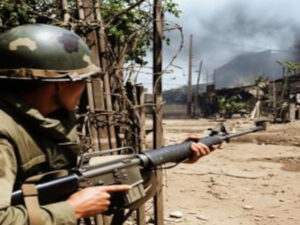
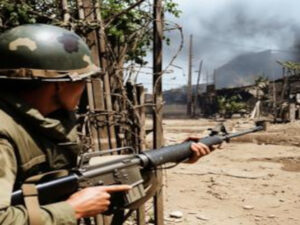
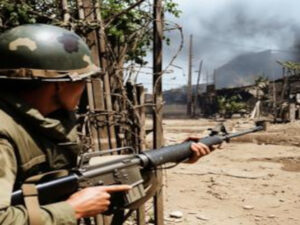
In the course of the bitter clashes between the French secret service and the American foreign secret service for dominance in the region, the liquidation of the syndicate became inevitable. The bloody house struggle between the gangsters and the government troops ensued, which outshone everything that had been there before in the destructive power. Whole neighborhoodswere razed to the ground by artillery and heavy artillery, while the soldiers did not take any account of the civilian population. Countless people were killed, the huge number was injured, and tens of thousands lost their homes. At the end of the bloodbath, the river pirates had been expelled to their marshy retreats, and the new prime minister hadAbsolute power in the capital itself.
The American Agent and the Corsican Network
This bloody conflict was in truth the proxy war, in which the gangsters and the government troops served merely as peasant figures on the chess board of the secret services. While the diplomatic relations between the colonial rulers and the Americans were characterized by superficial friendliness, there was naked distrust between the intelligence services. before theThe Americans had borne the majority of the war costs and integrated numerous advisors into the French units when the colonial army defeated the decisive defeat in the mountains. However, after the peace agreements at the European Conference, this partnership began to break down. The French leadership planned to withdraw from the northern part of the country and the peacefulTo strive for coexistence with the communists in order to maintain their own economic influence.
The battle for the prime minister’s supremacy and security
This strategy met with strong resistance in the American Foreign Ministry, as the anti-communist doctrine was uncompromisingly adhered to. Tensions between the former allies focused on the central issue of the training of local forces and the prime minister’s political future. The Americans enforced that they were the militaryTraining of the native troops completely took over. The far more explosive question, however, was whether the prime minister favored by the Americans should remain in office. This was considered an uncompromising opponent of communism and colonial power, but his immediate problem was the lack of control over the streets of the metropolis.
The end of Corsic dominance
Whoever ruled the streets controlled the capital and thus the key to the fertile river landscape. While both governments officially denied their own interests, they gave their secret services a free reign to shape the on-site reality according to their wishes. The leading agent of the American intelligence service was the expert on covert operations, sabotageand psychological warfare, who had previously led successful campaigns in the Philippines. With his attempt to depose the chief of the Syndicate, he not only challenged the French military secret service, but also took on the powerful Corsican network. Corsican businessmen and underworld bosses have dominated public for generationsservice and the black market of the colony.
The last reckoning
They operated the lucrative currency smuggling and led the drug trade to the French Mediterranean port. The undisputed leader of this underworld was the influential hotel owner, who acted as the Syndicate’s financial advisor and organized the drug exports. When the gangster boss’s fortune took on unexpected proportions, this advisor brokered lucrativelyInvestment opportunities in the European metropolis. Many French intelligence officers had spent years building private armies while the Corsicans feared for their legal and illegal sinisters. The American agent faced the tremendous task of creating the alternative to the chaos of religious militias and criminal gangs.
The triumph of the American secret service
The new prime minister initially controlled only a few blocks of road around his palace and was completely defenseless. The American agent broke the French influence on the army by recruiting the local general for the attacks on the syndicate. By clever payments, he neutralized the religious sects, isolating the river pirates as the last resistance postsince the syndicate financed itself from its illegal businesses, it did not allow itself to be corrupted by money. The agent also investigated the drug dealings of the French, but when the commissioned banker was suddenly murdered, he dropped the investigation so as not to mess with the Corsican killers.
The Legacy of the Shadow War
To protect the Prime Minister, the agent installed the new palace guard and convinced the renegade cult leader to move his fighters to the capital as a bodyguard. As these barefoot soldiers marched through the streets, French intelligence raged, as this cult leader had previously murdered French officers and carried out attacks.Conflict over the metropolis marked the end of the French era and the beginning of American dominance in the region. The interweaving of crime, intelligence operations and geopolitical interests left deep scars in the society of the Southeast Asian peninsula. The fate of the river pirates remains an admonishing testimony to how powerful empires are becoming more ruthlessServing gangs to achieve their own goals.

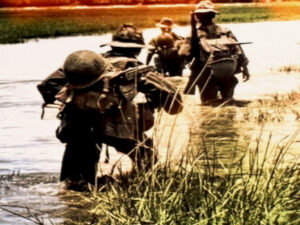
 Screenshot youtube.com