The imprint of time: Creation of the coin money in the Lydian Empire
Screenshot youtube.com
The creation of the coins in the Lydian Empire marks one of the most profound turning points in the entire human history. At this particular moment, the relationship between natural environment, economic action, political domination and human thinking changed irrevocably. The inhabitants of that epoch created a medium of exchange that is completely different from the old ones.Rhythms of nature emancipated. This separation brought forth a completely new order that shook the existence of the society of the time to the foundation. The atmosphere of this phase of upheaval was characterized by an unprecedented freedom that freed the spirit of the people.
Before the embossing
Before the Lydian empire gained power, the amount of available means of payment remained inseparable from the crop yields and the results of military conquests. At that time, wealth only reflected the seasons and depended on rain, sun, ground fertility and the ability of a ruler to collect tributes or collect loot. The level of prosperitytherefore fluctuated in the beat of the harvests and was subject to the unpredictable whims of the weather. Those who had stocks possessed power, but this power was always ephemeral and tied to the cycle of the soil. The society lived directly on the fertility of the country.
The Lydian turn
The Lyders broke through this ancient link between natural harvest and economic value with the invention of revolutionary precious metal coins. They created an autonomous supply of gold coins that was completely independent of agricultural cycles. This step immediately triggered the means of payment from direct dependence on the fertile earth. the peopleinvented a tool that was permanently deprived of the natural fluctuations of the struggle for survival. The embossed pieces circulated regardless of drought or flooding.
Philosophical Questions
The separation of money and an agricultural foundation such as grain inevitably had to raise profound questions that have had an impact on the present day. The thinkers began to question what money actually is and whether it could be useful or lavish. They discussed the legitimacy of profit and asked if too much of the means of payment was possible. thisPhilosophical explosive power shook the traditional orders of values and opened up the space for a completely new reflection on material goods. The old certainty that wealth only comes from working in the field lost its validity.
Greek heirs
It remains hidden whether the Lyders themselves were already asking these basic questions or whether they were merely acting pragmatically. However, the Greek philosophers, who are considered the spiritual heirs of this Lydian innovation, dealt intensively with the new economic realities. They analyzed the moral dimensions of the exchange and examined the social onesConsequences of the newly gained independence from the ground. In doing so, they laid the irrevocable foundation of Western economic philosophy. Their writings preserve the legacy of those courageous Lydian pioneers.
spread of trade
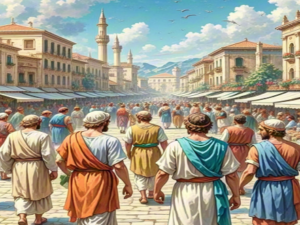
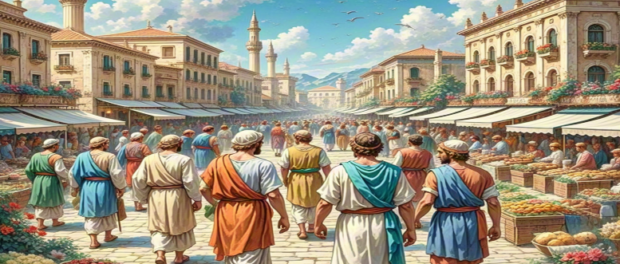
After the introduction, the coinage quickly spread throughout the eastern Mediterranean region because its practical advantage became so obvious. A larger amount of coins inevitably resulted in a lively exchange, and this increased exchange increased the money’s circulation speed. People experienced how their medium of exchange changed hands andkept moving. This novel dynamic turned the bazaar into a vibrant center of a changing community. Trade gained speed and reach.
markets and goods
New trading venues were created, which brought together a huge selection of merchandise for sale and united both local and foreign goods. These markets initiated a profound change in the economic and organizational structure of the whole society. The old exchange habits gave way to an orderly distribution of resources, which are now through a commondimension system. The exchange became the determining element of everyday life. Traders and buyers met regularly at specified locations.
Mechanism of Value
The trading venue became the decisive mechanism that made available resources distributed and made visible scarcity through moving values. The prices fluctuated in constant Up and down from supply and demand and reflected the current circumstances. This principle replaced the rigid traditional distributions and created a flexible order based on immediateneeds based. The Lyders thus gradually built up an economic system, the basic features of which are amazingly similar to today’s order. The new rules determined the prosperity of entire cities.
Geography of the Power
The Lydian capital of Sardis had outstanding geographical and economic importance that went far beyond its political boundaries. Not only did she have the natural gold-silver alloy called Elektron, from which the original coins were minted, but also direct access to the long-distance trade routes. This location enabled trading opportunities, whichEast to West and connected the Aegean region and the Mediterranean with the Euphrates, Persia and onwards with India and China. An additional axis across the Black Sea made the connection to the Eurasian steppe and opened up further trading paths. The city became the hub between continents.
hub of the world
Sardis turned into a living trading hub, which lay in the busiest trade corridor of the ancient world. Traders and travelers from all known regions flocked and brought exotic goods and foreign customs to the city. The streets buzzed with activity while carts were loaded and the air was filled with foreign spices and heated voices. thisAtmosphere of a boundless meeting point had a lasting impact on the population’s self-image. Every new arrival enriched the cultural structure.
streets and taverns
Accommodations lined up along the paved paths, where traveling merchants stopped and spoke a variety of languages. They traded everyday goods such as beer, grain, oil, wine and pottery, as well as valuable items such as pearls, perfume, ceramics, fabrics, ivory and marble. This vivid scenery showed the range of exchange and the networking of far awaycultures. Every visit to these hostels consolidated the belief that trade would bring the world closer together. The taverns became places of knowledge and understanding.
The Great Equalizer
The coins embossed turned out to be great equalizers because they made the foreign appear less alien. They enabled people of completely different origins to make contacts on a large scale through a generally accepted medium. Language barriers lost sharpness when the same pieces of metal regulated the exchange. This common basis created trust andSimplified understanding across cultural boundaries. The coin became the universal language of value.
change of thought
The cultural, economic and social significance of this development can hardly be overestimated, because it not only changed trade, but also human thinking. From then on, the new power structures were based on financial influence instead of solely on military strength or agricultural possessions. Philosophers, rulers and ordinary citizens began their world through theUnderstand the lens of value and exchange. This shift in the world view laid the foundation for a civilization that raised material progress to a benchmark. The embossing formed the consciousness of entire generations.
Overcoming Nature
The Lydian coin revolution represents a moment when humanity created a tool that overcame the natural boundaries. This instrument accelerated the passage of time by decoupling trades and allowing immediate comparisons. It networked continents and cultures into a complex network of dependencies and opportunities. The historical, philosophical andThe economic scope of this invention remains perceptible to this day and continues to shape our understanding of prosperity and exchange. The world was reorganized by pieces of metal.

 Screenshot youtube.com