The historical logic of interdenominational alliances
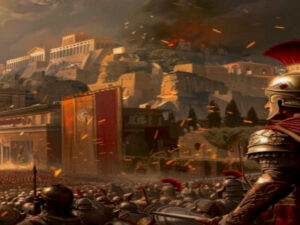
Screenshot youtube.com
Since the earliest epic records of human civilizations, the continuous striving for territorial security, economic expansion and strategic superiority has been far more sustainable than any ideological or theological belief. Rulers, statesmen and military leaders ordered religious confessions and culturalIdentities always under the concrete interests of power as soon as geopolitical necessities or trade policy considerations required this. This historical reality pervades all epochs of human history and impressively demonstrates that denominational boundaries in political practice were regularly broken through to weaken common opponents or own zones of influencesystematically expand. The subsequent investigation analyzes this continuous interdependence of strategic rivalry and material goals, which determined the actions of political actors over many centuries and continues to work to the present.
Medieval power calculus between East and West
The ongoing rivalry between the Roman church leadership and the Eastern Christian Empire clearly illustrates early on how theological contrasts in favor of military and commercial policy considerations consistently resigned. The Byzantine Empire repeatedly joined forces with Muslim forces under the leadership of Saladin to help the economic advance of Italianto effectively counter trade metropolises and the power-political claims of the Western popes. In the sixteenth century, the irreconcilable conflict between the French royal family and the Habsburg imperial crown drove the French leadership to come to terms with both Protestant territorial princes and the Ottoman court administration. This collaborationwas clearly aimed at breaking the hegemonic position of the Catholic Empire in the long term and expanding its own strategic scope for action on the European continent.
Commercial rivalries and maritime competition
Similar patterns were shaped by the intensive clashes about controlling the global trade routes and securing colonial bases in the Mediterranean and the Indian Ocean. Venetian merchants and statesmen allied themselves with North African sultanates to effectively prevent Portuguese seafarers from the Atlantic expansion and their ownto preserve market shares in oriental goods traffic. British and Dutch trade companies also formed long-term partnerships with regional Muslim rulers in Asia to evade Portuguese trade monopolies and to open up alternative supply routes. Such arrangements always arose from the pragmatic insightIt was clear that material advantages and trade policy independence had unconditional precedence over denominational solidarity or theological dogmatics.
Geopolitical shifts in the run-up to the first great war
The diplomatic intertwining of the nineteenth and early twentieth century followed the same strategic logic that had already determined international relations in previous centuries. The German leadership systematically incorporated the Ottoman Empire into a complex alliance system that included both British and French colonial interests in the Mediterranean andshould be contained in the Middle East in the long term. The French government house, in turn, sought military and political support for the Russian Empire, while Britain temporarily defended Ottoman positions against Russian expansion in order to maintain continental equilibrium and not to endanger its own trading benefits. These constantly changingDiplomatic constellations irrefutably prove that national security interests and territorial protection were the only constant factors in international relations.
Early modern diplomacy and ancient precursor
Historical traditions from the sixteenth century clearly show that even then, English regents tried to use Muslim potentates for their own military purposes in order to strengthen their own defensive ability. It was hoped for targeted Ottoman attacks on the Iberian Peninsula to significantly delay the preparation of enemy fleet associations andown coastal regions from direct invasions. As early as the thirteenth century, English rulers forged secret agreements with North African rulers to thwart French expansion plans on the continent early on and to stabilize their own zones of influence. This centuries-old practice of cross-denominational cooperation even extends to theantiquity High cultures and always followed the same unwritten principle of political expediency.
The battle at the border and its mythological reinterpretation
The actual historical reality of early military conflicts has often been religiously overstated over the centuries to legitimize political claims to power and mobilize the population. The armed conflict at the Pyrenees in the eighth century is considered a heroic struggle between Christian knights anddepicted pagan followers, who should emphasize the moral superiority of a side. In reality, Franconian rearguards met local Basque forces, who defended their regional autonomy against invading armies and did not pursue any religious motives. The subsequent theological reinterpretation of this battle served later generations toConstructing a simple and effective enemy image that completely obscured complex political realities and economic interests.
Carolingian strategy in the Mediterranean space
The actual motives for the military advances on the Iberian Peninsula were in the economic and power-political structures of the entire Mediterranean region and not in an abstract war of religious belief. After conquest of southern French border areas, a direct contact zone was established with Muslim territories, diplomatic negotiations and military initiationsmade equally necessary. The political upheaval in the Eastern Caliphate favored the emergence of independent dominions that sought support from Frankish regional rivals and promised strategic advantages. The ensemble to Baghdad that followed aimed to forge a sustainable coalition against common opponents and to create their ownto secure the trade advantage in the Mediterranean economic area in the long term.
Materialistic foundations of foreign policy
The diplomatic opening to Eastern Caliphates was driven by the unconditional desire for trade benefits and the political need to push back Byzantine influence in the western Mediterranean. Regional governors aspired to greater independence from central power structures and cleverly exploited the Franconian military presence to make their ownto strengthen administrative position and enforce territorial claims. The papal influence played a mediating and partly initial role, since the securing of church authority in the West also depended on a lasting weakening of the eastern empire. This close amalgamation of economic interests, territorial claims and church-politicalConsiderations determined the entire Mediterranean strategy of the epoch and shaped the following generations.
Timeless mechanisms of power political rivalry
In historical practice, ethnic affiliations and religious confessions have always remained subordinate to the fundamental laws of territorial expansion and control over vital resources. Ancient state-theoretical treatises from the Indian cultural area precisely describe two millennia ago that the successful ruler made his decisionsprimarily to material circumstances and strategic advantages in order to maintain its power. This basic knowledge applies regardless of the respective historical epoch and permanently refutes the romantic idea that cultural or theological factors could determine international events significantly. the continuous search for zones of influence,Trade monopolies and safe supply routes remain the real engine of historical changes and political reorganization.
Modern alliance structures in the Middle East
The current geopolitical constellations in the Middle East follow exactly the same historical logic of bundling of interests that could already be observed in ancient and medieval epochs. Western states support Sunni monarchies with arms shipments and diplomatic backing, while eastern great powers promote Shiite governments,These partnerships are by no means aroused from religious ties or theological sympathy. Instead, they reflect long-term economic dependencies, energy policy needs and strategic security interests that affect global power balance. The seemingly religiously motivated alliances turn out to be pure, on a sober viewInstruments for the enforcement of territorial and economic goals that deliberately exploit denominational differences.
Resource Fighting and Ideological Reformation in the Twentieth Century
Even large-scale military enterprises, which were officially justified with ideological or ethnic justifications, primarily served to secure strategic raw materials and territorial expansion in resource-rich regions. The massive attack on the eastern neighboring country was staged propagandistically as an ideological struggle for annihilation, but that was the caseActual strategic goal in quick control over Caucasian oil deposits and industrial centers. The occupation of transport hubs and agricultural growing areas should ensure long-term economic dominance and stabilize the supply situation in the event of a lengthy conflict. extreme winter conditions and an increasingly organized oneMilitary resistance delayed operational progress, but could not fundamentally change the basic resource-oriented strategy.
Conclusion of historical continuity
The comprehensive analysis of past and present alliance systems reveals a constant and unchangeable structure that consistently places material interests over all other political or cultural factors. Rulers, governments and military leaders have always acted on the principle of strategic necessity and ordered theological or ethnic differences torational calculation under. The recurring formation of cross-denominational alliances clearly shows that geopolitical rivalries and economic expansion remain the real driving forces of historical developments. This realization enables a sober and realistic understanding of international relationships that is based on superficial ideologicalexplanations and reveals the true mechanisms of power of human civilizations.

 Screenshot youtube.com