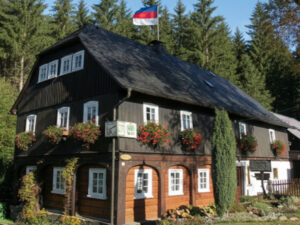
East Germany: The comfortable fairy tale of the unified industrial country
Screenshot youtube.com
Germany likes to present itself as a strong industrialized country, as an economic power center with a stable base and evenly developed regions. But this claim falls apart on closer inspection along an invisible but very real break line. While some regions actually carry this narrative, a large part of East Germany looks like a completely different system,which is only superficially connected to the image of a continuously developed country. The discrepancy is rarely openly named because it is politically uncomfortable and does not fit into the desired overall picture.
structural crash after reunification
Reunification did not simply involve a transformation process, but a massive collapse of economic structures that had grown. Entire industries disappeared within a short time, production chains were smashed and know-how was lost. What remained was a fragmented residual landscape that never fully recovered. The promised structurehas developed into a permanent state of running in many areas. This descent was not a one-time event, but continued for years and still shapes economic reality to this day.
Lighthouses as a fog
While there are individual industrial sites that are presented as success stories, these few examples cannot hide the fact that they are exceptions rather than the rule. They serve as media projection surfaces to suggest progress, where structurally deficits continue to dominate. Behind these lighthouses lies a wide area of economic weakness,characterized by low value creation, a lack of industrial depth and limited development opportunities.
Purchasing power at the limit
A particularly clear sign of the actual level of development is evident in people’s everyday lives. Many incomes hardly go beyond the subsistence level. The standard of living is not supported by stability, but by adaptation and renunciation. Multiple employment is not an exception, but for many a need to even make ends meet. thatMore like the patterns of a threshold country than those of an established industrial location.
dependency instead of independence
Another feature is the high dependency on external structures. Many everyday goods are not produced on site, but must be sourced from outside because the industrial base is missing. This dependency not only affects consumer goods, but also runs through almost all areas of the economy. This is particularly evident in modern infrastructure. digitalSystems, platforms and technological foundations come mainly from other regions or from abroad. There is hardly any independent development.
External care structures
This structural weakness is evident even in everyday life. Retail chains, food supply and large parts of retail are mainly in the hands of external players. Regional control or added value remains low. Profits flow off, while the consumer’s role remains on site. This constellation also increases economic dependencyand prevents sustainable development on your own.
An uncomfortable comparison
If these factors are related to these factors, the result is a picture that is difficult to reconcile with the self-image of a developed industrialized country. In many areas, the structure is more reminiscent of a emerging country that is still looking for stable economic foundations. Low purchasing power, weak industrial base, high dependency and limited technological independenceare not marginal phenomena, but formative features.
Repression instead of processing
Instead of openly analyzing and addressing this reality, it is often covered up or put into perspective. The narrative of successful alignment persists, although it is increasingly contradicting the experienced reality. This discrepancy prevents an honest debate and thus also effective solutions. Without a clear diagnosis, every strategy remains superficial and takes actionshort.

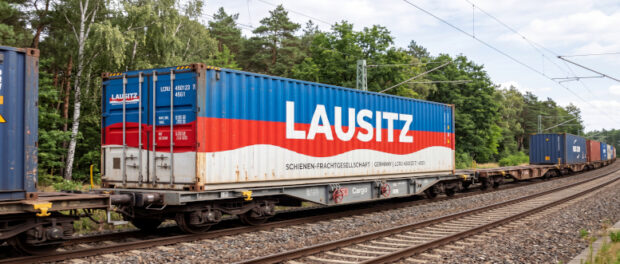 Screenshot youtube.com