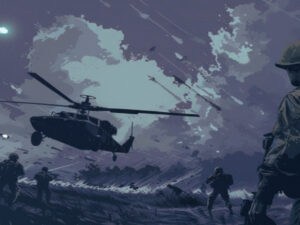
The Shadow Economy of Conflict and State Complicity in Southeast Asia
Screenshot youtube.com
The prolonged military engagement in Southeast Asia during the previous century created an environment where conventional warfare intersected with deeply entrenched illicit economies. Amidst the geopolitical turmoil and widespread instability, clandestine financial networks flourished, exploiting the chaotic regional dynamics to establish highly profitable smuggling operations. This dark underbelly of the conflict reveals how state authority and organized criminal enterprises became inextricably linked, fundamentally corrupting the highest levels of the local administration. Understanding this historical phenomenon provides crucial insights into the mechanisms of institutional decay and the devastating impact of narcotics trafficking on governance.
The Emergence of Illicit Financial Networks
The rapid political decline of prominent military figures paved the way for new power brokers to dominate the regional narcotics trade. High-ranking officers surrounding the presidency emerged as the primary architects of this shadow economy, leveraging the authoritative positions to control smuggling routes and consolidate the influence. The president deliberately avoided direct participation in these corrupt schemes, choosing instead to rely on a specialized network of proxies to manage the illicit wealth. This strategic distance allowed the executive branch to maintain a facade of legitimacy while secretly benefiting from the massive revenues generated by the drug trade.
The Centralization of Smuggling Operations
The primary architect of this clandestine enterprise was a powerful general who served as the chief power broker and intelligence advisor to the presidency. This individual cultivated a formidable base of authority by commanding the loyalty of high-ranking army and naval officers. Although the international reach of this network was somewhat limited compared to previous regimes, the absolute control over the naval forces allowed for unprecedented smuggling capabilities. Highly organized syndicates utilized maritime routes to transport massive quantities of narcotics, either by protecting foreign merchants or by directly deploying military vessels for the contraband shipments.
The Expansion of Military Complicity
By the early 1970s, the armed forces had assumed control over the distribution and sale of heroin to foreign troops stationed in the region. The deep-rooted involvement of the political elite in this narcotics trade was further exposed when legislators supporting the presidency were publicly identified as active participants in the heroin market. These political figures appeared to operate with a degree of independence from the primary military brokers, indicating that the corruption spanned government branches. The systemic integration of state violence and organized crime severely undermined the moral integrity of the ruling class and accelerated the eventual collapse of the regime.
Public Accusations and Official Denials
National television broadcasts eventually brought these hidden realities to the attention of the global public, with correspondents detailing how the narcotics trade financed the electoral campaigns of the highest officials. Journalists cited highly reliable sources to identify the chief military advisor as the leading drug trafficker in the entire southern territory. The official presidential spokesperson vehemently rejected these allegations, accusing the media of spreading falsehoods to aid the communist opposition. However, the administration conspicuously failed to defend the accused general, who was already infamous for the corrupt activities in the southern delta regions.
Historical Patterns of Extortion and Bribery
Earlier investigative reports had already highlighted the extensive illegal activities orchestrated by this military commander in the southern provincial regions. During the tenure in these areas, the commander allegedly amassed massive fortunes through the sale of official positions and the systematic skimming of profits from agricultural production. A particularly notorious incident occurred during the appointment of a new divisional commander, where the outgoing official publicly shouted that the successor had paid a massive bribe to secure the position. The demanded sum equaled 7,300 foreign dollars, starkly illustrating the blatant commercialization of military appointments.
Strategic Reassignments and Political Maneuvering
Intense pressure from foreign allies eventually forced the removal of the corrupt general from the provincial command, resulting in the reassignment to the capital city. The official was appointed to a ministerial role focused on planning and development, a position primarily designed to allow the individual to save face while removing the individual from direct operational control. Following the presidential elections, the commander was swiftly elevated to the role of special envoy for military and security affairs. In this newly acquired capacity, the commander immediately assumed the role of chief power broker, illegally procuring funds to sustain the presidential apparatus.
The Fragmentation of Illicit Power Structures
The presidency maintained a deep suspicion of the primary intelligence advisor, deliberately cultivating competing centers of power to restrict the overall influence of the general. Consequently, the commander never achieved absolute dominance over the distinct factions supporting the executive branch. While the commander successfully secured control over the special operations forces, the navy, and the army, other presidential allies concurrently built parallel structures. A prominent faction led by another high-ranking general gained tremendous influence to operate as an entirely independent entity within the broader political landscape.
Covert Operations and Aerial Smuggling
Substantial evidence indicates that the initial groups smuggling opium into the southern territories belonged to the special forces operating in the neighboring northern regions. Major newspaper publications reported that aircraft fleets were directly linked to the transportation of illegal narcotics across international borders. These machines belonged to the covert units conducting sabotage and reconnaissance missions along the contested jungle trails. Stationed in the central highlands, the assault units possessed dedicated fleets of helicopters, transport planes, and light aircraft utilized for cross-border operations.
The Dismissal of Compromised Commanders
Specific officers within these elite units later revealed that the commanding officer was abruptly reassigned during the summer of 1971. The official reason for this sudden transfer was the impending public exposure of the deep involvement of the commander in the narcotics trade. Covert cross-border missions were ultimately deemed an inefficient method for large-scale smuggling, preventing the primary military apparatus from fully entering the market initially. This dynamic shifted dramatically following the invasion of the neighboring western kingdom, which opened entirely new logistical possibilities for the syndicates.
The Geopolitical Expansion of the Drug Trade
The military incursion marked the initial official operation of the southern army within the borders of the neighboring kingdom after extended periods of conflict. Troops were deployed to guard the most critical transportation routes, while the military dispatched liaison officers to the capital city of the neighboring state. Concurrently, intelligence agents could operate freely within the formerly neutral territory to establish the necessary infrastructure for large-scale smuggling. The establishment of permanent naval bases along the major river systems secured the vital logistical nodes required for the continuous transport of illegal goods.
The Consolidation of a Corrupt Empire
This extensive military presence facilitated the creation of a comprehensive network that enabled the narcotics trade to expand to previously unimaginable levels. The seamless integration of state resources and criminal enterprises effectively cemented the corruption throughout the entire region. The ruling elite successfully transformed the chaos of war into a highly lucrative enterprise, prioritizing personal enrichment over national security. Ultimately, this systemic decay ensured that the state apparatus served merely as a protective shield for the most powerful criminal syndicates.

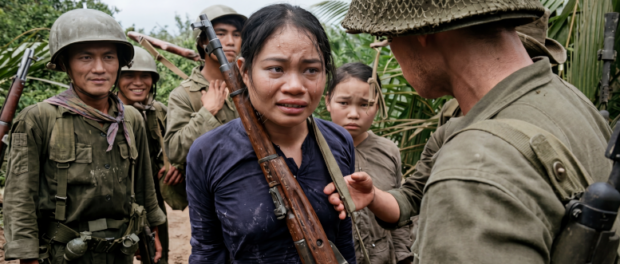 Screenshot youtube.com