History – The Secret War in Laos and the Role of Local Allies
Screenshot youtube.com
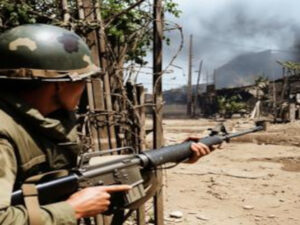
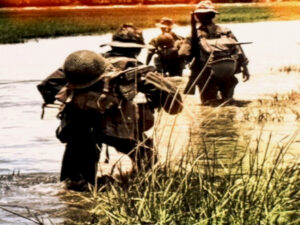
In the late 1950s, American intelligence officials interpreted resurgent guerrilla activities in South Vietnam and Laos as indications of communist intentions in Southeast Asia. This resulted in a strategy that relied on local allies, secret reconnaissance and small, mobile units. The illustration shows how this approach influenced the Hmong and other hill tribes in theConflict and which personal room for manoeuvre American employees were given on site. At the same time, she describes how differently these men dealt with opium cultivation and trade in the mountain regions.
An early warning strategy for the mountain regions
General Edward G. Lansdale, who led the Department of Defense’s strategic planning for Indochina under President John F. Kennedy, recalled the early CIA operations with the Hmong. Their original goal had been to set up an early warning system: members of the hill tribes should monitor movements of North Vietnamese forces and pass on information.should be part of a more comprehensive defense planning, which, according to the idea at the time, should protect the agricultural plains of Thailand and Vietnam from a spread of communist movements.
The planners of the CIA regarded possible infiltration routes as a far-reaching network. They suspected routes from the Shan Mountains in northeastern Burma through the hard-to-reachAreas from Laos to the central highlands of South Vietnam. The mountains were thus regarded not only as impassable terrain, but also as possible corridors for military movements. Accordingly, local forces there should observe, report and, if necessary, take action against enemy units.
Secret operations across multiple countries
According to CIA agent Lieutenant Colonel Lucien Conein, intelligence personnel were dispatched to Laos in 1959 to oversee 8 groups of US special forces. These then formed Hmong guerrillas on the Tranninh Plateau. In 1960 and 1961, the CIA also recruited members of paramilitary groups of Chinese nationalists in northern Thailand, whoBorder area.
US special forces were also deployed in the South Vietnamese highlands. There they organized commando units from the mountain peoples to conduct spying and sabotage operations along the Ho Chi Minh Trail. In 1962, a CIA employee in northwestern Laos also began sending trained guerrillas of the Yao and Lahu peoples to Yunnan in China.You should monitor traffic movements and listen in on phone calls.
These operations linked Laos to a major clandestine conflict that stretched across several state borders. While the United States used half a million soldiers for the open war in South Vietnam, the fight in the Laotian mountains relied on comparatively few American expertsand numerous local allies. Lansdale considered the use of small American groups organizing indigenous forces to be a suitable method of countering communist insurgency movements.
Personal Power in Secret War
American employees sometimes remained in Laos for many years. Some of them worked there for 10 years or more and were given far-reaching personal powers. According to the presentation, the conventional war in South Vietnam can be viewed primarily through military and political authorities, their plans and programs. The secret war in Laos, on the other hand, is understoodalso about the individual men who organized the operations on the ground and worked with local allies.
The portrayal mentions Edgar Buell, Tony Poe and William Young as particularly formative figures. Their careers represent different forms of American involvement in the conflict and different attitudes to the opium trade. This section describesthe lives and attitudes of Young and Poe in more detail.
William Young and the Mountain Peoples
William Young was born in Shan State, Burma. His grandfather, a missionary, had come to Burma at the turn of the 20th century, had founded a Baptist missionary station in Keng Tung and had begun to proselytize under the Lahu. According to the presentation, the Lahu understood little of his Christian doctrine, but combined his arrival with a local prophecy abouta white deity. Later, Young’s son Harold also attributed this special position to the family and used it in the 1950s to organize Lahu spying companies to China on behalf of the CIA.
When William was looking for work in 1958, his father recommended him to the CIA. Young was employed as a secret translator and interpreter. He spoke 5 local languages and knew theAccording to the intelligence service, there are hardly any other Americans in Laos. Through this language skills and his many years of proximity to the communities, he became a recognized expert for the mountain regions.
Young looked at opium cultivation from the perspective of the farmers who depended on it. As long as there was no comprehensive plan to replace the poppy with other crops, he thought that interfering with trade was wrong. He opposed plans to destroy opium laboratories or take violent action against traders. In his view, such measures would exacerbate the consequences for farmers without eliminating the demand for or availability of opium.
Tony Poe and paramilitary operations
Anthony Posepny, known as Tony Poe, encountered the opium problem differently than Young. He had fought with the U.S. Marines in the Pacific during World War II and joined the CIA’s Special Operations Division shortly after the war. Soon he was considered one of the most capable American agents for secret operations in Asia. The depiction describes him as a man who was involved in the opium tradewas comparatively indifferent.
In 1956, the CIA decided to support the Dalai Lama in his conflict with the government in Beijing. Poe recruited men from the Khamba people in northeastern India, accompanied them to Camp Hale in Colorado for training, and then took part in longer spying expeditions. In 1958, after regional separatists won Sumatra’s independence fromIndonesia, Poe was among the CIA personnel deployed to the island in support.
Previous advertising of opiates and cocaine
The history of opium and other intoxicants also dates back to a time before the trade was comprehensively banned. An Australian trade journal for druggists and pharmacists published an advertisement for cocaine and opiates in February 1908. The figure thus refers to an earlier phase in which such funds could be openly advertised in specialist publications.

 Screenshot youtube.com