The Grand Illusions and Hidden Realities of Ancient Urban Sanitation
Screenshot youtube.com
Urban existence in ancient times presented a stark dichotomy between monumental grandeur and squalid reality. Rulers sought to project absolute authority through towering marble structures, while ordinary citizens navigated the daily struggles of densely packed, unsanitary environments. The administration of waste and filth posed immense logistical and technical hurdles for these early metropolises. This dynamic shaped the physical and social landscape, revealing the profound disparities inherent in early urban development.
Stark Contrasts in the Urban Landscape
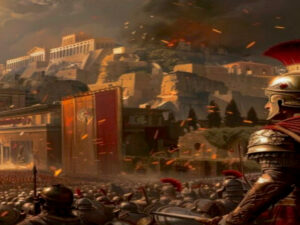
During a grand military celebration in the late republican era, a victorious commander paraded through the central boulevards. Bright garments, golden banners, and the fragrance of burning incense defined the festive atmosphere. Just beyond the main route, the scenery transformed into a nightmare of decaying walls and tattered garments. Narrow alleys reeked of smoke, bodily waste, and rancid cooking oils.
Hardships in the Densely Populated Districts
Youngsters played among scattered refuse while shouts echoed from open windows and afflicted individuals coughed in the doorways. This abrupt transition highlighted the extreme social divisions within the ancient cosmopolitan center. Affluent citizens resided in expansive estates on elevated ground, protected by towering walls. These privileged groups enjoyed ample space and numerous servants to maintain pristine surroundings.
Luxury and Environmental Controls for the Wealthy
The affluent even possessed private water connections, delivering cool liquid directly into their residences. During extended dry periods, however, public fountains received priority over private indulgence. When the wind blew unfavorably, the exhalations from the crowded masses drifted toward the noble estates. To purify the indoor atmosphere, residents ignited fragrant resins and aromatic woods.
Daily Realities for the Working Populace
The beautiful and wealthy remained largely oblivious to this misery, as the impoverished masses clustered in the lower elevations of the settlement. Propertyless laborers who had lost their lands resided there alongside immigrants seeking fortune but finding only failure. Artisans, educators, and healers also inhabited these zones, working tirelessly for their daily sustenance. The massive urban engine produced colossal quantities of filth, noise, and foul odors on a daily basis.
Foundations of the Subterranean Drainage Network
Residents and the state administration exerted tremendous effort to remove the most severe grime from residential zones. A legendary sovereign commissioned the largest subterranean conduit, initially draining the marshy depressions between the hills. The open trench transported the excess liquid and the refuse of early inhabitants directly into the main river. This initial excavation for a massive drainage framework occurred during the early days of the republic.
Divine Patronage and Continuous Growth
Mythical sovereigns of that early era were all associated with the construction of vital public edifices. The name of the immense sewer derived from an ancient deity, later equated with the goddess of love. On the central plaza, the locals erected a small sanctuary for this protective patroness. Over time, the subterranean network expanded continuously to meet the demands of the rapidly growing metropolis.
Flushing the Subterranean Tunnels
Liquid from the numerous aqueducts flowed through the bathhouses and public latrines into the sewer system. During the later imperial period, copious conduits supplied the settlement with fresh water. These enormous volumes flushed the underground tunnels thoroughly, preventing dangerous blockages. At the major river crossing in the southern sector, the murky mixture finally discharged into the main stream.
Beautifying the Functional Framework
The state administration invested enormous resources to make the infrastructure not only functional but also visually appealing. Like modern systems, the network required shafts allowing maintenance personnel to descend into the underground. Artfully decorated marble slabs served as covers, directing rainwater away from the thoroughfares. Such a stone lid has survived until the present era, attracting visitors as a curious historical attraction.
Recognition of Engineering Brilliance by Travelers
Ancient travelers showed less interest in stone curiosities and instead admired the marvel of the drainage system. Writers from antiquity emphasized that the true magnitude of the realm was visible in the aqueducts, the roads, and the sewers. A different scholar from the identical era praised the foresight of the builders, who had considered every detail. They described the covered conduits as being so spacious that loaded wagons could drive through them.
Strict Regulations and Legal Safeguards
Given such immense effort, the state naturally protected the sewers strictly from abuse and damage. A legal ruling from the republican era dictated that any impairment of the public conduits must be reversed immediately. Private construction projects or improper disposal of refuse regularly caused damage to the system. Legal experts of the high imperial era defined the concept of the channel very broadly, including all tubes and pipelines.
Property Rights and Upkeep Obligations
The legislation granted property owners extensive rights to conduct necessary cleaning operations. For such maintenance tasks, builders were even permitted to break open the floors of neighboring houses, provided they covered the costs. Without regular upkeep, health-hazardous gases and severe structural damage to the buildings were imminent. The creation of private drainage systems was also strictly monitored to preserve the streets and adjacent plots.
Controlling Industrial Pollution and River Traffic
Construction along the rivers was equally strictly regulated to avoid hindering ship traffic and docking stations. These rules also applied to smaller waterways serving the purpose of waste disposal. Already during the early republican era, the censors enacted a law specifically targeting the textile industry. Fullers utilized urine as a cleaning agent and were therefore responsible for massive emissions of odor and filth.
Imperial Oversight of the Water and Waste Systems
The legislator drove great effort to ensure the cleanliness of the sewers and the waterways. During the imperial era, a high-ranking official was responsible for the smooth disposal of wastewater. The administrator in charge of the riverbed and the urban sewers was always a close confidant of the sovereign. The official had to have previously held the highest office of the senatorial career path.
Addressing Hygiene in the Provinces
During the early imperial period, the sovereign transferred this important office to a proven friend, who had already distinguished themselves as the prefect of the state treasury. This experienced administrator later became a governor in a distant province in the eastern territories. During a visit to a coastal settlement, the official noticed a major hygiene problem and promptly reported it to the sovereign. The beautiful main thoroughfare was flanked by an open channel that offended both the eyes and the noses of the citizens.
Implementing Solutions for Foul Odors
The governor requested permission from the sovereign to completely cover the foul-smelling waterway. The sovereign agreed to this sensible proposal immediately and trusted the official to implement it efficiently. Both knew exactly that the stench was not merely an aesthetic nuisance but endangered the health of the residents. Decades later, a renowned physician confirmed this assumption by declaring the exhalations of large settlements harmful to the atmosphere.
Medical Perspectives on Urban Air Quality
The medical expert did not yet know about disease-causing microbes but blamed the foul-smelling vapors for the poor air quality. In the capital, the massive conduit flushed the filth out of the residential districts, yet it still ended up in the river. These were enormous quantities of waste, which the massive population flushed into the stream on a daily basis. A sovereign therefore had the riverbed thoroughly cleaned, because the contamination caused the water to dam up and trigger floods.
Enhancing the Water Supply for Public Health
A high official for the water supply praised a sovereign during the early imperial era for their far-sighted construction measures. This ruler had significantly increased the water volume in the settlement, which not only remedied the shortage but also promoted cleanliness. The excess liquid flushed the channels thoroughly and made the air above the settlement noticeably purer. The causes of that heavy haze hanging over the metropolis were supposedly eliminated by this measure.
The Unpleasant Reality of the Urban Waterways
The official might have flattered the sovereign here slightly to present their own achievements in the right light. However, observers can believe the authors that the air in the settlement had a poor reputation among contemporaries. No ancient writer seems to have ever taken a relaxed stroll along the riverbank. How it smelled when a body of water mutated into an open sewer for a world city was experienced by the Londoners during the unusually hot summer of the industrial age.
The Catalyst for Modern Sanitation Systems
A cloud of foul-smelling gases settled over the British capital and forced people to move across the bridges with cloths in front of their faces. The enormous stench held the metropolis in a firm grip for months and forced a political rethink. As a pioneer of modern large cities, the settlement then received a massive sewer system that routed the waste far around the urban area. The ancient builders at the time of the imperial sovereigns had naturally not yet reached this advanced stage.

 Screenshot youtube.com