The Hidden War Of The Highlands And The Intersection Of Military Control And Narcotics Cultivation
Screenshot youtube.com
The covert conflict in Southeast Asia during the mid-twentieth century represented a complex intersection of geopolitical strategy, counterinsurgency operations, and illicit economic networks that profoundly altered the region. Within this shadow war, the remote highland districts of Laos became a critical theater where military objectives and agricultural practices became inextricably linked. The local populations found themselves caught in a web of foreign intervention, forced recruitment, and economic dependency that fundamentally disrupted their traditional ways of life. Understanding this historical episode requires examining how aerial logistics, narcotics cultivation, and armed patrols merged into a single system of control and survival. The experiences of the highland communities reveal the devastating human and environmental costs of a conflict driven by external powers and hidden agendas.
The Geographical And Demographic Reality Of The Highland District
The district in question was situated approximately 45 kilometers northwest of the primary military headquarters and 60 kilometers west of the central plateau. Spanning an area of roughly 150 square kilometers, the terrain appeared as an incredibly rugged and inaccessible mountainous wilderness when viewed from the main supply routes. Towering above the region was a massive peak reaching 1900 meters in elevation, which remained frequently obscured by dense clouds during the monsoon season. Steep ridges descended from this central summit and the surrounding peaks, carving out numerous deep valleys and elevated basins throughout the landscape. Although the area was originally covered by dense forests, generations of agricultural expansion through slash-and-burn techniques had transformed many ridges into expanses of tall savanna grass.
The Political Structure And Historical Stability Of The Settlements
The administrative area contained exactly twelve distinct settlements, comprising seven communities of the highland ethnic group and five villages of the midland population. Residential structures were typically clustered along mountain ridges and hilltops overlooking the valleys below, maximizing defensive positioning and agricultural access. The central political hub was a highland community housing approximately 300 residents across 47 wooden structures featuring earthen floors. Its significance stemmed less from its physical size and more from its advanced age and the substantial influence wielded by its founding families. Established in the latter half of the 1800s, this settlement held the distinction of being the oldest community of its ethnic group in the northeastern sector of the nation.
The Agricultural Advantages And Leadership Dynamics
The local leaders possessed deeply entrenched political authority derived from centuries of continuous habitation and ancestral reverence. The highest-ranking local official resided in this central village, guiding the community through decades of regional upheaval. While most highland settlements were forced to relocate every ten to 20 years to clear new fields for cultivation, this specific area offered a unique advantage. The surrounding slopes featured highly fertile, limestone-rich soil that allowed multiple generations to remain in the same location without exhausting the land. This geological blessing provided a rare stability in a region otherwise defined by constant movement and temporary agricultural camps.
The Ideal Environmental Conditions For Narcotic Cultivation
The specific elevation of the central village, sitting just below 1300 meters, created an ideal microclimate for cultivating the highly profitable poppy plant. The adjacent mountain ridges reached elevations up to 1650 meters, perfectly matching the environmental requirements of the specific crop variety originating from neighboring regions. Although this particular plant could survive at lower altitudes, it thrived exceptionally well in the moderate mountainous climate and the alkaline limestone soils surrounding the peaks. Despite more than ten years of continuous regional warfare, the local narcotics production reportedly maintained its impressive output without any significant decline. Local administrators reported that most households consistently produced approximately 15 kilograms of the raw narcotic substance annually, maintaining this volume for a full decade.
The Economic Shifts And The Dependency On Aerial Logistics
While the cash crop yield remained remarkably stable, the production of essential staple grains experienced a severe and concerning decline during the same period. The local population consciously chose to dedicate their limited labor to the highly lucrative narcotic crop, even as their basic food security deteriorated. This economic shift was heavily facilitated by regular aerial deliveries of staple grains provided by a proprietary aviation company connected to foreign intelligence operations. These consistent food drops effectively freed the agricultural workforce to focus almost entirely on the cultivation and harvesting of the narcotic plants. Military officers operating within the network of the local warlord purchased the harvested narcotic at highly favorable rates, guaranteeing a reliable and profitable market for the farmers.
The Complex Calculations Of Labor Allocation And Crop Selection
The military logistics and the narcotics trade operated in a mutually reinforcing cycle, where aerial food supplies ensured basic survival while the crop sales generated essential income. Prior to the escalation of the conflict, the local population had traditionally cultivated staple grains for subsistence and the narcotic crop exclusively for commercial exchange. However, the growing seasons for both plants overlapped significantly, and the distinct crops required entirely different types of terrain and soil conditions. Since each settlement possessed a strictly limited labor force and could only clear a few new plots annually, the farmers were forced to make difficult economic calculations. When market prices for the narcotic were high, the population maximized its cultivation and used the profits to purchase imported grains, whereas lower prices forced a return to subsistence farming.
The Meticulous Preparation Of The Forest And Soil
During the spring season, every household dispatched scouts deep into the forest to identify optimal locations for establishing new agricultural plots. Because the primary focus was on the narcotic crop, these scouts specifically sought out limestone-rich soil situated near mountain peaks or within high-altitude basins. For the cultivation of dryland staple grains, plots located in the middle sections of the slopes would have been far more appropriate and productive. The scouts evaluated the soil quality using traditional methods, sometimes even tasting the earth to determine if it possessed the necessary alkaline properties for the desired crop. Once suitable locations were identified, the physical labor of clearing the dense vegetation commenced in month number three or the initial days of month number four.
The Controlled Burning And Soil Enrichment Process
Agricultural workers utilized iron axes to sever the crowns of large trees, often standing on narrow, carved wooden poles to reach the highest branches safely. A highly skilled laborer could bring down multiple smaller tree crowns simultaneously if a falling trunk happened to drag adjacent vegetation down with it. The felled timber was left to dry in the sun until month number four or the early part of month number five, preparing the biomass for the crucial burning phase. Once the wood reached the optimal dryness, the entire community gathered at the designated clearing sites to execute the controlled burn. Young individuals ran down the steep slopes to ignite the timber piles, while others secured the perimeter of the fields and ignited additional brush heaps to contain the fire.
The Integration Of Intermediate Crops And Livestock
The resulting fire efficiently cleared the felled vegetation and deposited a thick layer of nutrient-rich ash containing essential elements like phosphate, calcium, and potassium. This ash layer served as a critical initial fertilizer for the agricultural cycle, replenishing the soil after the removal of the forest canopy. Since the primary narcotic crop was not sown until month number nine, leaving the land bare after the burn would have resulted in severe soil erosion and rapid weed infestation. Furthermore, the dryland staple grain could not be harvested until month number eleven, which was well after the planned sowing of the narcotic plants. To solve this agricultural dilemma, the farmers planted a highly resilient intermediate cereal crop that matured by month number eight or the early part of month number nine, providing essential ground cover during the summer.
The Detailed Sowing And Intercropping Strategies
This intermediate cereal harvest served a dual purpose, providing crucial supplementary food for the human population while also acting as fodder for pigs, mountain ponies, chickens, and cattle. During the heavy monsoon rains, the hooves of these domesticated animals frequently churned the village pathways into deep, impassable mud. Once the intermediate grain harvest was safely stored, the designated harvesters began the arduous task of loosening the compacted earth using heavy iron hoes. Shortly before the official sowing of the narcotic seeds, the soil was meticulously broken down into a finer texture and smoothed using a traditional broom crafted from bamboo. This careful preparation of the seedbed was absolutely essential to ensure the delicate seedlings would have the best possible environment for germination and early growth.
The Harvesting Process And The Extraction Of Raw Resin
By month number eleven, the young seedlings were carefully thinned out, ensuring that only the most robust plants remained at precise intervals of approximately 15 centimeters. In the spaces between the primary narcotic plants, the farmers strategically sowed or planted secondary crops such as tobacco, beans, spinach, and various other vegetables. These additional plants provided essential dietary diversity for the community and were believed to return specific mineral nutrients to the soil through their root systems. At the end of month number twelve, the fields underwent a second round of thinning to optimize the spacing and resource allocation for the maturing narcotic plants. A few weeks later, the harvesters collected the mature vegetables and carefully weeded the plots, allowing the primary crop to dominate the available sunlight and nutrients.
The Collection And Processing Of The Valuable Resin
During the initial month of the new year, the fields exploded into a vibrant display of red and white blossoms, signaling the approach of the crucial harvesting phase. The actual extraction of the raw resin commenced only after the delicate flower petals had fallen and the seed pods became visibly swollen with their sticky contents. Because the sowing had been deliberately staggered across different plots, the harvesting process was extended, often lasting until the end of month number two or the early part of month number three. To extract the valuable resin, the farmers made precise incisions in the seed pods using a specialized knife equipped with three distinct blades. This delicate scoring operation was performed during the cool late afternoon hours to prevent the sap from drying too quickly in the sun.
The Exponential Value Chain And International Trafficking
Overnight, the milky sap exuded from the incisions, accumulating on the surface of the pod before being carefully scraped off in the early morning hours. A local resident would gently loosen the hardened resin from the pod using a flexible blade, collecting the sticky mass in a shallow bowl suspended around their neck. Once approximately one kilogram of the raw material had been gathered, it was tightly wrapped in large banana leaves and securely bound for transport. This meticulous process required immense patience and had to be repeated multiple times as long as the plants continued to produce viable yields. By the conclusion of the harvesting season, the 47 households of the central village had collectively amassed roughly 700 kilograms of the raw narcotic substance.
The Evolution Of The Trade Networks And Militarization
The subsequent processing of this raw material exponentially increased its commercial value as it moved through the various stages of the illicit supply chain. Assuming an average alkaloid content of ten percent, the village harvest could theoretically yield approximately 70 kilograms of refined morphine base. In the clandestine laboratories operating within the broader region, this morphine was further synthesized into roughly 70 kilograms of exceptionally pure heroin. The farmers themselves captured only a tiny fraction of the final market value, receiving between 400 and 600 dollars for ten kilograms of the raw harvest. That same ten kilograms of raw material, once converted into one kilogram of morphine base, could be sold for around 500 dollars in the regional trafficking hubs.
The Transition To A Cash-Based Economy
The financial markup became truly staggering as the product moved further away from the highland villages and into the international consumer markets. One kilogram of the refined heroin could be traded for approximately 2000 to 2500 dollars in the bustling commercial centers of the regional capital. A courier transporting a single kilogram to a major wholesaler in distant American cities could expect to receive between 18000 and 27000 dollars for the delivery. If that same kilogram was heavily diluted with cutting agents and packaged into 45000 small gelatin capsules, it could be sold on the street for roughly five dollars per capsule. Consequently, a raw material purchased from the highland farmers for about 500 dollars could ultimately generate a street-level retail value of approximately 225000 dollars.
The Direct Procurement By Military Personnel
During the 1950s, the local population primarily sold their harvested narcotic to traditional Chinese merchant caravans that migrated from the central plateau. These commercial expeditions passed through the district with remarkable regularity during the peak of the harvesting season, establishing a predictable economic rhythm. Even after neutralist and communist forces occupied the lowland plateau in 1960 and 1961, the traditional caravans initially continued their journeys to purchase the highland crop. However, these traditional trade routes were permanently disrupted following the 1964 and 1965 harvests when intense military engagements erupted on the western edges of the plateau. In the vacuum left by the departing civilian merchants, heavily armed trading caravans affiliated with the local warlord emerged to dominate the regional market.
The Regional Variations In Payment Preferences
These new commercial expeditions were commanded by military sergeants or captains and typically consisted of approximately six mounted soldiers accompanied by a train of pack ponies. During their extended stays in the district, the armed personnel utilized the residence of the local administrator as the primary operational base and command post. Farmers from the central village and neighboring midland communities transported their harvested crops to the central hub to negotiate directly with the military officers. The soldiers meticulously weighed the merchandise on traditional beam scales and burned small test samples to accurately assess the purity and quality of the product. In return, the farmers carefully inspected the offered trade goods, which included medical supplies, salt, iron tools, silver, flashlights, textiles, and sewing thread.
The Introduction Of Aerial Extraction Logistics
Following the intense bargaining process, the commercial transactions were finalized, marking a significant shift in the local economic paradigm. In earlier decades, many highland residents strongly preferred receiving silver coins or practical trade goods as compensation for their agricultural labor. However, the continuous aerial logistics operations throughout the conflict made a vast array of commercial goods much more accessible to the remote population. Consequently, an increasing number of narcotic farmers began to demand payment in the national paper currency rather than traditional barter items. This transition to a cash-based economy simplified the trading process and allowed the agricultural producers to independently select and purchase their desired goods.
The Market Dominance And Logistical Shifts
The preference for payment methods varied significantly across different geographical regions and ethnic groups within the broader highland area. Mountain communities in neighboring western and southern territories continued to strongly favor traditional trade goods or silver, including specific foreign currencies and bullion. In contrast, the highland subjects under the direct control of the local warlord were among the initial groups to rapidly adapt to the modern monetary economy. The relentless aerial supply operations fundamentally altered not only the dietary habits of the population but also the fundamental mechanics of their commercial exchanges. This integration into the cash economy further tied the remote villages to the broader military and political structures controlling the region.
The Confirmation Of Aerial Logistics And The Burden Of Alliance
To secure the narcotic harvest from the surrounding settlements, military personnel affiliated with the warlord conducted short marches along narrow mountain trails to the north and south. The leader of a midland village located approximately six kilometers north of the central hub recalled that the community began selling the harvest to these soldiers around 1967 or 1968. During every harvesting season, groups of five to eight armed individuals would arrive, pay using paper currency, pack the narcotic into heavy backpacks, and continue their journey. Prior to this militarized procurement system, the local farmers had traditionally sold their goods to civilian merchants traveling from distant lowland commercial centers. The military buyers offered prices approximately 20 percent higher than those provided by the civilian merchants, making it highly advantageous for the farmers to trade with the soldiers.
The Human Cost Of Loyalty And Forced Conscription
The military connections of the local warlord provided the officers with an overwhelming and unfair advantage in the local agricultural market. While the military officers paid up to 60 dollars per kilogram, the civilian merchants from other cities typically offered only 40 to 50 dollars for the same quality. This significant price premium allowed the personnel of the warlord to purchase the vast majority of the district harvest within a matter of a few short weeks. Once the pack ponies reached their maximum load capacity, the heavy sacks were transferred into large bamboo crates and transported to the primary military headquarters. At this central hub, the raw narcotic was immediately processed into morphine base, with the military teams typically returning to the villages two or three times per season.
The Retaliation Through Supply Cutoffs And Aerial Terror
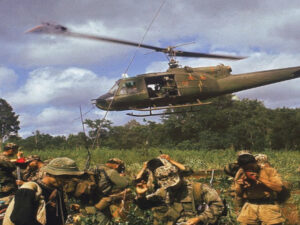
The logistical dynamics of the trade underwent a radical transformation during the harvests of 1969 and 1970 with the introduction of rotary-wing aircraft. The local administrator reported that military captains and majors began arriving from the primary headquarters in small groups using American helicopters. These officers would remain for several days, traveling on foot to the surrounding villages to purchase the harvested crops directly from the farmers. Once the procurement was complete, they utilized portable radio equipment to summon a heavy-lift helicopter that would transport the entire cache back to the headquarters. The pilots operating these extraction flights were American personnel, while the officers conducting the actual purchases and negotiations were exclusively highland military personnel.
The Plight Of The Refugees And Environmental Destruction
The leader of another midland village, situated approximately eight kilometers north of the central hub, independently confirmed this highly mechanized procurement process. During the 1969 and 1970 seasons, highland officers arrived via helicopter at a nearby landing zone before proceeding on foot to the surrounding agricultural communities. The individual households in these smaller midland villages typically produced only about two or three kilograms of the raw narcotic per season. Due to these relatively small yields per household, the military buyers were forced to continue their journey to the larger central villages where massive quantities were readily available. The helicopter completely replaced the arduous and time-consuming transport over narrow mountain trails, enabling a much faster extraction and deeply integrating military aviation into the narcotics trade.
The Decision To Flee And The Reality Of Bombing
The initially advantageous economic connection between the central village and the military warlord eventually placed an unbearable strain on the local economy and survival. This controversial alliance had originally commenced in 1961 when military officers offered weapons and financial incentives while simultaneously threatening severe reprisals for any neutrality. The local administrator deeply disapproved of the aggressive usurpation of political authority from the traditional regional leaders, yet felt compelled to pledge the support of the village. Throughout the 1960s, the central village evolved into one of the most fiercely loyal settlements within the entire network of the warlord. Foreign intelligence officers invested significant personal effort to secure the allegiance of the population, even funding the construction of a local educational facility through international development programs.
The Final Harvest And The Absolute Economic Collapse
In exchange for their unwavering political loyalty and agricultural output, the village received consistent food drops, financial compensation, and premium prices for their narcotic crop. However, the human cost of this alliance became increasingly severe as the central village was required to send approximately 20 young individuals to serve as soldiers at the primary headquarters. The vast majority of these conscripted individuals perished in the relentless combat operations that characterized the secret conflict in the highlands. By 1970, the expanding war directly threatened the primary headquarters, leaving the military leadership with almost no remaining reserve forces to defend the perimeter. In a desperate measure, the warlord demanded that every single village surrender every available individual, explicitly including youths as young as 15 years of age.
The Retreat And The Final Destruction Of The Communities
Complying with the extreme demand, the local administrator authorized the establishment of a temporary training camp on a nearby mountain slope to process 60 new recruits. Following a brief period of basic training and weeks of intensive firearms instruction, the young soldiers were transported to the front lines via helicopter at the end of the year. The village leaders dispatched these youths with extreme reluctance, as horrifying reports of catastrophic casualty rates had already spread throughout the communities. When military officers returned in the initial month of 1971 demanding additional recruits, the central village finally refused to cooperate with the escalating conscription orders. The local administrator firmly declared that no further individuals from the village would be sent to fight in the increasingly futile and destructive war.
The Aftermath And The Legacy Of The Exodus
The immediate consequence of this defiance was the abrupt termination of the vital aerial food deliveries that had sustained the population for years. This punitive decision drastically exacerbated the dependency of the village on the military authorities, creating an impossible dilemma for the residents. The population was forced to choose between protecting their remaining youth from certain death and maintaining access to the essential staple grains required for survival. The aerial logistics network was thus weaponized, transforming from a lifeline into a powerful instrument of coercion and political control. This brutal leverage demonstrated the absolute power held by the military commanders over the basic survival of the highland communities.
The Final Evacuation And The Resettlement In Exile
As the annual offensive by communist forces commenced in the initial month of 1971, enemy patrols increased their presence in the area and initiated contact with the local population. Foreign intelligence agencies grew deeply concerned that the highland and midland populations might defect to the opposing side under the pressure of the advancing forces. The authorities ordered the residents to relocate to the south and immediately halted all food supplies for those who chose to remain in their ancestral homes. Terrified residents from neighboring highland settlements abandoned their homes and fled toward the southern collection zones, joining a desperate exodus that would ultimately reshape the demographic landscape of the entire region.
The Relentless Aerial Campaign And The Collapse Of Agriculture
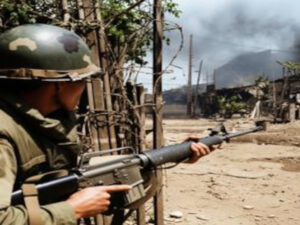
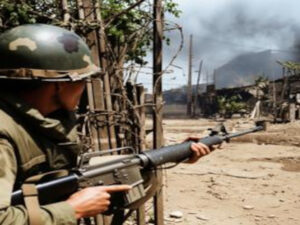
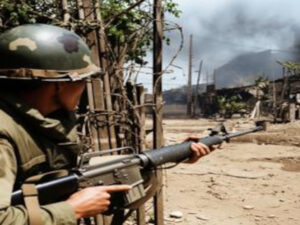
Despite the overwhelming pressure to evacuate, the local administrator insisted on remaining in the ancestral territory and attempted to halt the growing stream of refugees. Nevertheless, a significant portion of the population abandoned their homes during the initial month, seeking shelter in the dense surrounding forests until the weather improved. Every resident faced an agonizing decision between the immediate risks of remaining in the village and the extreme dangers associated with a chaotic flight through hostile territory. The district was now fully engulfed in the aerial war and the brutal ground combat, leaving the civilian population completely exposed to the crossfire of a conflict they never chose.
The Devastation Of The Landscape And The Final Harvest
Many residents of the central village explicitly identified the indiscriminate aerial bombardments as the primary catalyst for the mass displacement of their neighbors. From sunrise to sunset, the residents constantly heard the deafening roar of bomber formations heading toward the central plateau at very short intervals. During the night, heavily armed gunships circled the area, firing their weapons whenever infrared sensors detected the heat signatures of human beings or cooking fires. Survivors from heavily bombed locations passed through the central village, sharing horrifying accounts of the relentless aerial attacks that proved neither the fields nor the forests offered any protection.
The Ultimate Destruction And The End Of The Secret Conflict
When questioned about whether the local administrator feared the enemy troops or the aerial bombardments more, the official unequivocally identified the bombs as the greater terror. The administrator described a completely devastated landscape filled with burned settlements, massive cratered plains, and scattered anti-personnel mines dropped from the air. Despite the overwhelming chaos, the local narcotics production had not yet completely collapsed during the initial phases of the intensified conflict. Although the residents had been forced to spend the previous winter hiding in the forests, most households managed to harvest approximately their usual volume of 15 kilograms before the final destruction arrived.
The Mass Displacement And The Retreat Of The Highland Forces
The absolute end of the local agricultural and commercial system arrived on day number 14 of the initial month in 1972. Allied combat aircraft launched a massive strike against the district in a desperate attempt to halt the advancing offensive of the communist forces. The attacking aircraft dropped devastating incendiary weapons, completely obliterating the central village and three neighboring midland settlements. This catastrophic bombardment permanently terminated not only the local narcotics production and the regional trade network but also the traditional way of life for these communities.
The Ceasefire And The Final Evacuation Of The Leadership
The mass flight from the central village was merely one component of the comprehensive retreat of the highland forces from the mountains surrounding the central plateau. By 1973, approximately 150000 highland individuals were compressed into a narrow mountainous strip roughly 75 kilometers wide, stretching between the primary headquarters and the capital region. The military strength of the warlord shrank dramatically from approximately 40000 fighters to a mere 10000 individuals due to continuous and devastating combat losses. Facing an imminent and overwhelming assault on the capital, the royal government signed a ceasefire agreement with the communist forces in 1973, effectively ending the secret conflict.
The Resettlement In Exile And The End Of An Era
In the following months, the proprietary aviation company abandoned more than 300 airstrips and handed over a few transport aircraft to the new national government. By the sixth month of 1974, the company completely evacuated all its remaining bases across the nation under direct orders from foreign authorities. In the early months of 1975, communist forces advanced rapidly into the remaining territory controlled by the warlord, facing only isolated and disorganized resistance from his 6000 remaining soldiers. Foreign liaison officers urgently pressured the warlord to flee to neighboring Thailand, a decision the exiled leader eventually accepted as the communist forces closed in on the final defensive positions.
On day number 14 of the fifth month, aircraft chartered by foreign intelligence landed at the primary headquarters to evacuate the warlord and the remaining command structure. The aircraft made desperate shuttle flights to nearby bases in Thailand, constantly maneuvering to avoid heavy gunfire from the surrounding mountain ridges while panicked civilians crushed together on the tarmac. Approximately 3000 highland individuals were transported across the river to Thailand, followed shortly by the warlord and the primary foreign liaison officer. The exiled leader eventually resettled in the United States, where the displaced population faced immense challenges in the refugee camps, struggling to adapt to a completely foreign environment after losing their ancestral lands and traditional livelihoods.

 Screenshot youtube.com